
4,700
3,760
MEDITERRANEAN HOMES
Schestowitz is a strong believer that a home should create a sense of belonging and togetherness. Growing up, she developed an appreciation for harmonizing diverse styles, placing a modern stainless steel island by an old dining area, an African dresser next to an Eames chair. Schestowitz is not a follower of design guidelines; she believes in an intuitive harmony of space, color, and light. The spaces she creates are infused with travel collectibles, art acquisitions, family pieces, and historical patterns. The rich palettes and bold patterns create spaces that feel naturally inviting and intimate, a result of her long-standing exploration of Mediterranean style.
4,700
3,760
4,800
3,840
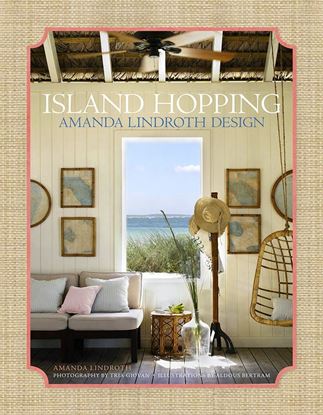
ISLAND HOPPING AMANDA LINDROTH DESIGN
White canvas, boldly colored fabrics in solids, stripes, and jaunty prints, rattan and cane seating, whitewashed or colorfully painted English case furniture, canopied beds, straw matting—these are some of the signature ingredients of an Amanda Lindroth interior.
Since she founded her Nassau-based firm in 2010, she has become the go-to designer of island dwellers from Lyford Cay to Antigua, Abaco to Belize, Harbour Island to Palm Beach, and as far north as Great Cranberry Island, Maine. Her airy, relaxed, indoor-outdoor aesthetic is apparent in every one of the twenty-five projects featured here.
With photographs by Tria Giovan, herself an island native, and charming illustrations by Aldous Bertram, who decorated Lindroth’s pied-à-terre in Palm Beach with stunning trompe l’oeil renderings, Island Hopping: Amanda Lindroth Design is the visual equivalent of an island getaway.
4,800
3,840
4,800
3,840
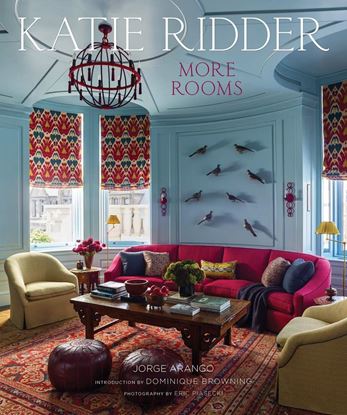
KATIE RIDDER MORE ROOMS
Bold combinations of primary and secondary colors; exquisitely crafted trims, embroidery, lampshades, and countless accessories (all designed by Ridder); imaginative room surfaces from silver leaf to custom stenciling. These are but a few of the signature elements of a Katie Ridder interior. Katie Ridder: More Rooms explores Ridder’s unique aesthetic room by room to underscore the astounding breadth and depth of her decorating ingenuity. The illuminating text details Ridder’s singularly creative approach to the essential elements of each room, including furniture plan, color, lighting, finishes, pattern, layering, and scale. Illustrated with specially commissioned photographs by Eric Piasecki and featuring an introduction by longtime editor in chief of House & Garden Dominique Browning, Katie Ridder: More Rooms provides endless inspiration for design aficionados.
4,800
3,840
4,800
3,840
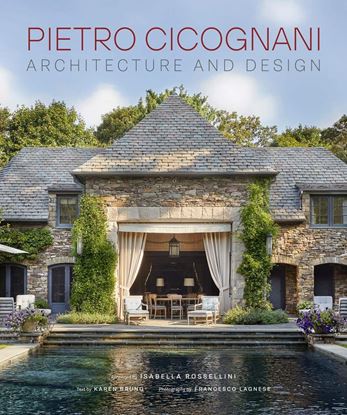
PIETRO CICOGNANI ARCHITECTURE AND DESIGN
For 30 years, Italian-born Pietro Cicognani has been designing highly customized and exquisitely crafted country houses, city apartments, outbuildings, pool houses, and even garden plans for an A-list clientele. In the first monograph of his work, some 20 of his notable projects are featured, including a converted barn complex on Long Island, a sprawling estate in upstate New York, a chic minimalist town house in Manhattan, and a romantic seaside house and elaborate garden in the Hamptons. Whether new construction or gut renovation, each project is designed in collaboration with the finest artisans, craftspeople, and exceptional interior designers. Illustrated with photographs by Francesco Lagnese, as well as site and floor plans and drawings, the book includes a foreword by Isabella Rossellini, whose country home Cicognani designed.
4,800
3,840
4,800
3,840
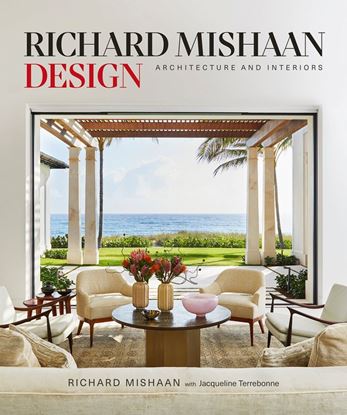
RICHARD MISHAAN DESIGN ARCHITECTURE
Richard Mishaan is renowned for his masterly integration of textiles, palettes rich in complementary shades, natural materials forged by artisans, surfaces bedecked with talismanic curios, a strategic sense of when and where to place a mirror, and a deep knowledge of both the fine and decorative arts. His many influences, including his upbringing in Colombia, coupled with his idiosyncratic perspective, explain why his sophisticated clientele return repeatedly as their lives evolve.
In Richard Mishaan Design, his working methods are revealed in projects as varied as the conversion of a 400-year-old barn in the Hamptons into a warm, inviting family home and the transformation of an ultra-modern, glass-walled New York City apartment into a comfortable yet sophisticated aerie. Here too are show houses, which he uses as experimental laboratories, working out such diverse design ideas as updating legendary designer Renzo Mongiardino’s aesthetic and achieving a chic look on a tight budget. He has also designed rooms in bespoke hotels, ranging from the Rat Pack–influenced Shelborne South Beach in Miami to the Tcherassi, a renovated 250-year-old mansion in Cartagena, Colombia.
4,800
3,840

4,995
3,996
LOUIS VUITTON. EXTRAORDINARY VOYAGES
The mid-19th and early 20th centuries heralded new means of transport and equipment and, with them, new and original ways of exploring the world. Transatlantic liners, automobiles, long-haul airplanes, zeppelins, and express trains unfurled new horizons and changed travel itself into an adventure. Distant lands were no longer solely accessible to aristocrats, explorers, and adventurers. Instead, the world opened up to new groups of people eager to circumvent the globe. And for many of these new globetrotters, traveling was synonymous with Louis Vuitton, the French label whose iconic and functional luggage trunks could be found on nearly every boat, plane, car, and train around the world.
In this beautiful book, author Francisca Mattéoli recounts 50 tales of thrilling travel undertaken in every possible mode of transit, from the hot air balloon to the space shuttle, each lavishly illustrated with more than 300 historical photographs and ephemera from Louis Vuitton’s official archives. Louis Vuitton: Extraordinary Voyages is a journey all its own—an evocative and transporting account of the most surprising and transformative trips taken since the 19th century.
4,995
3,996
4,995
3,996
AT THE ARTISANS TABLE INSPIRATION
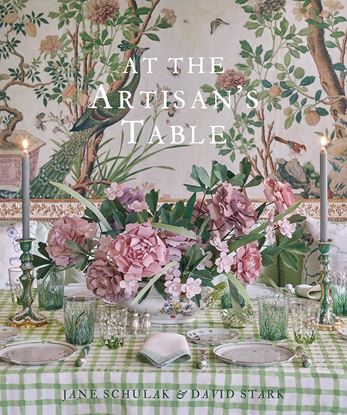
Throughout history, tabletop decoration has been at the nexus of utilitarian function and innovative design. In At the Artisan’s Table, designers and event producers Jane Schulak and David Stark pair historical table wares from the world’s finest design museums with pieces by an international array of contemporary artisans who reinterpret traditional crafts and styles, including Aptware (marbled clay), blue-and-white Delft, chinoiserie, faux bois, plaster, splatterware, and trompe l’oeil.
Each chapter features a museum object that serves as a muse; the work and studio of the artist who has updated the traditional craft; and gorgeous table settings designed by Schulak and Stark that incorporate the artist’s handmade wares and provide inspiration for everyone who has ever wished to wow their dinner guests.
4,995
3,996
4,995
3,996
UNIPOL TOWER. GROUP HEADQUARTERS MILAN
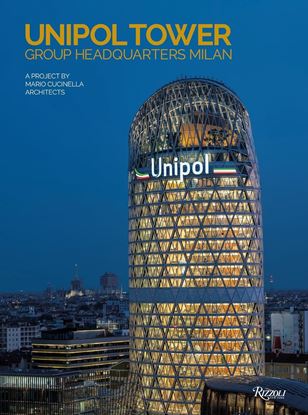
A new tower stands out against the city skyline: the Unipol Tower designed by Mario Cucinella Architects, an internationally renowned architecture studio based in Milan and Bologna. The Unipol Tower is a 124-meter elliptical tower in the Porta Nuova area, in the heart of the city. Made from glass and steel, it has a glasshouse on the rooftop serving as a cultural venue. Commissioned by Unipol, the leading Italian insurance company, the tower looks beyond the corporate identity and headquarters of Unipol and has been acclaimed as one of the most advanced architecture projects ever created.
4,995
3,996

4,995
3,996
THE BATTLE OF VERSAILLE
The first illustrated book to chronicle the dramatic 1973 face-off between French and American fashion designers, which left an indelible mark on the fashion industry, launched American designers as a global force, and challenged the cultural norms of the time.
Images from the archives of renowned fashion photojournalists Bill Cunningham and Jean-luce Huré—largely unseen until now—capture the behind-the-scenes drama, fabulous clothing, iconic models, and glamorous guests at this historic show.
4,995
3,996