

1,250
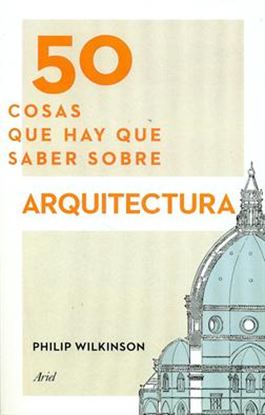
50 COSAS QUE HAY QUE SOBRE ARQUITECTURA
¿Cuál es la diferencia entre una columna dórica y una jónica? ¿Cuál es la función de un arbotante? ¿Cuáles son los principios rectores de la arquitectura moderna? ¿En qué se diferencia la restauración de la conservación?
Desde las raíces más tempranas de la arquitectura en la Grecia antigua, pasando por el desarrollo revolucionario de finales del siglo XX, hasta las tendencias más recientes de la arquitectura ecológica, esta guía esencial explica los conceptos e ideas fundamentales sobre arquitectura y brinda una nueva y fundada comprensión de la disciplina y su profundo impacto en el mundo en que vivimos.
1,250
4,500
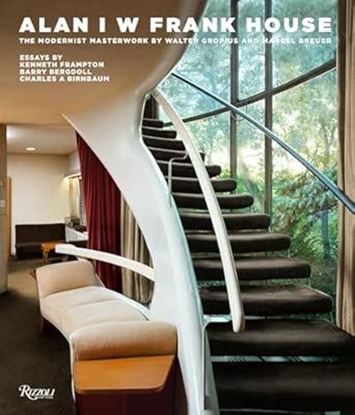
ALAN I W FRANK HOUSE: THE MODERNIST M.
The first book to feature this modernist masterpiece, one of Walter Gropius and Marcel Breuer's most important residential commissions.
Offering a rare opportunity to explore the largest and most luxurious house designed by Walter Gropius, founder of the Bauhaus, and Marcel Breuer, leading architect and furniture designer of the twentieth century, this beautifully designed volume celebrates the Alan I W Frank House in Pittsburgh, Pennsylvania.
Built in 1939-40, the house embodies the Bauhaus "total work of art" philosophy, with Gropius and Breuer having designed every aspect of the building and its site. Illustrations including new and archival images and the architects' plans and sketches highlight an exquisite balance of proportions and colors. Accompanying essays place this house firmly within the American modernist canon just as the Bauhaus celebrates its one-hundreth anniversary in 2019.
4,500
4,200
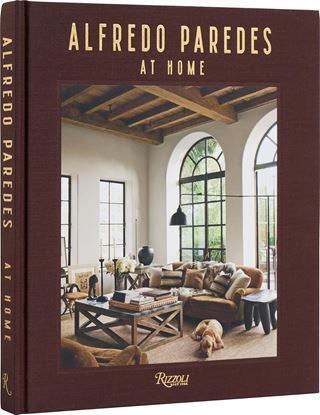
ALFREDO PAREDES AT HOME
While touring readers through four of his own homes, Paredes shares the key elements in his creative process, giving us access to the same tools he uses in every home to decorate rooms that feel modern even as they glamorize the past, to show us how an environment has real power to transform our very state of mind. Paredes is renowned for being a master of extrapolating an entire theme from one unique item, say transforming the stripe of a crisp Oxford shirt into a unique upholstery perfect for the seaside, or finding inspiration for a couch’s decorative fringe in a well-worn piece of leather ranch gear. He is said to have “perfect visual pitch,” creating vignettes and rooms with an energy that feels undeniably masculine and sophisticated thanks to dark wood, iron railings, rustic fabrics, an overall patina, and soft furnishings in soothing earth tones.
4,200
3,200
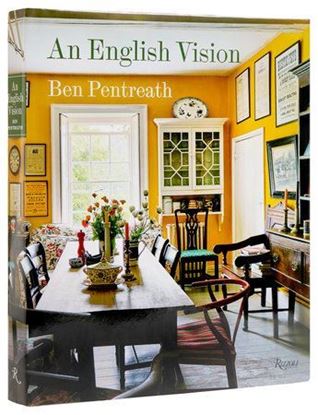
AN ENGLISH VISION
This is the first of Pentreath’s books to present his own output in its entirety—from his personal residences in Dorset, London, and Scotland that brought him international fame to many old and new houses that he has designed and some of the larger, town-scaled projects that make his practice unique in the world of traditional design. Although the results range from his colorful and romantic versions of the English country cottage to traditional splendor, there are underlying ideas that inform the breadth of his output—a sense of scale, proportion, craft, detail, sustainability, and appropriateness—that have a universal relevance today.
3,200
1,350
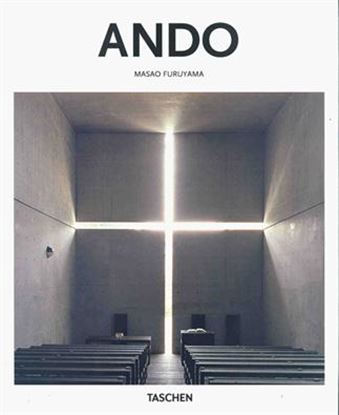
ANDO (BA-ARCH) (ES)
Este libro de TASCHEN ofrece la introducción perfecta a la obra de Tadao Ando y explora el híbrido de tradición, modernidad y función de unos edificios que fascinan a arquitectos, diseñadores y diseñadores de moda, entre otros. A través de obras clave como viviendas particulares, iglesias, museos, complejos de apartamentos y espacios culturales, analizamos una estética única, monumental y acogedora, basada tanto en la tradicional serenidad japonesa como en los vocabularios decididamente modernos de la Bauhaus y Le Corbusier.
1,350
1,350
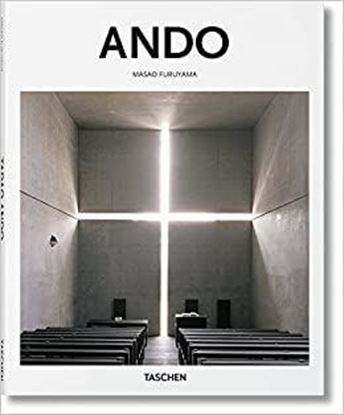
ANDO (BA-ARCH) (GB) (INT)
In this essential TASCHEN introduction to Tadao Ando we explore the hybrid of tradition, modernism, and function that allows his buildings to enchant architects, designers, fashion designers, and beyond. Through key projects including private homes, churches, museums, apartment complexes, and cultural spaces, we explore a uniquely monumental yet comforting aesthetic that draws as much on the calm restraint of Japanese tradition as the compelling modernist vocabularies of Bauhaus and Le Corbusier.
With featured projects in Japan, France, Italy, Spain, and the United States, we see not only Ando’s global reach but also his refined sensitivity for the environs: the play of light through windows, and, in particular, the interaction of buildings with water. From the mesmerizing Church of the Light in Osaka to the luminous Punta della Dogana Contemporary Art Center in Venice, this is a radiant tour through a distinctly contemporary form as much as a timeless appeal of light, elements, and equilibrium.
1,350