


15,000
12,000
LIFE, HOLLYWOOD (XL) (GB)
In November 1936, publisher Henry R. Luce launched Life as a photo-led weekly news magazine with a clear purpose: “To see life; to see the world; to eyewitness great events.” Before readers’ attention was consumed by television, Life served as their window to the world, and by the late 1940s, it was being viewed by 1 in 3 Americans. Jean Harlow was the first movie star to appear on a Life cover in 1937, and from then until 1972 over 200 covers featured Hollywood-related subjects, illustrating the strength of the bond between Life and the film industry.
15,000
12,000
13,500
10,800
XL-HOKUSAI-INT
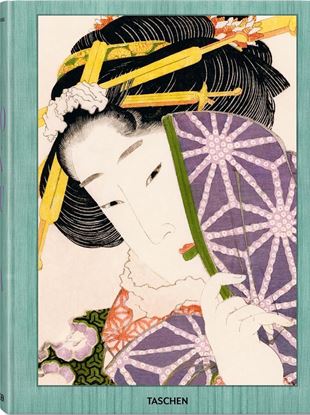
At the age of six, Hokusai was said to have painted his first picture, and a year after his death aged 89, his designs for illustrated books were posthumously published. Tracing a long, prolific career, this edition spans each of the artist’s creative phases: from the actor portraits with which Hokusai started out to the 1,300 designs carried out in his final years under the name Manji.Reproducing 746 woodblock prints, paintings, sketches, and book illustrations, many of them in granular detail, this volume is comfortably the most complete publication on perhaps Japan’s most famous artist. Hokusai’s wide appeal as the recognizable figure of Japan’s Edo period endures to this day: in March 2023, a version of his iconic woodblock print Under the Wave off Kanagawa (or The Great Wave), from his series Thirty-six Views of Mount Fuji, was auctioned for 2.76 million US dollars.
13,500
10,800
8,500
6,800
ANNA ATKINS. CYANOTYPES (CL) (INT)
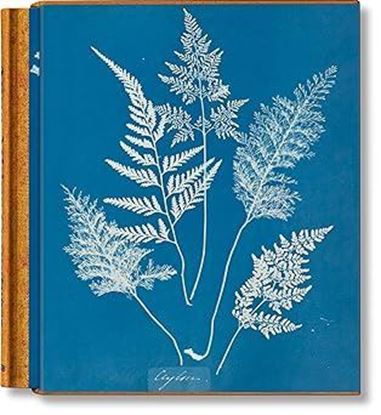
At the dawn of the Victorian era in her open-air laboratory in Halstead, Kent, Anna Atkins embarked on a radical experiment to document botanical species using a completely new artistic medium. The inimitable cyanotype photograms of algae and ferns she created were made into the first books to feature photographic images. Striking yet ethereal, these albums are a perfect synthesis of art and science.Although the cyanotype technique was discovered by her friend John Herschel, Atkins was the first to realize both its practical purpose for own her interests in botany and taxonomy, and its intriguing artistic potential.
8,500
6,800
6,700
5,360
VERMEER. THE COMPLETE WORKS (GB)
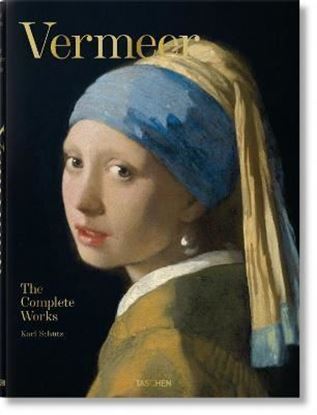
His works have prompted a New York Times bestseller; a film starring Scarlett Johansson and Colin Firth; record visitor numbers at art institutions from Amsterdam to Washington, DC; and special crowd-control measures at the Mauritshuis, The Hague, where thousands flock to catch a glimpse of the enigmatic and enchanting Girl with a Pearl Earring, also known as the “Dutch Mona Lisa”.
In his lifetime, however, the fame of Johannes Vermeer (1632–1675) barely extended beyond his native Delft and a small circle of patrons. After his death, his name was largely forgotten, except by a few Dutch art collectors and dealers. Outside of Holland, his works were even misattributed to other artists. It was not until the mid-19th century that Vermeer came to the attention of the international art world, which suddenly looked upon his narrative minutiae, meticulous textural details, and majestic planes of light, spotted a genius, and never looked back.
6,700
5,360

6,700
5,360
JAPAN 1900. A PORTRAIT IN COLOR (INT)
The Golden Age of Travel neatly overlaps with the reign of the Emperor Meiji, which began in 1868 with the overthrow of a feudal order that had kept Japan secluded from the outside world for more than 200 years. In the ensuing four-and-a-half decades, Japan became a less remote and more attractive destination for the international traveler and a popular subject for photographers, both Japanese and foreign.
6,700
5,360
6,500
5,200
CARAVAGGIO (XL) (INT)
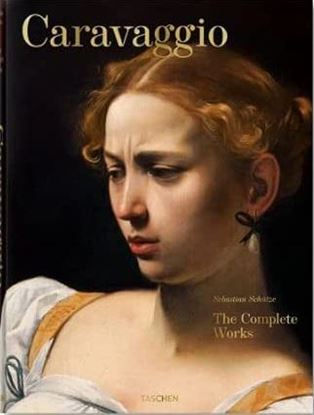
Caravaggio, or more accurately Michelangelo Merisi da Caravaggio (1571–1610), was a legend even in his own lifetime. Notorious bad boy of Italian painting, the artist was at once celebrated and controversial: Violent in temper, precise in technique, a creative master, and a man on the run.
This work offers a comprehensive reassessment of Caravaggio’s entire œuvre with a catalogue raisonné of his works. Each painting is reproduced in large format, with recent, high production photography allowing for dramatic close-ups with Caravaggio's ingenious details of looks and gestures.
Five introductory chapters analyze Caravaggio's artistic career from his early struggle to make a living, through his first public commissions in Rome, and his growing celebrity status. They look at his increasing daring with lighting and with a boundary-breaking naturalism which allowed even biblical events to unfold with an unprecedented immediacy before the viewer.
6,500
5,200