
15,000
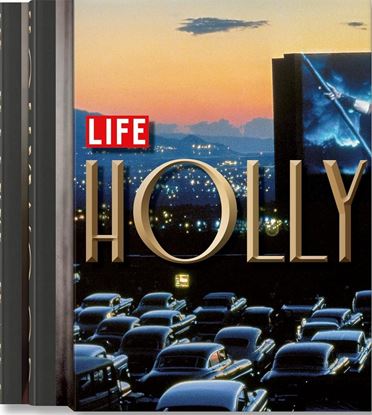
LIFE, HOLLYWOOD (XL) (GB)
In November 1936, publisher Henry R. Luce launched Life as a photo-led weekly news magazine with a clear purpose: “To see life; to see the world; to eyewitness great events.” Before readers’ attention was consumed by television, Life served as their window to the world, and by the late 1940s, it was being viewed by 1 in 3 Americans. Jean Harlow was the first movie star to appear on a Life cover in 1937, and from then until 1972 over 200 covers featured Hollywood-related subjects, illustrating the strength of the bond between Life and the film industry.
15,000
2,300
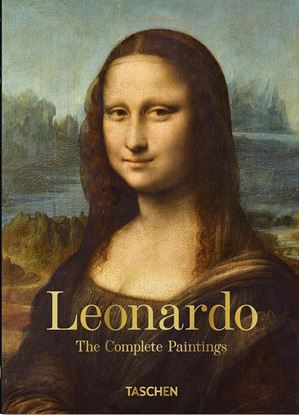
LEONARDO: THE COMPLETE PAINTINGS 40TH ED
One of the most accomplished human beings who ever lived, Leonardo da Vinci (1452–1519) remains a quintessential Renaissance genius. The perfect companion to the Leonardo Graphic Work edition, this book is a compact catalogue raisonné of all of the artist’s masterful paintings.
Drawn from our best-selling XXL edition, the book traces the artist’s life and work across 10 chapters, presenting all known paintings and drawing on his letters, contracts, diary entries, and writings to explore the man behind such groundbreaking artworks. From Virgin of the Rocks to Virgin and Child with St. Anne to the ever-beguiling Mona Lisa, you’ll find some of the finest treasures of the Louvre, Prado, and National Gallery, London here, as well as Leonardo works lost to time, but no less startling in their precision and poise.
2,300
6,500
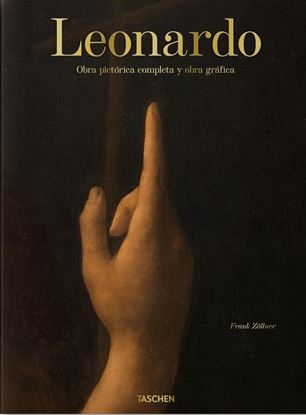
LEONARDO. OBRA PICTORICA COMPLETA (FP) E
Unmatched in his ingenuity, technical prowess, and curiosity, Leonardo da Vinci (1452–1519) epitomizes the humanistic ideal of the Renaissance man: a peerless master of painting, sculpture, cartography, anatomy, architecture – and more. Simultaneously captivating art historians, collectors, and the millions who flock yearly to admire his works, Leonardo’s appeal is as diffuse as were his preoccupations. His images permeate nearly every facet of Western culture – The Vitruvian Man is engraved into millions of Euro coins, The Last Supper is considered the single most reproduced religious painting in history, and the Mona Lisa has entranced countless artists and observers for centuries.
6,500
2,300
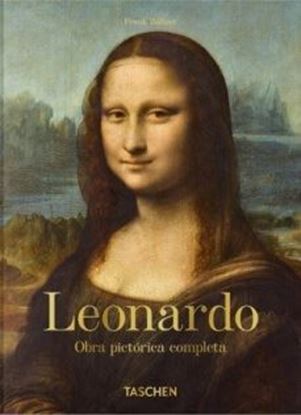
LEONARDO. OBRA PICTORICA (45TH) (E)
Uno de los seres humanos más brillantes jamás conocidos, Leonardo sigue siendo el genio del Renacimiento por excelencia. Compañero perfecto de la edición Leonardo da Vinci. Obra gráfica, este libro es un catálogo razonado de todas las obras maestras pictóricas del artista, tanto supervivientes como perdidas, desde la Mona Lisa a La última cena.
2,300
1,350
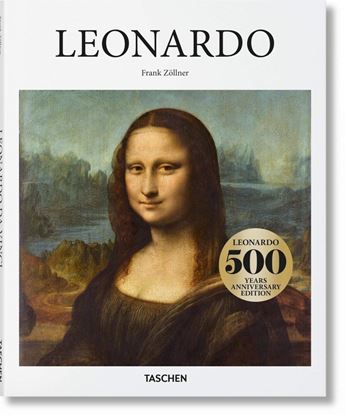
LEONARDO (BA-ART)
Filling notebook after notebook with sketches, inventions, and theories, Leonardo da Vinci (1452–1519) not only stands as one of the most exceptional draftsmen of art history, but also as a mastermind and innovator who anticipated some of the greatest discoveries of human progress, sometimes centuries before their material realization.
From the smallest arteries in the human heart to the far-flung constellations of the universe, Leonardo saw nature and science as being unequivocally connected. His points of inquiry and invention spanned philosophy, anatomy, geology, and mathematics, from the laws of optics, gravitation, heat, and light to the building of a flying machine.
In his painting, Leonardo steered art out of the Middle Ages with works such as The Last Supper and the world-famous La Gioconda or Mona Lisa depicting not only physical appearances, but a compelling psychological intrigue and depth which continues to draw crowds of mesmerized visitors to masterpieces in Paris, Milan, Washington, London, and Rome.
This book brings together some of Leonardo’s most outstanding work to introduce a figure of infinite curiosity, feverish imagination, and sublime artistic ability, often described as having “not enough worlds for to conquer, and not enough lives for to live” (Alan Woods).
1,350
2,995
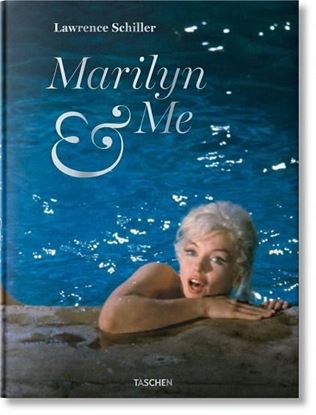
LAWRENCE SCHILLE. MARILYN & ME (FO)
“Tú ya eres famosa, el que se va a hacer famoso ahora soy yo”, le dijo el fotógrafo Lawrence Schiller mientras hablaban de las fotografías que estaba a punto de hacerle. “No seas tan arrogante”, le respondió burlona Marilyn. “Sustituir a un fotógrafo es fácil”. Esto ocurrió en 1962, y Schiller, que por entonces tenía 25 años, cumplía un encargo para Paris Match. Conocía ya a Marilyn (ambos habían trabado amistad dos años antes, cuando se conocieron durante el rodaje de El multimillonario), pero esto no le sirvió de nada el día en que ella accedió a posar desnuda ante su cámara durante la escena de la piscina en Something’s Got to Give.
2,995