


6,500
4,875
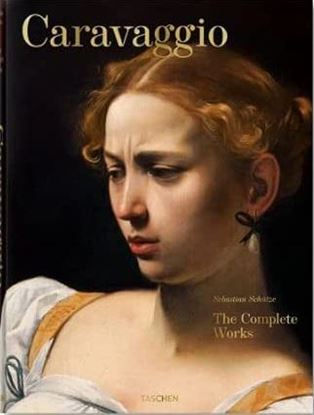
CARAVAGGIO (XL) (INT)
Caravaggio, or more accurately Michelangelo Merisi da Caravaggio (1571–1610), was a legend even in his own lifetime. Notorious bad boy of Italian painting, the artist was at once celebrated and controversial: Violent in temper, precise in technique, a creative master, and a man on the run.
This work offers a comprehensive reassessment of Caravaggio’s entire œuvre with a catalogue raisonné of his works. Each painting is reproduced in large format, with recent, high production photography allowing for dramatic close-ups with Caravaggio's ingenious details of looks and gestures.
Five introductory chapters analyze Caravaggio's artistic career from his early struggle to make a living, through his first public commissions in Rome, and his growing celebrity status. They look at his increasing daring with lighting and with a boundary-breaking naturalism which allowed even biblical events to unfold with an unprecedented immediacy before the viewer.
6,500
4,875

6,700
5,025
JAPAN 1900. A PORTRAIT IN COLOR (INT)
The Golden Age of Travel neatly overlaps with the reign of the Emperor Meiji, which began in 1868 with the overthrow of a feudal order that had kept Japan secluded from the outside world for more than 200 years. In the ensuing four-and-a-half decades, Japan became a less remote and more attractive destination for the international traveler and a popular subject for photographers, both Japanese and foreign.
6,700
5,025
6,700
5,025
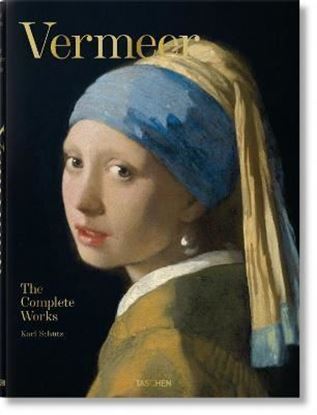
VERMEER. THE COMPLETE WORKS (GB)
His works have prompted a New York Times bestseller; a film starring Scarlett Johansson and Colin Firth; record visitor numbers at art institutions from Amsterdam to Washington, DC; and special crowd-control measures at the Mauritshuis, The Hague, where thousands flock to catch a glimpse of the enigmatic and enchanting Girl with a Pearl Earring, also known as the “Dutch Mona Lisa”.
In his lifetime, however, the fame of Johannes Vermeer (1632–1675) barely extended beyond his native Delft and a small circle of patrons. After his death, his name was largely forgotten, except by a few Dutch art collectors and dealers. Outside of Holland, his works were even misattributed to other artists. It was not until the mid-19th century that Vermeer came to the attention of the international art world, which suddenly looked upon his narrative minutiae, meticulous textural details, and majestic planes of light, spotted a genius, and never looked back.
6,700
5,025