

9,500
7,125
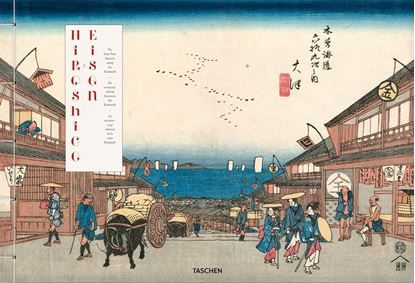
XL-HIROSHIGE/EISEN, KISOKAIDO-INT
The Kisokaido route through Japan was ordained in the early 1600s by the country’s then-ruler Tokugawa Ieyasu, who decreed that staging posts be installed along the length of the arduous passage between Edo (present-day Tokyo) and Kyoto. Inns, shops, and restaurants were established to provide sustenance and lodging to weary travelers. In 1835, renowned woodblock print artist Keisai Eisen was commissioned to create a series of works to chart the Kisokaido journey. After producing 24 prints, Eisen was replaced by Utagawa Hiroshige, who completed the series of 70 prints in 1838.
9,500
7,125
13,500
10,125
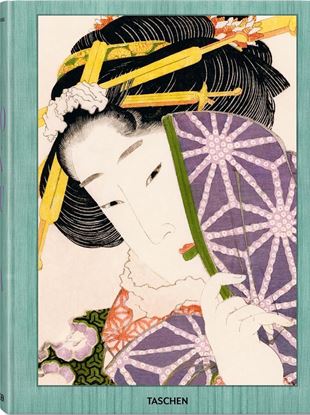
XL-HOKUSAI-INT
At the age of six, Hokusai was said to have painted his first picture, and a year after his death aged 89, his designs for illustrated books were posthumously published. Tracing a long, prolific career, this edition spans each of the artist’s creative phases: from the actor portraits with which Hokusai started out to the 1,300 designs carried out in his final years under the name Manji.Reproducing 746 woodblock prints, paintings, sketches, and book illustrations, many of them in granular detail, this volume is comfortably the most complete publication on perhaps Japan’s most famous artist. Hokusai’s wide appeal as the recognizable figure of Japan’s Edo period endures to this day: in March 2023, a version of his iconic woodblock print Under the Wave off Kanagawa (or The Great Wave), from his series Thirty-six Views of Mount Fuji, was auctioned for 2.76 million US dollars.
13,500
10,125
15,000
11,250
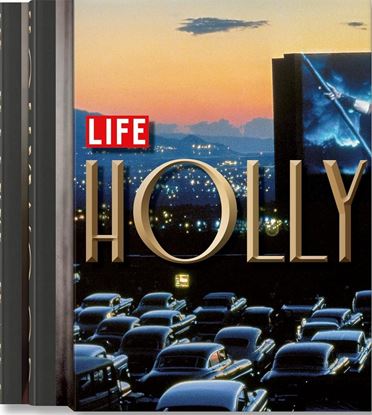
LIFE, HOLLYWOOD (XL) (GB)
In November 1936, publisher Henry R. Luce launched Life as a photo-led weekly news magazine with a clear purpose: “To see life; to see the world; to eyewitness great events.” Before readers’ attention was consumed by television, Life served as their window to the world, and by the late 1940s, it was being viewed by 1 in 3 Americans. Jean Harlow was the first movie star to appear on a Life cover in 1937, and from then until 1972 over 200 covers featured Hollywood-related subjects, illustrating the strength of the bond between Life and the film industry.
15,000
11,250