1,350
1,080
EXPRESSIONISM (BASIC ART EDITION) GB
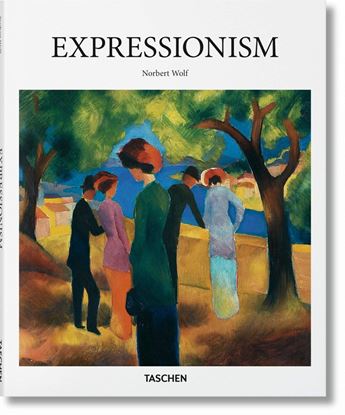
Sharp angles, strange forms, lurid colors, and distorted perspectives are classic hallmarks of Expressionism, the twentieth century movement that prioritized emotion over objective reality. Though particularly present in Germany and Austria, the movement’s approach flourished internationally and is today hailed as one of the most influential shifts in art history.
With leading groups Die Brücke (The Bridge) and Der Blaue Reiter (The Blue Rider), and key players such as Wassily Kandinsky, Egon Schiele, and Emil Nolde, the Expressionists disowned Impressionism, which they regarded as “man lowered to the position of a gramophone record of the outer world”, to depict instead a raw and visceral experience of life as it was felt, rather than seen on the surface. Their paintings brim with emotive force, conveyed in particular through intense and non-naturalistic color palettes, loose brushwork, and thick textures.
1,350
1,080
1,350
1,080
HIROSHIGE (BASIC ART EDITION) GB
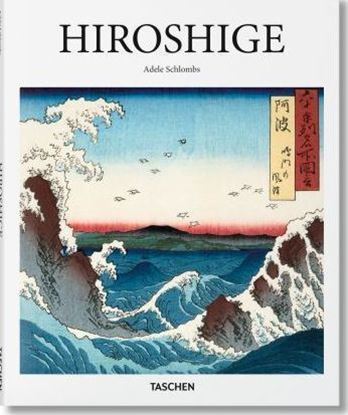
Utagawa Hiroshige (1797–1858) was one of the last great artists in the ukiyo-e tradition. Literally meaning “pictures of the floating world,” ukiyo-e was a particular woodblock print genre of art that flourished between the 17th and 19th centuries. Subjects ranged from the bright lights and attractions of Edo (modern-day Tokyo), to spectacular natural landscapes.
In the West, Hiroshige’s prints became exemplary of the Japonisme that swept through Europe and defined the Western world’s visual idea of Japan. Because they could be mass produced, ukiyo-e works were often used as designs for fans, greeting cards, and book illustrations. The style influenced Impressionist, Post-Impressionist, and Art Nouveau artists alike, with Vincent van Gogh and James Abbott McNeill Whistler both particularly inspired by Hiroshige’s landscapes.
1,350
1,080
1,350
1,080
VAN GOGH (BA-ART) (GB)
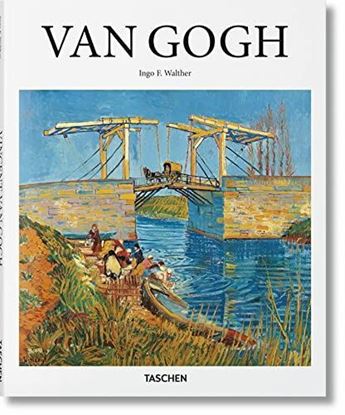
Today, the works of Vincent van Gogh (1853–1890) are among the most well known and celebrated in the world. In Sunflowers, The Starry Night, Self-Portrait with Bandaged Ear, and many paintings and drawings beyond, we recognize an artist uniquely dexterous in the portrayal of mood and place through paint, pencil, charcoal, or chalk.
Yet as he was deploying the lurid colors, emphatic brushwork, and contoured forms that would subsequently make his name, van Gogh battled not only the disinterest of his contemporary audience but also devastating bouts of mental illness. His episodes of depression and anxiety would eventually claim his life, when, in 1890, he committed suicide shortly after his 37th birthday.
This richly illustrated introduction follows Vincent van Gogh’s story from his earliest pictures of peasants and rural workers, through his bright Parisian period, to his final, feverish burst of creative energy in the South of France during the last two and a half years of his life.
1,350
1,080
1,350
1,080
1,350
1,080
LEONARDO (BA-ART)
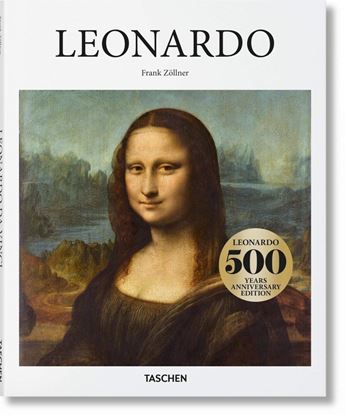
Filling notebook after notebook with sketches, inventions, and theories, Leonardo da Vinci (1452–1519) not only stands as one of the most exceptional draftsmen of art history, but also as a mastermind and innovator who anticipated some of the greatest discoveries of human progress, sometimes centuries before their material realization.
From the smallest arteries in the human heart to the far-flung constellations of the universe, Leonardo saw nature and science as being unequivocally connected. His points of inquiry and invention spanned philosophy, anatomy, geology, and mathematics, from the laws of optics, gravitation, heat, and light to the building of a flying machine.
In his painting, Leonardo steered art out of the Middle Ages with works such as The Last Supper and the world-famous La Gioconda or Mona Lisa depicting not only physical appearances, but a compelling psychological intrigue and depth which continues to draw crowds of mesmerized visitors to masterpieces in Paris, Milan, Washington, London, and Rome.
This book brings together some of Leonardo’s most outstanding work to introduce a figure of infinite curiosity, feverish imagination, and sublime artistic ability, often described as having “not enough worlds for to conquer, and not enough lives for to live” (Alan Woods).
1,350
1,080
1,350
1,080
CEZANNE (BA-ART) (GB)
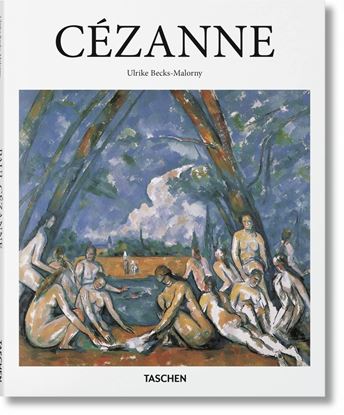
In the latter half of the 19th century, in the verdant countryside near Aix-en-Provence, Paul Cézanne (1839–1906), busily plied his brush to landscapes and still lifes that would become anchors of modern art. With compact, intense dabs of paint and bold new approaches to light and space, he mediated the way from Impressionism to the defining movements of the early 20th century and became, in the words of both Matisse and Picasso, “father of us all.”
This fresh artist introduction selects key works from Cézanne’s oeuvre to understand his development, innovation, and crucial influence on modern art. From compositions of fruits and pears to scenes of outdoor bathers, we trace his experimentation with color, perspective, and texture to evoke “a harmony parallel to Nature,” as well as the very process of seeing and recording.
Along the way, we discover Cézanne’s celebrated Card Players, his layering of warm and cool hues to build up form and surface, and the geometric rigor of his landscapes from the vicinity of Aix-en-Provence, as bright with the light of southern France as they are bold with a radical new rendering of dimensions and depth.
1,350
1,080