

1,350
1,013
HIROSHIGE (BASIC ART EDITION) GB
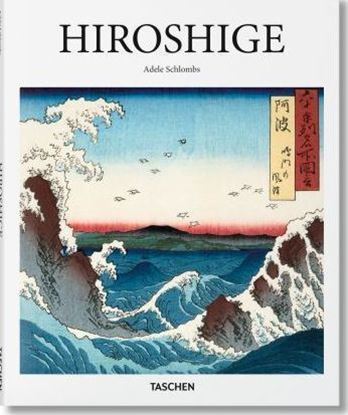
Utagawa Hiroshige (1797–1858) was one of the last great artists in the ukiyo-e tradition. Literally meaning “pictures of the floating world,” ukiyo-e was a particular woodblock print genre of art that flourished between the 17th and 19th centuries. Subjects ranged from the bright lights and attractions of Edo (modern-day Tokyo), to spectacular natural landscapes.
In the West, Hiroshige’s prints became exemplary of the Japonisme that swept through Europe and defined the Western world’s visual idea of Japan. Because they could be mass produced, ukiyo-e works were often used as designs for fans, greeting cards, and book illustrations. The style influenced Impressionist, Post-Impressionist, and Art Nouveau artists alike, with Vincent van Gogh and James Abbott McNeill Whistler both particularly inspired by Hiroshige’s landscapes.
1,350
1,013
1,350
1,013
LEONARDO (BA-ART)
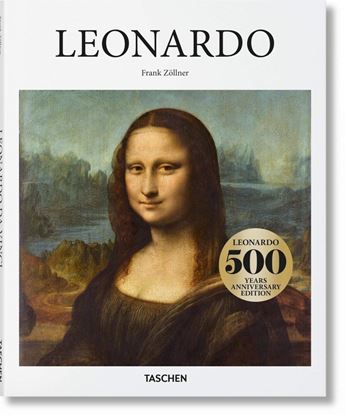
Filling notebook after notebook with sketches, inventions, and theories, Leonardo da Vinci (1452–1519) not only stands as one of the most exceptional draftsmen of art history, but also as a mastermind and innovator who anticipated some of the greatest discoveries of human progress, sometimes centuries before their material realization.
From the smallest arteries in the human heart to the far-flung constellations of the universe, Leonardo saw nature and science as being unequivocally connected. His points of inquiry and invention spanned philosophy, anatomy, geology, and mathematics, from the laws of optics, gravitation, heat, and light to the building of a flying machine.
In his painting, Leonardo steered art out of the Middle Ages with works such as The Last Supper and the world-famous La Gioconda or Mona Lisa depicting not only physical appearances, but a compelling psychological intrigue and depth which continues to draw crowds of mesmerized visitors to masterpieces in Paris, Milan, Washington, London, and Rome.
This book brings together some of Leonardo’s most outstanding work to introduce a figure of infinite curiosity, feverish imagination, and sublime artistic ability, often described as having “not enough worlds for to conquer, and not enough lives for to live” (Alan Woods).
1,350
1,013
1,350
1,013
ABSTRACT EXPRESSIONISM (BA-ARCH) (GB)
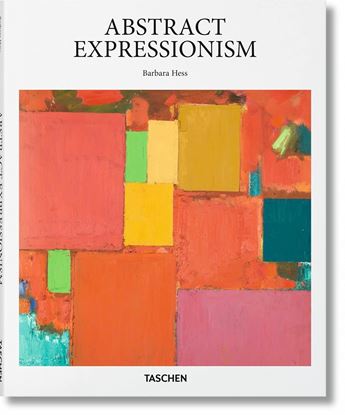
Hailed as the first American-born art movement to have a worldwide influence, Abstract Expressionism denotes the non-representational use of paint as a means of personal expression. It emerged in America in the 1940s, with lead protagonists including Jackson Pollock, Philip Guston, Robert Motherwell, Mark Rothko, and Willem de Kooning.
Abstract Expressionism spawned many different stylistic tendencies but two particularly prominent sub-categories: action painting, exemplified by de Kooning and Pollock, and color field painting, made most famous by Rothko. Throughout, Abstract Expressionists strove to convey emotions and ideas through the making of marks, through forms, textures, shades, and the particular quality of brushstrokes. The movement favored large-scale canvases, and embraced the role of accident or chance.
With featured works from 20 key Abstract Expressionist artists, this book introduces the movement which shifted the center of art gravity from Paris to New York and remains for many the golden moment of American art.
1,350
1,013
1,350
1,013
CEZANNE (BA-ART) (GB)
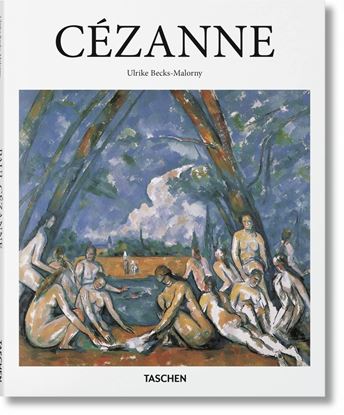
In the latter half of the 19th century, in the verdant countryside near Aix-en-Provence, Paul Cézanne (1839–1906), busily plied his brush to landscapes and still lifes that would become anchors of modern art. With compact, intense dabs of paint and bold new approaches to light and space, he mediated the way from Impressionism to the defining movements of the early 20th century and became, in the words of both Matisse and Picasso, “father of us all.”
This fresh artist introduction selects key works from Cézanne’s oeuvre to understand his development, innovation, and crucial influence on modern art. From compositions of fruits and pears to scenes of outdoor bathers, we trace his experimentation with color, perspective, and texture to evoke “a harmony parallel to Nature,” as well as the very process of seeing and recording.
Along the way, we discover Cézanne’s celebrated Card Players, his layering of warm and cool hues to build up form and surface, and the geometric rigor of his landscapes from the vicinity of Aix-en-Provence, as bright with the light of southern France as they are bold with a radical new rendering of dimensions and depth.
1,350
1,013
1,350
1,013
DALI (BA-ART) (GB)
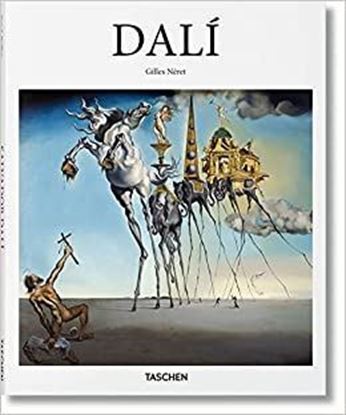
Painter, sculptor, writer, filmmaker, and all-round showman Salvador Dalí (1904–1989) was one of the 20th century’s greatest exhibitionists and eccentrics. One of the first artists to apply the insights of Freudian psychoanalysis to art, he is celebrated in particular for his surrealist practice, with such conceits as the soft watches or the lobster telephone, now hallmarks of the surrealist enterprise, and of modernism in general.
Dalí frequently described his paintings as “hand-painted dream photographs.” Their tantalizing tension and interest resides in the precise rendering of bizarre elements and incongruous arrangements. As Dalí himself explained, he painted with “the most imperialist fury of precision,” but only “to systematize confusion and thus to help discredit completely the world of reality.”
Revolutionizing the role of the artist, the mustache-twirling Dalí also had the intuition to parade a controversial persona in the public arena and, through printmaking, fashion, advertising, writing, and film, to create work that could be consumed and not just contemplated on a gallery wall.
1,350
1,013
1,350
1,013
HARING (BA-ART) (GB)
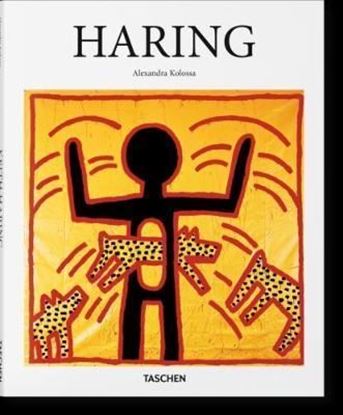
One of the key figures in the New York art world of the 1980s, Keith Haring (1958–1990) created a signature style that blended street art, graffiti, a Pop sensibility, and cartoon elements to unique, memorable effect. With thick black outlines, bright colors, and kinetic figures, his public (and occasionally illegal) interventions, sculptures, and works on canvas and paper have become instantly recognizable icons of 20th-century visual culture.
From his first chalk drawings in the New York City subway stations, to his renowned “Radiant Baby” symbol, and his commissions for Swatch Watch and Absolut Vodka, Haring’s work was both emblematic of the manic work ethic of 1980s New York, yet distinctive for its social awareness. Belying their bright, playful aesthetics, his pieces often tackled intensely controversial socio-political issues, including racism, capitalism, religious fundamentalism, and the increasing impact of AIDS on New York’s gay community, the latter foreshadowing his own death from the disease in 1990.
1,350
1,013