

1,500
1,125
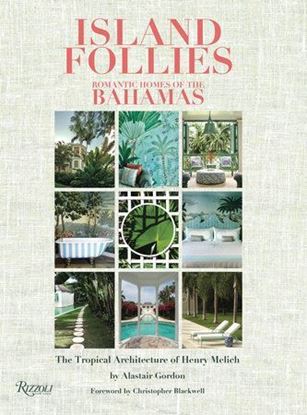
ISLAND FOLLIES
A celebration of Henry Melich’s wonderfully whimsical and romantic island escapes, which continue to inspire the work of designers today.
1,500
1,125
1,500
1,125
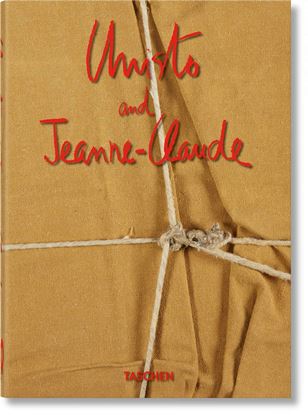
CHRISTO & JEANNE-CLAUDE (40) (INT)
The works of Christo and Jeanne-Claude are monuments of transience. Gigantic in scale, they are always temporary, created to exist only for a limited time and to leave unique, unrepeatable impressions. “From the smallest of the Packages made in Paris in the early 1960s, to the delicate pattern of hundreds of branches embraced by a translucent fabric veil... in Christo and Jeanne-Claude’s works there is nothing abstract, nothing imagined; it is all there―corporeal and tangible.” (Lorenza Giovanelli)
1,500
1,125
1,500
1,125
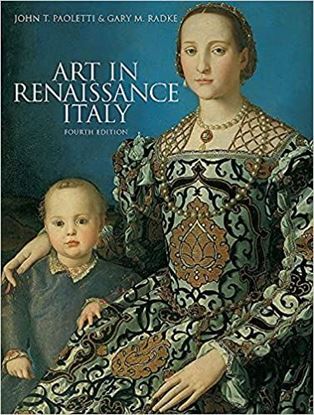
ART IN RENAISSANCE ITALY, FOURTH EDITION
Art in Renaissance Italy (4th Edition)
With a freshness and breadth of approach that sets the art in its context, this book explores why works were created and who commissioned the palaces, cathedrals, paintings and sculptures. It covers Rome and Florence, Venice and the Veneto, Assisi, Siena, Milan, Pavia, Genoa, Padua, Mantua, Verona, Ferrara, Urbino and Naples. Chapters are grouped into four chronological parts, allowing for a sustained examination of individual cities in different periods. 'Contemporary Scene' boxes provide fascinating glimpses of daily life and 'Contemporary Voice' boxes quote from painters and writers of the time. Innovative and scholarly, yet accessible and beautifully presented, this book is a definitive work on the Italian Renaissance. This revised edition contains around 200 new pictures and nearly all colour images. The chapter structure has also been improved for yet greater geographic and chronological clarity, and a new page size makes the volume more user-friendly.
1,500
1,125
1,500
1,125
PAUL OUTERBRIDGE (INT)
Whether in his sumptuous images for advertising or his soft-hued nudes, Paul Outerbridge (1896–1958) was an alchemist of desire. Color was integral to his aesthetic allure, embracing the complex tri-color-carbro process to create a seductive surface of texture and tone. His quest was for “artificial paradises”―a perfection of form, with a surreal edge.
This concise monograph introduces Outerbridge’s unique aesthetic and its commercial and artistic trajectory, from his professional peak as New York’s highest-paid commercial photographer through to his retreat to Hollywood in the 1940s after a scandal over his erotic photography. With key examples from his oeuvre, the book explores Outerbridge’s innovative style through Cubist still life images, magazine photographs, and his controversial nudes, as well as his interaction with other avant-garde photographers, such as Alfred Stieglitz, Paul Strand, and Man Ray. Along the way, we recognize Outerbridge’s particular ability to transform everyday objects into a quasi-abstract composition and his pioneering role in championing the expressionistic, as much as commercial, potential of color photographs.
1,500
1,125

1,500
1,125
1,500
1,125
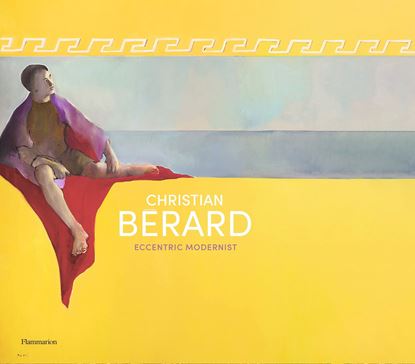
CHRISTIAN BERARD. ECCENTRIC MODERNIST
Christian Bérard worked freely in many artistic circles and fields as a painter, designer of theater and film sets and costumes, fashion designer, interior designer, masterful draftsman, and colorist. His iconic drawings epitomized the Paris fashion world and graced the covers of Vogue, Harper’s Bazaar, and Women’s Wear Daily in the 1920s and 1930s. Tracing his eccentric and colorful life of encounters and artistic partnerships with the greatest creatives of his time—Jean-Michel Frank, Christian Dior, Gabrielle Chanel, Jean Cocteau, Boris Kochno—this book includes more than two hundred of his paintings, drawings, photographs, intimate correspondences, and interior decorations, along with portraits of Bérard by Cartier-Bresson, Horst, and Schall.
1,500
1,125