



2,995
2,246
MARINA PEREZ SIMAO
The first international monograph of one of the most exciting painters working in Brazil today, Marina Perez Simão.
Marina Perez Simão (1981–) is an internationally recognized contemporary artist who uses a variety of techniques, such as collage, drawing, watercolor, and oil painting, as starting points to combine interior and exterior landscapes. She composes visual journeys that sometimes traverse the unknown, the abstract, and the nebulous, but which also include visions and memories.
Simão’s work is held in several public collections worldwide, including the Musée d’Art Moderne et Contemporain, in Saint-Étienne, France; the Ekard Collection in the Netherlands; the Samdani Art Foundation in Bangladesh; the Sifang Art Museum in China; the Speed Art Museum in Kentucky; and the Dallas Museum of Art, among others.
2,995
2,246
2,995
2,246
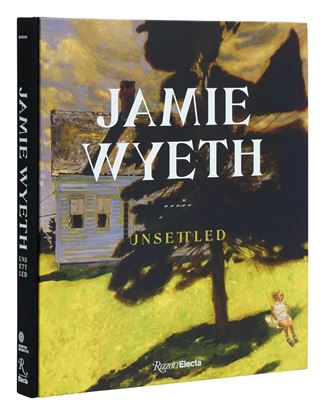
JAMIE WYETH. UNSETTLED
A major monograph of the American realist artist, descendant of one of America’s most revered artistic families, and painter of dark and uneasy subjects.
This book traces a persistent vein of intriguing, often disconcerting, imagery over the career of renowned artist Jamie Wyeth (b. 1946), famous for his hyperrealist paintings of farm animals and Maine lighthouses. The focus in this volume is on the chilling thread that runs through his work, present but not overwhelming, and ever-evolving with his style and subjects. Whether he is introducing curious characters or surveying strange landscapes, Wyeth is at home with uneasy subjects and a master of the unsettled mood
2,995
2,246
3,200
2,400
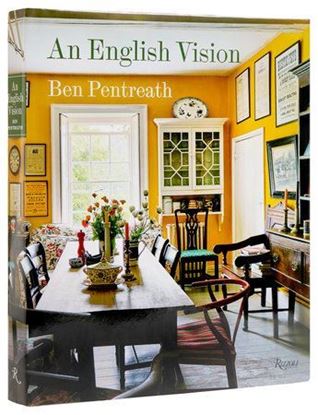
AN ENGLISH VISION
This is the first of Pentreath’s books to present his own output in its entirety—from his personal residences in Dorset, London, and Scotland that brought him international fame to many old and new houses that he has designed and some of the larger, town-scaled projects that make his practice unique in the world of traditional design. Although the results range from his colorful and romantic versions of the English country cottage to traditional splendor, there are underlying ideas that inform the breadth of his output—a sense of scale, proportion, craft, detail, sustainability, and appropriateness—that have a universal relevance today.
3,200
2,400
3,200
2,400
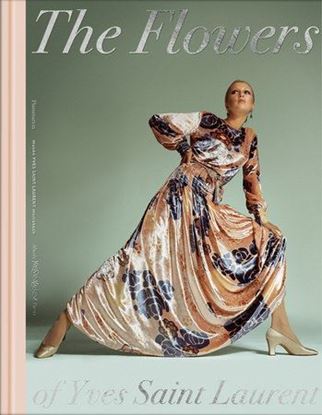
THE FLOWERS OF YVES SAINT LAURENT
Produced with the Yves Saint Laurent museums in Paris and Marrakech, this book examines how flowers served as the designer’s muse throughout his life and work.
Yves Saint Laurent’s passion for flowers and gardens was the source of endless inspiration. From a thousand and one rose buds to sprigs of lily of the valley, from an avalanche of bougainvillea to delicate poppy blooms, and from sheaves of wheat to majestic lilies, he metamorphosed nature in his creations. Employing flowers as a palette of patterns and techniques, he adorned women in floral appliqués, prints, and embroideries.
3,200
2,400

3,200
2,400
KARL LAGERFELD. A FASHION HISTORY
Ottavi enjoyed a rare degree of open and candid access to Lagerfeld in his later years, and this biography offers an unparalleled look into the iconic designer’s complex personality and wide-ranging creativity. Lagerfeld himself wanted this to be a frank, honest, serious account that would be an invaluable resource for fashion lovers and admirers of his incomparable legacy. Unlike other recent books, this intimate portrait deftly reveals his true inner nature in his own words.
3,200
2,400
3,300
2,475
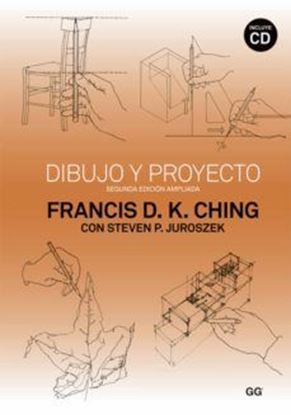
DIBUJO Y PROYECTO
El dibujo es una herramienta cognitiva y creativa fundamental a la hora de abordar el proyecto arquitectónico. Bajo esta premisa Francis D. K. Ching nos ofrece en este libro una guía de referencia con la que aprender a utilizar el dibujo como técnica para pensar el proyecto.Organizado en tres grandes bloques que pasan de lo más descriptivo a lo especulativo dibujo por observación, sistemas convencionales de representación gráfica y dibujo imaginativo, el libro explica paso a paso la gran multiplicidad de conceptos y técnicas que entran en juego en el dibujo arquitectónico: desde los principios básicos de la expresión gráfica (la línea, la forma, la sombra o el espacio), hasta los sistemas de representación más frecuentes (el sistema diédrico, la axonometría y la perspectiva cónica) o los innumerables conceptos y herramientas existentes (tales como el rayado, la orientación, la escala, la estratificación o la diagramación).Además de los 1.500 dibujos ilustrados a mano y los cerca de 140 ejercicios que incluye el libro, esta nueva edición ampliada incorpora técnicas de dibujo por ordenador e incluye un CD con tutoriales. El estudiante de arquitectura y el arquitecto encontrarán en estas páginas una ayuda práctica y didáctica no solo para representar los proyectos, sino también para pensar espacialmente.
3,300
2,475