

900
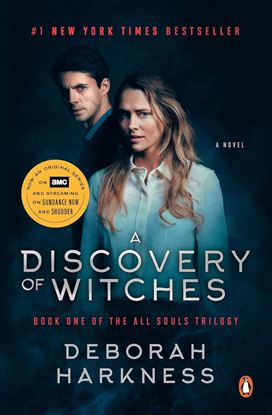
A DISCOVERY OF WITCHES (MOVIE-TI) (PB)
Deborah Harkness’s sparkling debut, A Discovery of Witches, has brought her into the spotlight and galvanized fans around the world. In this tale of passion and obsession, Diana Bishop, a young scholar and a descendant of witches, discovers a long-lost and enchanted alchemical manuscript, Ashmole 782, deep in Oxford's Bodleian Library. Its reappearance summons a fantastical underworld, which she navigates with her leading man, vampire geneticist Matthew Clairmont.
Harkness has created a universe to rival those of Anne Rice, Diana Gabaldon, and Elizabeth Kostova, and she adds a scholar's depth to this riveting tale of magic and suspense.
900
900
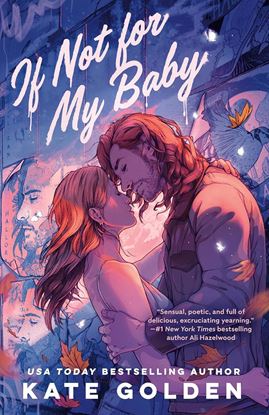
IF NOT FOR MY BABY
Clementine Clark isn’t looking for love. Growing up with a single mom who weeps over a new guy each week tends to have that effect on a girl. But Clementine doesn’t mind being the rational one—she’s even buried her musical dreams so deeply within herself that she hardly notices the hole it’s left in her life.
That is until her best friend calls her with a life-changing opportunity: to join Irish megastar Halloran on his first US tour as a backing vocalist. Clementine wants to reject the offer, but the pay is enough to change her and her mom’s life. Overnight, Clementine goes from serving enchiladas at the Happy Tortilla to belting high notes before a cheering crowd.
But the whiplash of trading small-town Texas for sold-out stadiumsis nothing compared to the rush of performing with the enigmatic Thomas Patrick Halloran. Poet, introvert, and lyrical genius, Halloran quickly gets under Clementine’s skin. The two couldn’t see the world more differently. And yet, over the course of the next eight weeks on tour, the romantic rockstar might just strike an unforgettable chord in Clementine. But will it be enough for an encore?
900
900
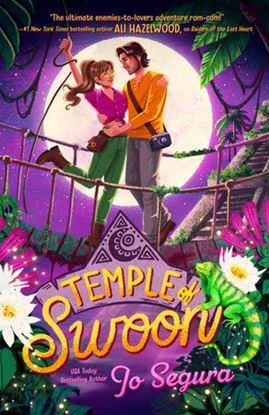
TEMPLE OF SWOON
While her mentor may be the world’s most badass archaeologist, the only thing bad about Dr. Miriam Jacobs are her corny jokes. But when Miri is charged with leading an unmapped expedition through the Amazon for the fabled Lost City of the Moon, she finally has her chance to prove to her colleagues that she’s capable—and hopefully prove it to herself, too.
Journalist Rafael Monfils has joined the archaeological team to chronicle their search for the lost city. Or at least, that’s what they think he’s doing. Rafa’s real goal? Make sure the team does not reach the Cidade da Lua, stopping the desecration of the holy city and protecting his mother’s legacy. All he needs to do is keep them on the wrong path.
900
900
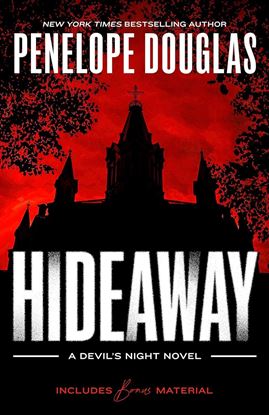
HIDEAWAY. DEVIL'S NIGHT 2
Buried in the shadows of the city, there’s an abandoned hotel called The Pope, surrounded by a mystery about the hidden twelfth floor and the guest who never checked out. Banks knows the local legend, but Kai Mori believes the myth around the hotel. He and his friends think they know her, think they can scare her, but Banks knows something they don’t. Even though she struggles to hide everything she feels when Kai looks at her, the person he seeks is much closer than he’ll ever realize.
900

900
BOOK BOYFRIEND
Jennifer Worth lives to escape into the world of her favorite romantasy series Elytheum Courts, where the romance is sweeping and the men are brave, chivalrous . . . and winged. Newly single and craving connection, she travels to an immersive fan experience celebrating all things Elytheum, only to see the last face she expected—Scott Daniels, her work nemesis, whose disinterest in Jennifer’s favorite series and standoffishness have made their publishing jobs feel like a feuding fae court.
Except the Scott she encounters at the Elytheum Experience, in his secondhand cosplay outfit, is . . . different. Swaggering, flirtatious, confident. Unlucky in romance himself and inspired by Jennifer’s love for the swoonworthy men of Elytheum, Scott is determined to remake himself into the perfect book boyfriend.
Jennifer has no interest in helping the man who vexes her every workday and dismisses her fictional fantasies, but as the immersive convention activities force them together, they’re surprised to discover magic like none Jennifer has ever read about. But is enemies-to-lovers romance only for books, or can Jennifer and Scott bring the trope to life?
900

900
FANG FICTION
he’s out for adventure. He’s out for blood.
Tess Rosenbloom is no stranger to the dark. An assault survivor and grad school dropout, Tess spends her nights managing a chic Brooklyn hotel and her days reading her favorite vampire novels, Blood Feud. She even dabbles in online conspiracies claiming Blood Feud is real—it’s fun to hunt for clues! But deep down, Tess doesn’t believe vampires actually exist . . . until one walks through her door.
It turns out the sexy villain of Blood Feud is trapped, and only Tess can rescue him. Eager to escape her life, Tess agrees to help, and soon she’s on a secret island where the sun never shines, surrounded by deadly vampires—and most terrifying of all, she's falling in love with one of them. (Meanwhile, back in New York, Tess’s estranged best friend is having a sapphic paranormal affair of her own.)
900