

950
LESSONS IN CHEMISTRY
Chemist Elizabeth Zott is not your average woman. In fact, Elizabeth Zott would be the first to point out that there is no such thing as an average woman. But it’s the early 1960s and her all-male team at Hastings Research Institute takes a very unscientific view of equality. Except for one: Calvin Evans; the lonely, brilliant, Nobel–prize nominated grudge-holder who falls in love with—of all things—her mind. True chemistry results.
But like science, life is unpredictable. Which is why a few years later Elizabeth Zott finds herself not only a single mother, but the reluctant star of America’s most beloved cooking show Supper at Six. Elizabeth’s unusual approach to cooking (“combine one tablespoon acetic acid with a pinch of sodium chloride”) proves revolutionary. But as her following grows, not everyone is happy. Because as it turns out, Elizabeth Zott isn’t just teaching women to cook. She’s daring them to change the status quo.
950
950
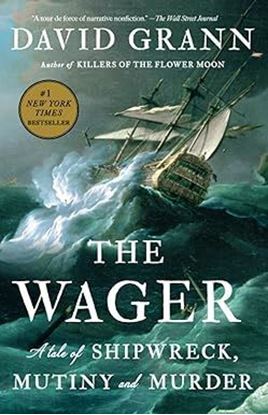
THE WAGER
On 28th January 1742, a ramshackle vessel of patched-together wood and cloth washed up on the coast of Brazil. Inside were thirty emaciated men, barely alive, and they had an extraordinary tale to tell. They were survivors of His Majesty’s ship The Wager, a British vessel that had left England in 1740 on a secret mission during an imperial war with Spain. While chasing a Spanish treasure-filled galleon, The Wager was wrecked on a desolate island off the coast of Patagonia. The crew, marooned for months and facing starvation, built the flimsy craft and sailed for more than a hundred days, traversing 2,500 miles of storm-wracked seas. They were greeted as heroes.
Then, six months later, another, even more decrepit, craft landed on the coast of Chile. This boat contained just three castaways and they had a very different story to tell. The thirty sailors who landed in Brazil were not heroes – they were mutineers. The first group responded with counter-charges of their own, of a tyrannical and murderous captain and his henchmen. While stranded on the island the crew had fallen into anarchy, with warring factions fighting for dominion over the barren wilderness. As accusations of treachery and murder flew, the Admiralty convened a court martial to determine who was telling the truth. The stakes were life-and-death—for whomever the court found guilty could hang.
950

950
THE CULTURE PLAYBOOK
As an entrepreneur and founder of an investment bank led by women, | found The Culture Playbook to be an invaluable asset, providing tools and techniques as 1 work to unleash my team's full power and potential in an ever-evolving workplace. Daniel Coyle has given us all a game plan for success.”
950

950
THE RULE BOOK
Nora Mackenzie’s entire career lies in the hands of famous NFL tight end Derek Pender, who also happens to be her extremely hot college ex-boyfriend. Nora didn’t end things as gracefully as she could have back then, and now it has come back to haunt her. Derek is her first client as an official full-time sports agent and he’s holding a grudge.
Derek has set his sights on a little friendly revenge. If Nora Mackenzie, the first girl to ever break his heart, wants to be his agent, oh, he’ll let her be his agent. The plan is simple: make Nora’s life absolutely miserable. But if Derek knows anything about the woman he once loved—she won’t quit easily.
950
950
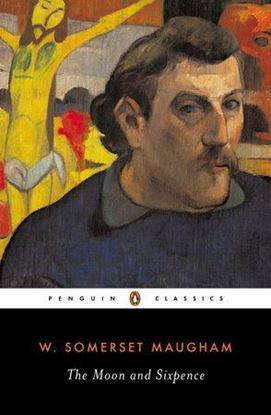
THE MOON AND SIXPENCE
The Moon and Sixpence follows the life of one Charles Strickland, a bourgeois city gent whose dull exterior conceals the soul of a genius. Compulsive and impassioned, he abandons his home, wife, and children to devote himself slavishly to painting. In a tiny studio in Paris, he fills canvas after canvas, refusing to sell or even exhibit his work. Beset by poverty, sickness, and his own intransigent, unscrupulous nature, he drifts to Tahiti, where, even after being blinded by leprosy, he produces some of his most extraordinary works of art. Inspired by the life of Paul Gauguin, The Moon and Sixpence is an unforgettable study of a man possessed by the need to create—regardless of the cost to himself and to others.
For more than seventy years, Penguin has been the leading publisher of classic literature in the English-speaking world. With more than 1,700 titles, Penguin Classics represents a global bookshelf of the best works throughout history and across genres and disciplines. Readers trust the series to provide authoritative texts enhanced by introductions and notes by distinguished scholars and contemporary authors, as well as up-to-date translations by award-winning translators.
950
950
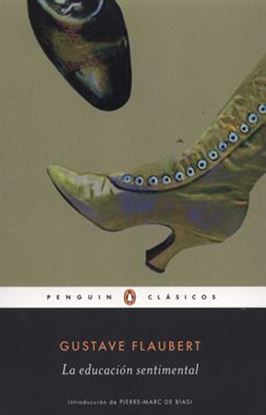
LA EDUCACION SENTIMENTAL
Los mejores libros jamás escritos. «No leáis La educación sentimental como los niños: por diversión; ni por instrucción, como los ambiciosos. Leedla para vivir.» Gustave Flaubert
La historia de un ambicioso joven de provincias que se enamora de una mujer casada sirvió a Flaubert para crear uno de los hitos estilísticos de la literatura universal, La educación sentimental (1869), quizá su obra maestra, sin duda una de las novelas más perdurables de todos los tiempos.En la cubierta del barco que le lleva de París a su ciudad natal, Frédéric Moreau se quedará prendado de la belleza de la señora Arnoux. Este será el punto de arranque de las tribulaciones de un joven que sueña con alcanzar fama y fortuna y que, de regreso a París, frecuentará al señor Arnoux para estar cerca de su secreto amor. Todo ello tendrá lugar en un escenario esplendoroso, el París de mediados del siglo XIX, la capital de la burguesía emergente, donde la intensidad del placer se mezcla con el inevitable tedio y el resplandor de uno de los periodos cruciales de la historia europea: la revolución de 1848.Esta edición, que presentamos en una traducción coetánea -modernizada- que conserva todo el vigor del original, se abre con un estudio de Pierre-Marc de Biasi, reconocido experto en la obra de Flaubert. A modo de apéndice se facilita una cronología de la redacción de la novela, campo recurrente, el de la genética textual, para comprender las cotas de perfección que alcanzó el autor. «Todas las calles conducían a su casa; los coches se estacionaban en las plazas, únicamente para ir allá más deprisa.»
950