


650
THE LORD OF THE RINGS. PART. 3 (MM)
While the evil might of the Dark Lord Sauron swarms out to conquer all Middle-earth, Frodo and Sam struggle deep into Mordor, seat of Sauron’s power. To defeat the Dark Lord, the One Ring, ruler of the accursed Rings of Power, must be destroyed in the fires of Mount Doom. But the way is impossibly hard, and Frodo is weakening. Weighed down by the compulsion of the Ring, he begins finally to despair.
650

650
THE LORD OF THE RINGS. PART. 2 (MM)
The second part of J.R.R. Tolkien’s epic adventure The Lord of the Rings.
The Fellowship is scattered. Some brace hopelessly for war against the ancient evil of Sauron. Others must contend with the treachery of the wizard Saruman. Only Frodo and Sam are left to take the One Ring, ruler of the accursed Rings of Power, to be destroyed in Mordor, the dark realm where Sauron is supreme. Their guide is Gollum, deceitful and obsessive slave to the corruption of the Ring.
650
700
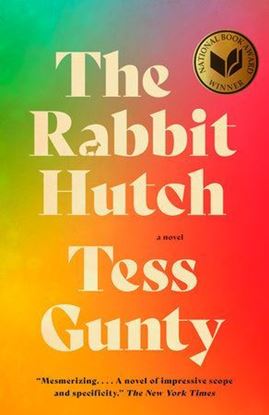
THE RABBIT HUTCH
The automobile industry has abandoned Vacca Vale, Indiana, leaving its residents behind, too. In a run-down apartment building on the edge of town, commonly known as the Rabbit Hutch, lives one of these people, a young girl named Blandine Watkins, who The Rabbit Hutch centers around. Hauntingly beautiful and unnervingly bright, Blandine lives alongside three teenage boys, all recently aged out of the state foster-care system, all of them madly in love with Blandine. Plagued by the structures, people, and places that not only failed her but actively harmed her, Blandine pays no mind to their affection. All she wants is an escape, a true bodily escape like the mystics describe in the books she reads.
700

700
TRUE BIZ
True biz? The students at the River Valley School for the Deaf just want to hook up, pass their history finals, and have politicians, doctors, and their parents stop telling them what to do with their bodies. This revelatory novel plunges readers into the halls of a residential school for the deaf, where they’ll meet Charlie, a rebellious transfer student who’s never met another deaf person before; Austin, the school’s golden boy, whose world is rocked when his baby sister is born hearing; and February, the hearing headmistress, a CODA (child of deaf adult(s)) who is fighting to keep her school open and her marriage intact, but might not be able to do both. As a series of crises both personal and political threaten to unravel each of them, Charlie, Austin, and February find their lives inextricable from one another—and changed forever.
700
700
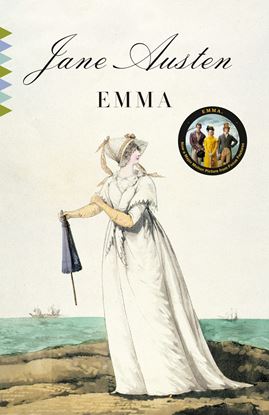
EMMA (ING) (VINTAGE CLASSIC)
A Vintage Classics edition of Jane Austen’s revolutionary and inspiring novel
Twenty-one-year-old Emma Woodhouse is comfortably dominating the social order in the village of Highbury, convinced that she has both the understanding and the right to manage other people’s lives—for their own good, of course. Her well-meant interfering centers on the aloof Jane Fairfax, the dangerously attractive Frank Churchill, the foolish if appealing Harriet Smith, and the ambitious young vicar Mr. Elton—and ends with her complacency shattered, her mind awakened to some of life’s more intractable dilemmas, and her happiness assured.
Austen’s comic imagination was so deft and beautifully fluent that she could use it to probe the deepest human ironies while setting before us a dazzling gallery of characters—some pretentious or ridiculous, some admirable and moving, all utterly true.
700
700
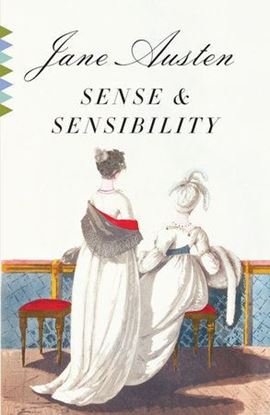
SENSE AND SENSIBILITY (VINTAGE CLASSIC)
In its marvelously perceptive portrayal of two young women in love, Sense and Sensibility is the answer to those critics and readers who believe that Jane Austen's novels, despite their perfection of form and tone, lack strong feeling. Its two heroines--so utterly unlike each other-both undergo the most violent passions when they are separated from the men they love. What differentiates them, and gives this extroardinary book its complexity and brilliance, is the way each expresses her suffering: Marianne-young, impetuous, ardent-falls into paroxysms of grief when she is rejected by the dashing John Willoughby; while her sister, Elinor--wiser, more sensible, more self-controlled--masks her despair when it appears that Edward Ferrars is to marry the mean-spirited and cunning Lucy Steele. All, of course, ends happily--but not until Elinor's "sense" and Marianne's "sensibility" have equally worked to reveal the profound emotional life that runs beneath the surface of Austen's immaculate and irresistible art.
700