

1,150
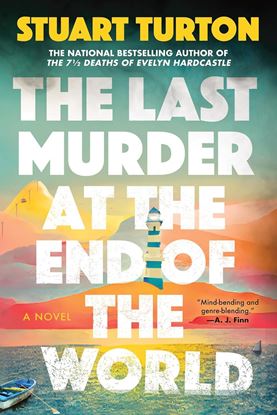
THE LAST MURDER AT THE END OT THE WORLD
Solve the murder to save what's left of the world.
Outside the island there is nothing: the world was destroyed by a fog that swept the planet, killing anyone it touched.
On the island: it is idyllic. One hundred and twenty-two villagers and three scientists, living in peaceful harmony. The villagers are content to fish, farm and feast, to obey their nightly curfew, to do what they're told by the scientists.
Until, to the horror of the islanders, one of their beloved scientists is found brutally stabbed to death. And then they learn that the murder has triggered a lowering of the security system around the island, the only thing that was keeping the fog at bay. If the murder isn't solved within 107 hours, the fog will smother the island―and everyone on it.
But the security system has also wiped everyone's memories of exactly what happened the night before, which means that someone on the island is a murderer―and they don't even know it.
And the clock is ticking.
1,150
1,150
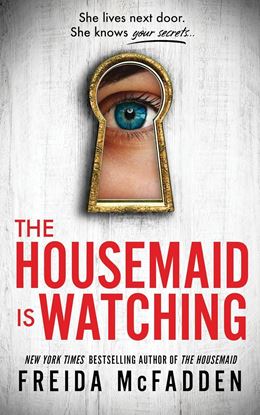
THE HOUSEMAID IS WATCHING
I used to clean other people's houses―now, I can't believe this home is actually mine. The charming kitchen, the quiet cul-de-sac, the huge yard where my kids can play. My husband and I saved for years to give our children the life they deserve.
Even though I'm wary of our new neighbor Mrs. Lowell, when she invites us over for dinner it's our chance to make friends. Her maid opens the door wearing a white apron, her hair in a tight bun. I know exactly what it's like to be in her shoes. But her cold stare gives me chills…
The Lowells' maid isn't the only strange thing on our street. I'm sure I see a shadowy figure watching us. My husband leaves the house late at night. And when I meet a woman who lives across the way, her words chill me to the bone: Be careful of your neighbors.
Did I make a terrible mistake moving my family here?
1,150
1,150
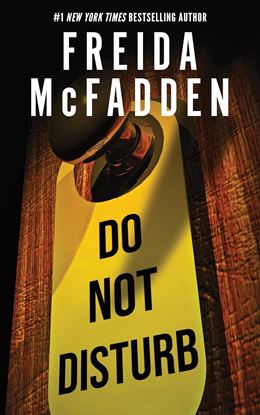
DO NOT DISTURB
Quinn Alexander has committed an unthinkable crime.
To avoid spending her life in prison, Quinn makes a run for it. She leaves behind her home, her job, and her family. She grabs her passport and heads for the northern border before the police can discover what she's done.
But when an unexpected snowstorm forces her off the road, Quinn must take refuge at the broken-down, isolated Baxter Motel. The handsome and kindly owner, Nick Baxter, is only too happy to offer her a cheap room for the night.
Unfortunately, the Baxter Motel isn't the quiet, safe haven it seemed to be. The motel has a dark and disturbing past. And in the dilapidated house across the way, the silhouette of Nick's ailing wife is always at the window. Always watching.
In the morning, Quinn must leave the motel. She'll pack up her belongings and get back on the road to freedom.
1,150
1,150
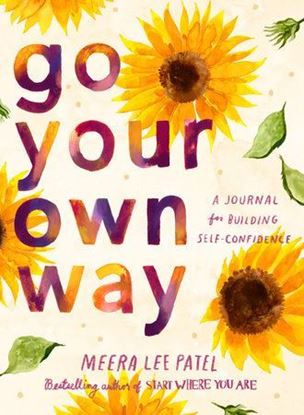
GO YOUR OWN WAY
Even in the best of times, it’s easy to lose your way. In this vividly illustrated journal, you’ll find support, inspiration, and thought-provoking questions to help you gain clarity and strength in the face of life’s challenges. Popular artist and author Meera Lee Patel brings together powerful quotes and insights that reframe the experience of being different in order to more fully embrace who we are and where we want to go next.
1,150

1,150
THE WORLD AFTER ALICE
When Morgan and Benji surprise their families with a wedding invitation to Maine, they’re aware the news of their clandestine relationship will come as a shock. Twelve years have passed since the stunning loss of sixteen-year-old Alice, Benji’s sister and Morgan’s best friend, and no one is quite the same. But the young couple decide to plunge headlong into matrimony, marking the first time their fractured families will reunite since Alice’s funeral.
As the arriving guests descend upon the tranquil coastal town, they bring with them not only skepticism about the impromptu nuptials but also deep-seated secrets and agendas of their own. Peter, Morgan’s father, may be trying to dissuade his daughter from saying “I do,” while Linnie, Benji’s mother, introduces a boyfriend who bears a tumultuous past of his own. Nick, Benji’s father, is scheming to secure a new job before his wife—formerly his mistress—discovers he’s lost his old one. Morgan, too, carries delicate secrets that threaten to jeopardize the happiness for which she has so longed. And as for Benji—well, he’s just trying to make sure the whole weekend doesn’t implode.
1,150

1,150
MARIA
In the 1950s, Oscar Hammerstein is asked to write the lyrics to a musical based on the life of a woman named Maria von Trapp. He’s intrigued to learn that she was once a novice who hoped to live quietly as an Austrian nun before her abbey sent her away to teach a widowed baron’s sickly child. What should have been a ten-month assignment, however, unexpectedly turned into a marriage proposal. And when the family was forced to flee their home to escape the Nazis, it was Maria who instructed them on how to survive using nothing but the power of their voices.
It’s an inspirational story, to be sure, and as half of the famous Rodgers & Hammerstein duo, Hammerstein knows it has big Broadway potential. Yet much of Maria’s life will have to be reinvented for the stage, and with the horrors of war still fresh in people’s minds, Hammerstein can’t let audiences see just how close the von Trapps came to losing their lives.
But when Maria sees the script that is supposedly based on her life, she becomes so incensed that she sets off to confront Hammerstein in person. Told that he’s busy, she is asked to express her concerns to his secretary, Fran, instead. The pair strike up an unlikely friendship as Maria tells Fran about her life, contradicting much of what will eventually appear in The Sound of Music.
A tale of love, loss, and the difficult choices that we are often forced to make, Maria is a powerful reminder that the truth is usually more complicated—and certainly more compelling—than the stories immortalized by Hollywood.
1,150