
900
720
AMULETO (BOL)
Auxilio Lacouture se considera a sí misma «la madre de todos los mexicanos» y «la madre de la poesía mexicana». Uruguaya de nacimiento, residente de México D.F., abonada a los trabajos humildes y esporádicos durante el día, incansablemente inmersa en la bohemia nocturna de la ciudad, todo cambia para ella el 18 de septiembre de 1968, cuando el ejército toma posesión del campus de la Universidad Nacional Autónoma de México y ella queda encerrada en los baños de la facultad de filosofía y letras.
A lo largo de trece días de encierro y aislamiento forzado, por sus ojos transitan la poetisa Lilian Serpes, amante a su vez del Che Guevara; los poetas españoles León Felipe y Pedro Garfias; el malogrado alter ego de Bolaño Arturo Belano. De este modo, Auxilio reflexiona sobre la senda y los pasos dejados atrás y los que, aún y cada vez más, restan sumidos en las sombras de un país de incierto futuro.
900
720

900
720
LOS MUCHACHOS DE ZINC (BOL)
Entre 1979 y 1989 un millón de tropas soviéticas combatieron en una guerra devastadora en Afganistán que provocó más de 50.000 bajas y acabó con la juventud y la humanidad de varias decenas de miles de soldados más. Los muertos soviéticos volvían a casa en ataúdes de zinc sellados mientras el estado no reconocía ni la mera existencia del conflicto.Los muchachos de zinc generó una inmensa polémica y mucha indignación cuando fue publicada originalmente en la URSS: las críticas acusaron a su autora de haber escrito un «texto fantasioso lleno de injurias» y de ser parte de «un coro histérico de ataques malignos». En el libro, Svetlana Alexiévich presenta el testimonio cándido y emocionante de los oficiales y los soldados rasos, de las enfermeras y las prostitutas, las madres, los hijos y las hijas que describen la guerra y sus duraderos efectos. El resultado es una historia turbadora por su brutalidad y reveladora en su parecido a la experiencia estadounidense en Vietnam y más tarde en Irak y el mismo Afganistán.
900
720
900
720
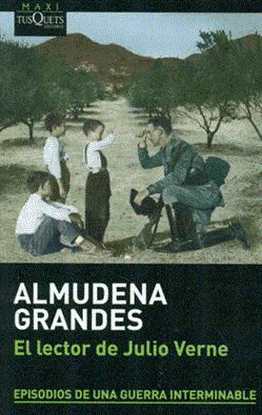
EL LECTOR DE JULIO VERNE (MAXI) (BOL)
Nino, hijo de guardia civil, tiene nueve años, vive en la casa cuartel de un pueblo de la Sierra Sur de Jaén, y nunca podrá olvidar el verano de 1947. Pepe el Portugués, el forastero misterioso, fascinante, que acaba de instalarse en un molino apartado, se convierte en su amigo y su modelo, el hombre en el que le gustaría convertirse alguna vez. Mientras pasan juntos las tardes a la orilla del río, Nino se jurará a sí mismo que nunca será guardia civil como su padre, y comenzará a recibir clases de mecanografía en el cortijo de las Rubias, donde una familia de mujeres solas, viudas y huérfanas, resiste en la frontera entre el monte y el llano. Mientras descubre un mundo nuevo gracias a las novelas de aventuras que le convertirán en otra persona, Nino comprende una verdad que nadie había querido contarle. En la Sierra Sur se está librando una guerra, pero los enemigos de su padre no son los suyos. Tras ese verano, empezará a mirar con otros ojos a los guerrilleros liderados por Cencerro, y a entender por qué su padre quiere que aprenda mecanografía.
900
720

900
720
CONSEJOS DE DISCIPULO DE MORRISON (BOL)
Ángel Ros se encuentra atrapado, incapaz de elegir entre los dos polos opuestos de su vida. Por un lado, su pasión por la sudamericana Ana Ríos Ricardi, su pareja, con la que se entrega a las aventuras más salvajes; por el otro, su proyecto inacabado, la obra Cant de Dèdalus anunciant fi. Por un lado, la música y la psicodelia desatadas; por el otro, la quietud del pensamiento bien razonado. Por un lado, The Doors y Jim Morrison, y, por el otro, James Joyce. Así pues, los lances, teñidos de violencia y fiereza, se entretejen con las hondas reflexiones que el protagonista y relator de la novela dedica al quehacer literario hasta disolverse en una misma realidad. Situada en Barcelona, Consejos de un discípulo de Morrison a un fanático de Joyce supone el debut narrativo de Roberto Bolaño, que deja apuntadas entre líneas tanto su propia experiencia vital como los caminos que iba a recorrer su literatura. La edición se completa con el cuento Diario de bar, escrito también por ambos autores, y un prólogo de A. G. Porta en el que relata la experiencia de escritura a cuatro manos junto a Roberto Bolaño.
900
720

900
720
SE BUSCA UNA MUJER (CM)
En este libro ambientado en Los Ángeles se nota la continua presencia de la gran urbe en toda la escritura de Charles Bukowski, ciudad infernal, a pesar de estar situada en medio del paraíso californiano, sueño de todo pobre ciudadano USA, con sus naranjas, su sol y su vino, vino del que Bukowski da buena cuenta toda su vida, como el whisky, como la cerveza, que habrán de ser, inevitablemente, su fuente de inspiración.
Bukowski toma una actitud de ermitaño loco, de lucidez exasperada, de humorista borracho en la barra de un bar solitario. Se ríe de todo, trata de ganar algo de dinero para un trago o una puta sin trabajar mucho, frecuenta otras ratas urbanas enloquecidas, odia a la humanidad, se encierra en su habitación y se entretiene en contarnos las historias que le ocurren o se le ocurren.
900
720

900
720
EL HABLADOR (BOL)
«La imagen de esos primitivos habladores que recorrían los bosques llevando historias de aldea en aldea me acompañó urgiéndome cada día más a fantasear una historia a partir de ellos.»Mario Vargas Llosa. En El hablador Mario Vargas Llosa contrapone con extraordinario virtuosismo técnico dos mundos que parecen vivir enfrentados, el de las sociedades modernas y el de los pueblos que viven en armonía con la naturaleza. A su vez conduce al lector a un viaje vertiginoso por el imaginario colectivo de los indios machiguengas, que le sirve para desarrollar, una vez más, una de sus obsesiones: el papel de la ficción en la vida de los hombres.
900
720