

1,850
1,480
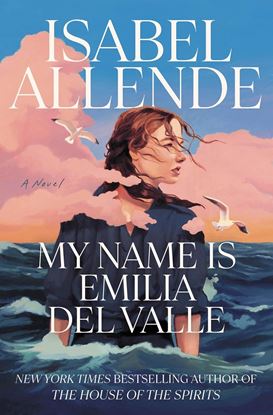
MY NAME IS EMILIA DEL VALLE (HC)
In San Francisco in 1866, an Irish nun, abandoned following a torrid relationship with a Chilean aristocrat, gives birth to a daughter named Emilia del Valle. Raised by a loving stepfather, Emilia grows into an independent thinker and a self-sufficient young woman.
To pursue her passion for writing, she is willing to defy societal norms. At the age of seventeen, she begins to publish pulp fiction using a man’s pen name. When these fictional worlds can no longer satisfy her sense of adventure, she turns to journalism, convincing an editor at The Daily Examiner to hire her. There she is paired with another talented reporter, Eric Whelan.
1,850
1,480

900
720
MY RETURN TO THE WALTER BOYS
Jackie Howard returns to the Walter ranch after a summer in New York. She needed space―and got it. But she doesn't know where things stand with her and Cole Walter after that goodbye kiss. Over the summer, she stopped texting him. She never stopped thinking about him.
Still, with Cole living off in town to work at Tony's garage before he heads off to college, Jackie thinks it'll be easy to avoid him―only to find that when she sees him face to face at last, it's, well... impossible to resist him. Things are getting complicated: he's the boy she can't get off her mind, and the Walters have become the family she loves and needs. How can Jackie move forward when she's afraid of taking the next step?
900
720
1,200
960
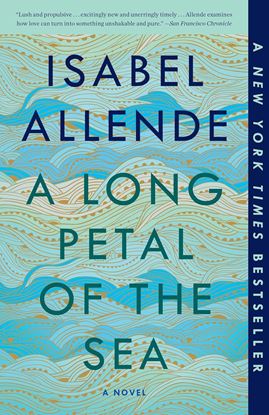
A LONG PETAL OF THE SEA (PB)
In the late 1930s, civil war grips Spain. When General Franco and his Fascists succeed in overthrowing the government, hundreds of thousands are forced to flee in a treacherous journey over the mountains to the French border. Among them is Roser, a pregnant young widow, who finds her life intertwined with that of Victor Dalmau, an army doctor and the brother of her deceased love. In order to survive, the two must unite in a marriage neither of them desires.
Together with two thousand other refugees, Roser and Victor embark on the SS Winnipeg, a ship chartered by the poet Pablo Neruda, to Chile: “the long petal of sea and wine and snow.” As unlikely partners, the couple embraces exile as the rest of Europe erupts in world war. Starting over on a new continent, they face trial after trial, but they will also find joy as they patiently await the day when they might go home. Through it all, their hope of returning to Spain keeps them going.
1,200
960

1,350
1,080
GREAT BIG BEAUTIFUL LIFE
ALICE SCOTT is an eternal optimist still dreaming of her big writing break. Hayden Anderson is a Pulitzer Prize-winning human thundercloud. And they're both on balmy Little Crescent Island for the same reason: to write the biography of a woman no one has seen in years or at least to meet with the octogenarian who claims to be the Margaret Ives. Tragic heiress, former tabloid princess, and daughter of one of the most storied (and scandalous) families of the twentieth century. When Margaret invites them both for a one-month trial period, after which she'll choose the person.who'll tell her story, there are three things keeping Alice's head in the game. One: Alice genuinely likes people, which means people usually like Alice—and she has a whole month to win the legendary woman over. Two: she's ready for this job and the chance to impress her perennially unimpressed family with a Serious Publication. | Three: Hayden Anderson, who should have no reason to be concerned about losing this book, is glowering at her in a shaken-to-the core way that suggests he sees her as competition.
1,350
1,080
1,250
1,000
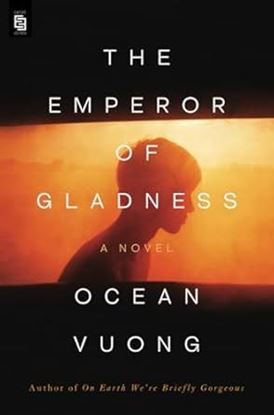
THE EMPEROR OF GLADNESS
One late summer evening in the post-industrial town of East Gladness, Connecticut, nineteen-year-old Hai stands on the edge of a bridge in pelting rain, ready to jump, when he hears someone shout across the river.
1,250
1,000
1,450
1,160
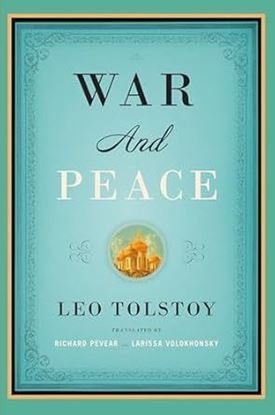
WAR AND PEACE (VINTAGE CLASSIC)
Pierre Bezukhov, the illegitimate son of a count who is fighting for his inheritance and yearning for spiritual fulfillment; Prince Andrei Bolkonsky, who leaves behind his family to fight in the war against Napoleon; and Natasha Rostov, the beautiful young daughter of a nobleman, who intrigues both men. As Napoleon’s army invades, Tolstoy vividly follows characters from diverse backgrounds—peasants and nobility, civilians and soldiers—as they struggle with the problems unique to their era, their history, and their culture.
1,450
1,160