



900
720
THE TEMPORARY ROOMIE
No one said fair trade needed to be “fair.”
As the owner of Honeysuckle Salon, Jessie Barnes usually has everything managed and on track, but now in her third trimester of an unexpected pregnancy, she feels a bit lost and increasingly desperate after faulty plumbing floods her apartment. Unfortunately, her knight in shining armor is actually Dr. Drew Marshall, her best friend’s brother, and he’s also the man she chewed out not too long ago for being a chauvinistic dirtbag.
Every moment Drew’s had to prove her wrong since then has failed, so Jessie’s opinion of him hasn’t improved. That remains the case when he agrees to let her stay with him during renovations, under one condition: She pretends to be his girlfriend for upcoming work festivities. For the sake of her brother, Jessie is willing to make the tough situation work, and giving Drew a taste of his own medicine sounds . . . intriguing.
But when their rivalry sparks a deeper connection, Jessie’s future becomes even more unclear—and with a baby on the way, she’ll have to make a decision soon.
900
720

900
720
TEMPLE OF SWOON
While her mentor may be the world’s most badass archaeologist, the only thing bad about Dr. Miriam Jacobs are her corny jokes. But when Miri is charged with leading an unmapped expedition through the Amazon for the fabled Lost City of the Moon, she finally has her chance to prove to her colleagues that she’s capable—and hopefully prove it to herself, too.
Journalist Rafael Monfils has joined the archaeological team to chronicle their search for the lost city. Or at least, that’s what they think he’s doing. Rafa’s real goal? Make sure the team does not reach the Cidade da Lua, stopping the desecration of the holy city and protecting his mother’s legacy. All he needs to do is keep them on the wrong path.
900
720
995
796
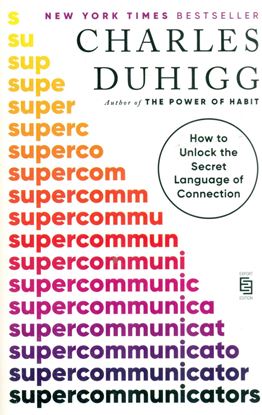
SUPERCOMMUNICATORS
Come inside a jury room as one juror leads a starkly divided room to consensus. Join a young CIA officer as he recruits a reluctant foreign agent. And sit with an accomplished surgeon as he tries, and fails, to convince yet another cancer patient to opt for the less risky course of treatment. In Supercommunicators, Charles Duhigg blends deep research and his trademark storytelling skills to show how we can all learn to identify and leverage the hidden layers that lurk beneath every conversation. Communication is a superpower and the best communicators understand that whenever we speak, we’re actually participating in one of three conversations: practical (What’s this really about?), emotional (How do we feel?), and social (Who are we?). If you don’t know what kind of conversation you’re having, you’re unlikely to connect.
995
796
1,995
1,596
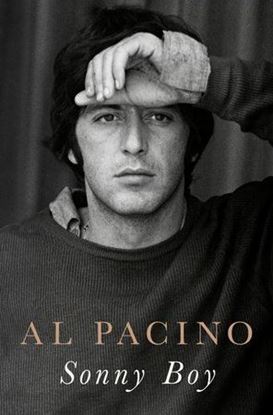
SONNY BOY
To the wider world, Al Pacino exploded onto the scene like a supernova. He landed his first leading role, in The Panic in Needle Park, in 1971, and by 1975, he had starred in four movies—The Godfather and The Godfather Part II, Serpico, and Dog Day Afternoon—that were not just successes but landmarks in the history of film. Those performances became legendary and changed his life forever. Not since Marlon Brando and James Dean in the late 1950s had an actor landed in the culture with such force.
1,995
1,596
1,995
1,596
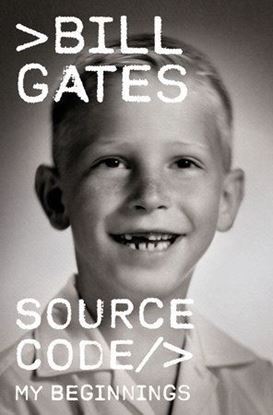
SOURCE CODE
Everyone is programmed a little differently, and Bill Gates' unique insight led to business triumphs that are now widely known: the twenty-year-old who dropped out of Harvard to start a software company that became an industry giant and changed the way the world works and lives; the billionaire many times over who turned his attention to philanthropic pursuits to address climate change, global health, and U.S. education.
Source Code is not about Microsoft or the Gates Foundation or the future of technology. It’s the human, personal story of how Bill Gates became who he is today: his childhood, his early passions and pursuits. It’s the story of his principled grandmother and ambitious parents, his first deep friendships and the sudden death of his best friend; of his struggles to fit in and his discovery of a world of coding and computers in the dawn of a new era; of embarking in his early teens on a path that took him from midnight escapades at a nearby computer center to his college dorm room, where he sparked a revolution that would change the world.
Bill Gates tells this, his own story, for the first time: wise, warm, revealing, it’s a fascinating portrait of an American life.
1,995
1,596
1,750
1,400
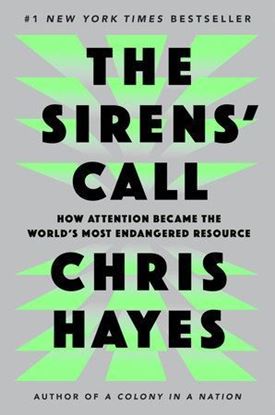
THE SIRENS' CALL
We all feel it—the distraction, the loss of focus, the addictive focus on the wrong things for too long. We bump into the zombies on their phones in the street, and sometimes they’re us. We stare in pity at the four people at the table in the restaurant, all on their phones, and then we feel the buzz in our pocket. Something has changed utterly: for most of human history, the boundary between public and private has been clear, at least in theory. Now, as Chris Hayes writes, “With the help of a few tech firms, we basically tore it down in about a decade.” Hayes argues that we are in the midst of an epoch-defining transition whose only parallel is what happened to labor in the nineteenth century: attention has become a commodified resource extracted from us, and from which we are increasingly alienated. The Sirens’ Call is the big-picture vision we urgently need to offer clarity and guidance.
1,750
1,400