1,150
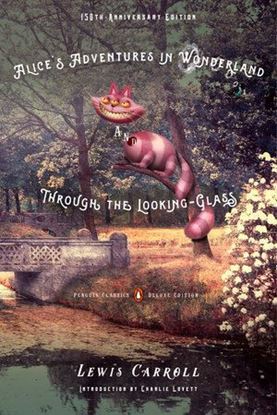
ALICE S ADVENTURE IN WONDERLA (DELUXE)
Original, experimental, and unparalleled in their charm, Lewis Carroll’s Alice’s Adventures in Wonderland and Through the Looking-Glass and What Alice Found There have enchanted readers for generations. The topsy-turvy dream worlds of Wonderland and the Looking-Glass realm are full of the unexpected: A baby turns into a pig, time stands still at a “mad” tea-party, and a chaotic game of chess turns seven-year-old Alice into a queen. These unforgettable tales—filled with sparkling wordplay and unbridled imagination—balance joyous nonsense with poignant moments of longing for the lost innocence of childhood.
1,150
1,250
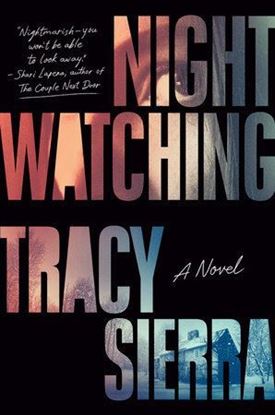
NIGHTWATCHING
Home alone with her young children during a blizzard, a mother tucks her son back into bed in the middle of the night. She hears a noise—old houses are always making some kind of noise. But this sound is disturbingly familiar: it’s the tread of footsteps, unusually heavy and slow, coming up the stairs.
She sees the figure of a man appear down the hallway, shrouded in the shadows. Terrified, she quietly wakes her children and hustles them into the oldest part of the house, a tiny, secret room concealed behind a wall. There they hide as the man searches for them, trying to tempt the children out with promises and scare the mother into surrender.
In the suffocating darkness, the mother struggles to remain calm, to plan. Should she search for a weapon or attempt escape? But then she catches another glimpse of him. That face. That voice. And at once she knows her situation is even more dire than she’d feared, because she knows exactly who he is—and what he wants.
1,250
950
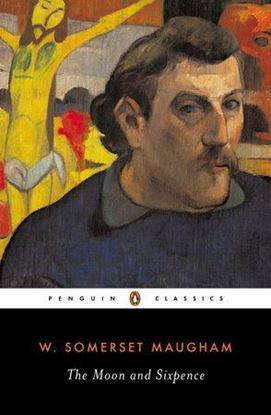
THE MOON AND SIXPENCE
The Moon and Sixpence follows the life of one Charles Strickland, a bourgeois city gent whose dull exterior conceals the soul of a genius. Compulsive and impassioned, he abandons his home, wife, and children to devote himself slavishly to painting. In a tiny studio in Paris, he fills canvas after canvas, refusing to sell or even exhibit his work. Beset by poverty, sickness, and his own intransigent, unscrupulous nature, he drifts to Tahiti, where, even after being blinded by leprosy, he produces some of his most extraordinary works of art. Inspired by the life of Paul Gauguin, The Moon and Sixpence is an unforgettable study of a man possessed by the need to create—regardless of the cost to himself and to others.
For more than seventy years, Penguin has been the leading publisher of classic literature in the English-speaking world. With more than 1,700 titles, Penguin Classics represents a global bookshelf of the best works throughout history and across genres and disciplines. Readers trust the series to provide authoritative texts enhanced by introductions and notes by distinguished scholars and contemporary authors, as well as up-to-date translations by award-winning translators.
950

1,250
NIGHT FLIGHT TO PARIS
October 1942: it’s been two years since Kate Rees was sent to Paris on a British Secret Service mission to assassinate Hitler. Since then, she has left spycraft behind to take a training job as a sharpshooting instructor in the Scottish Highlands. But her quiet life is violently disrupted when Colonel Stepney, her former handler, drags her back into the fray for a risky three-pronged mission in Paris.
Each task is more dangerous than the next: Deliver a package of forbidden biological material. Assassinate a high-ranking German operative whose knowledge of invasion plans could turn the tide of the war against the Allies. Rescue a British agent who once saved Kate’s life—and get out.
Kate will encounter sheiks and spies, poets and partisans, as she races to keep up with the constantly shifting nature of her assignment, showing every ounce of her Oregonian grit in the process.
1,250
1,250
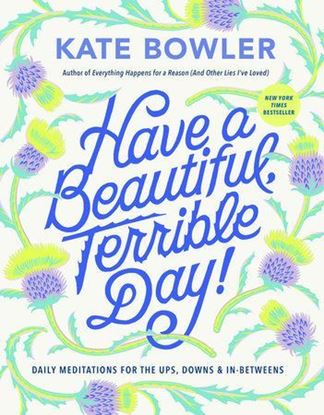
HAVE A BEAUTIFUL, TERRIBLE DAY!
Kate Bowler believes that the cultural pressure to be cheerful and optimistic at all times has taken a toll on our faith. But what if we could find better language than forced positivity to express our hopes and our anxieties?
Have a Beautiful, Terrible Day! is packed with bite-size reflections and action-oriented steps to help you get through the day, be it good, bad, or totally mediocre. This is a devotional for the rest of us—which is to say, the people who don’t have magical lives that always work out for the best. As she composed these meditations during a season of chronic pain, Bowler understands how every day can be an obstacle course. She encourages us to develop our capacity to feel the breadth of our experiences. The better we are at identifying our highs and lows, the more resilient we become.
Like modern-day psalms, Bowler’s spiritual reflections look for the ways we can expand our capacity for courage, love, and honesty—while discovering divine moments with God. With bonus sections to use during the seasons of Advent and Lent, this is an easy book to read along with other people too.
If you want to build your daily habit of spiritual attentiveness, this book is here to say: May all your days be lovely. But for those that aren’t, have a beautiful, terrible day!
1,250
2,500
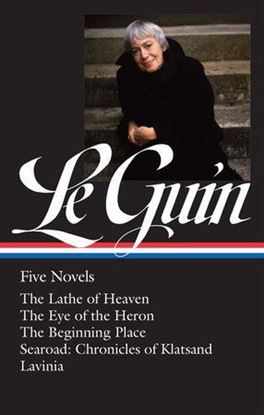
LE GUIN: FIVE NOVELS (LOA #379)
This 7th volume in the definitive Library of America edition of Ursula K. Le Guin’s works presents 5 remarkable standalone novels that showcase her boundless creativity and literary range.
In the Locus Award–winning The Lathe of Heaven (1971), one of Le Guin’s most admired works of science fiction, George Orr begins have effective dreams: dreams that change reality itself. But when he turns to the sleep researcher William Haber for help, the doctor sees an opportunity to use Orr’s strange gift for his own ends.
A former Terran prison colony on the planet Victoria seems destined for revolution in The Eye of the Heron (1978), when the authoritarian leaders in the City try to assert control over the peaceful farmers who have been sent to live around them.
The Beginning Place (1980) is a parable-like story in which Hugh and Irena have both found their way to the Beginning Place, a gateway to another world. The two initially become enemies, but must learn to work together when the utopia they’ve found turns out to have a shadow.
The long out-of-print Searoad: Chronicles of Klatsand (1991) is a Winesburg, Ohio-like series of linked stories set in a small vacation town on the Oregon coast, where some of the characters have come for a weekend and some for longer, but all are pilgrims in the grip of inexpressible longings.
2,500