

850
680
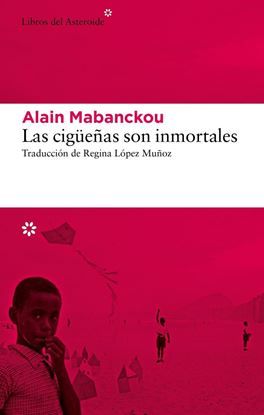
LAS CIGUEÑAS SON INMORTALES
Michel, un chico de trece años con fama de soñador, vive en la localidad congoleña de Pointe-Noire. Su vida transcurre con normalidad: va al colegio, juega, tiene sus más y sus menos con los vecinos; su madre trabaja en un puesto de plátanos en el mercado y su padre, en un hotel. Pero en marzo de 1977, de repente, estalla la noticia: el camarada presidente Marien Ngouabi ha sido brutalmente asesinado. El atentado tendrá distintas consecuencias en la vida de Michel y su familia, el aprendizaje de la mentira no será la menor de ellas.
Con humor y emoción, a través de la mirada ingenua del protagonista adolescente, el autor se vale del universo familiar para ofrecernos un fresco de la descolonización y los callejones sin salida del continente africano, de los que el Congo es un doloroso ejemplo.
Dueño de un universo literario único y considerado como uno de los escritores francófonos más importantes de la actualidad, Mabanckou mezcla intimidad y tragedia política en esta historia de un chico que se enfrenta de golpe con la realidad de la vida.
850
680
3,500
2,800
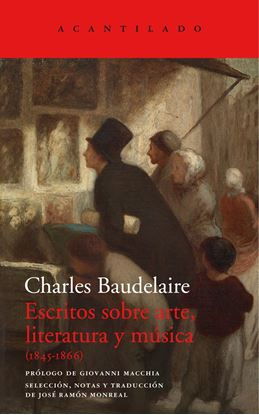
ESCRITOS SOBRE ARTE, LITERATURA Y MUSICA
Autor intempestivo, maldito y antimoderno, antes incluso de la publicación de Las flores del mal Baudelaire ya se había labrado un nombre entre sus contemporáneos como crítico perspicaz y temible. Sus intereses abarcaban todas las manifestaciones artísticas, desde la música a la estética, pasando por la literatura, el arte y la traducción. Este volumen reúne por primera vez en español la totalidad de sus escritos sobre estética, que incluye no sólo obras tan representativas como las dedicadas a los Salones de 1845 y 1846 y El pintor de la vida moderna, sino también los artículos publicados en la prensa francesa, los prólogos a las traducciones de Poe o el estudio que dedicó a la obra de Wagner. Todos ellos ilustran su pensamiento artístico, literario y musical, y el ejercicio de la crítica como tarea subjetiva y vehemente, destinada a proponer perspectivas fundadas y singulares. Los textos que hoy presentamos trazaron la hoja de ruta de la modernidad y recuperan para el lector contemporáneo una concepción vigente del fenómeno estético que transciende los confines de las artes para abrirse de pleno a lo nuevo.
3,500
2,800
750
600
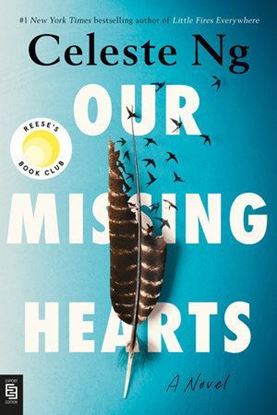
OUR MISSING HEARTS
Twelve-year-old Bird Gardner lives a quiet existence with his loving but broken father, a former linguist who now shelves books in a university library. His mother Margaret, a Chinese American poet, left the family when he was nine years old without a trace. Bird knows to not ask too many questions, stand out too much, or stray too far. For a decade, his family's life has been governed by laws written to preserve “American culture” in the wake of years of economic instability and violence. To keep the peace and restore prosperity, the authorities are now allowed to relocate children of dissidents, especially those of Asian origin, and libraries have been forced to remove books seen as unpatriotic.
Bird has grown up disavowing his mother and her poems; he doesn’t know her work or what happened to her, and he knows he shouldn’t wonder. But when he receives a mysterious letter containing only a cryptic drawing, he is pulled into a quest to find her. His journey will take him back to the many folktales she poured into his head as a child, through the ranks of an underground network of librarians, into the lives of the children who have been taken, and finally to New York City, where a new act of defiance may be the beginning of much-needed change.
750
600
900
720
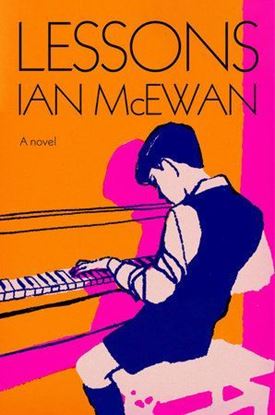
LESSONS
When the world is still counting the cost of the Second World War and the Iron Curtain has closed, eleven-year-old Roland Baines's life is turned upside down. Two thousand miles from his mother's protective love, stranded at an unusual boarding school, his vulnerability attracts piano teacher Miss Miriam Cornell, leaving scars as well as a memory of love that will never fade.
Now, when his wife vanishes, leaving him alone with his tiny son, Roland is forced to confront the reality of his restless existence. As the radiation from Chernobyl spreads across Europe, he begins a search for answers that looks deep into his family history and will last for the rest of his life.
Haunted by lost opportunities, Roland seeks solace through every possible means—music, literature, friends, sex, politics, and, finally, love cut tragically short, then love ultimately redeemed. His journey raises important questions for us all. Can we take full charge of the course of our lives without causing damage to others? How do global events beyond our control shape our lives and our memories? And what can we really learn from the traumas of the past?
Epic, mesmerizing, and deeply humane, Lessons is a chronicle for our times—a powerful meditation on history and humanity through the prism of one man's lifetime.
900
720
650
520
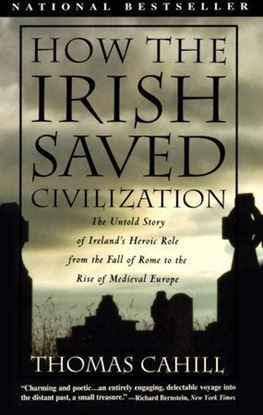
HOW THE IRISH SAVED CIVILIZATION
Every year millions of Americans celebrate St. Patrick’s Day, but they may not be aware of how great an influence St. Patrick was on the subsequent history of civilization. Not only did he bring Christianity to Ireland, he instilled a sense of literacy and learning that would create the conditions that allowed Ireland to become “the isle of saints and scholars”—and thus preserve Western culture while Europe was being overrun by barbarians.
In this entertaining and compelling narrative, Thomas Cahill tells the story of how Europe evolved from the classical age of Rome to the medieval era. Without Ireland, the transition could not have taken place. Not only did Irish monks and scribes maintain the very record of Western civilization — copying manuscripts of Greek and Latin writers, both pagan and Christian, while libraries and learning on the continent were forever lost—they brought their uniquely Irish world-view to the task.
As Cahill delightfully illustrates, so much of the liveliness we associate with medieval culture has its roots in Ireland. When the seeds of culture were replanted on the European continent, it was from Ireland that they were germinated.
650
520
850
680
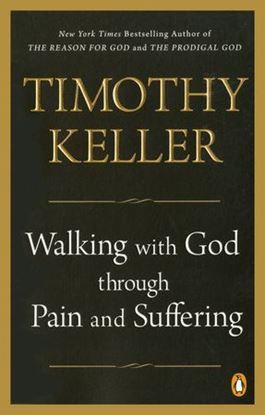
WALKING WITH GOD THROUGH PAIN AND SUFFE
The question of why God would allow pain and suffering in the world has vexed believers and nonbelievers for millennia. Timothy Keller, whose books have sold millions of copies to both religious and secular readers, takes on this enduring issue and shows that there is meaning and reason behind our pain and suffering, making a forceful and ground-breaking case that this essential part of the human experience can be overcome only by understanding our relationship with God.
As the pastor of Redeemer Presbyterian Church in Manhattan, Timothy Keller is known for his unique insights into religion and culture. Keller's series of books has guided countless readers in their spiritual journeys. Walking with God through Pain and Suffering uses biblical wisdom and personal stories of overcoming adversity to bring a much-needed, fresh viewpoint to this important issue.
850
680