

1,450
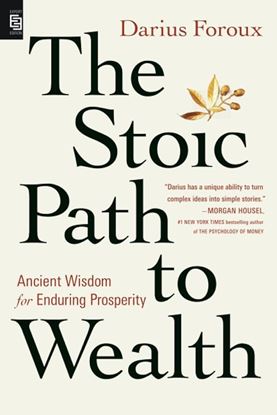
THE STOIC PATH TO WEALTH
The Stoics understood that if you can control your reactions and manage your emotions, you can achieve success. The same principles apply to our financial lives today. The greatest investors approach the markets with discipline, emotional distance, and self-mastery—lessons that the Stoics have been teaching us for thousands of years.
1,450
1,650
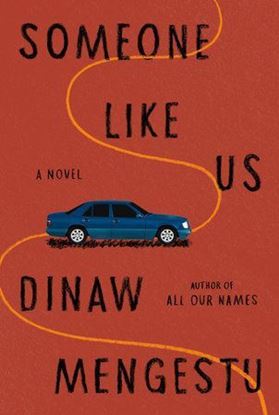
SOMEONE LIKE US
After abandoning his once-promising career as a journalist in search of a new life in Paris, Mamush meets Hannah—a photographer whose way of seeing the world shows him the possibility of finding not only love but family. Now, five years later, with his marriage to Hannah on the verge of collapse, he returns to the close-knit immigrant Ethiopian community of Washington, DC, that defined his childhood. At its center is Mamush’s stoic, implacable mother, and Samuel, the larger-than-life father figure whose ceaseless charm and humor have always served as a cover for a harder, more troubling truth. But on the same day that Mamush arrives home in Washington, Samuel is found dead in his garage.
With Hannah and their two-year-old son back in Paris, Mamush sets out on an unexpected journey across America in search of answers to questions he’d been told never to ask. As he does so, he begins to understand that perhaps the only chance he has of saving his family and making it back home is to confront not only the unresolved mystery around Samuel’s life and death, but his own troubled memories, and the years spent masking them.
1,650
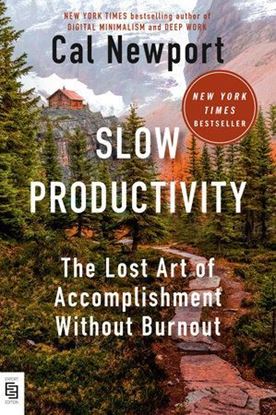
1,400
SLOW PRODUCTIVITY
Our current definition of “productivity” is broken. It pushes us to treat busyness as a proxy for useful effort, leading to impossibly lengthy task lists and ceaseless meetings. We’re overwhelmed by all we have to do and on the edge of burnout, left to decide between giving into soul-sapping hustle culture or rejecting ambition altogether. But are these really our only choices?
Long before the arrival of pinging inboxes and clogged schedules, history’s most creative and impactful philosophers, scientists, artists, and writers mastered the art of producing valuable work with staying power. In this timely and provocative book, Cal Newport harnesses the wisdom of these traditional knowledge workers to radically transform our modern jobs. Drawing from deep research on the habits and mindsets of a varied cast of storied thinkers – from Galileo and Isaac Newton, to Jane Austen and Georgia O’Keefe – Newport lays out the key principles of “slow productivity,” a more sustainable alternative to the aimless overwhelm that defines our current moment. Combining cultural criticism with systematic pragmatism, Newport deconstructs the absurdities inherent in standard notions of productivity, and then provides step-by-step advice for cultivating a slower, more humane alternative.
1,400