


1,995
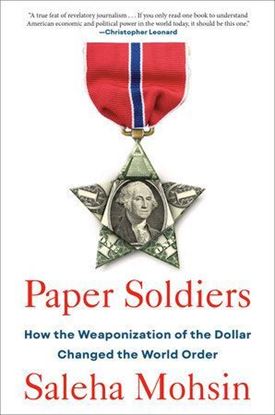
PAPER SOLDIERS
In 1995, Treasury Secretary Robert Rubin re-defined the next thirty years of currency policy with the mantra, “A strong dollar is in America’s interest.” That mantra held, ushering in exceptional prosperity and cheap foreign goods, but the strong dollar policy also played a role in the devastating hollowing out of America’s manufacturing sector. Meanwhile, abroad, the United States increasingly turned to the dollar as a weapon of war. In Paper Soldiers, Saleha Mohsin reveals how the Treasury Department has shaped U.S. policy at home and overseas by wielding the American dollar as a weapon—and what that means in a new age of crisis.
For decades, America has preferred its currency superpower-strong, the basis of a “strong dollar” policy that attracted foreign investors and pleased consumers. Drawing on Mohsin’s unparalleled access to current and former Treasury officials like Robert Rubin, Steven Mnuchin, and Janet Yellen, Paper Soldiers traces that policy’s intended and unintended consequences, including the rise of populist sentiment and trade war with China—culminating in an unprecedented attack on the dollar’s pristine status during the Trump presidency—and connects the dollar’s weaponization from 9/11 to the deployment of crippling financial sanctions against Russia. Ultimately, Mohsin argues that, untethered from many of the economic assumptions of the last generation, the power and influence of the American dollar is now at stake.
With first-hand reporting and fresh analysis that illustrates the vast, often unappreciated power that the Treasury Department wields at home and abroad, Paper Soldiers tells the inside story of how we really got here—and the future not only of the almighty dollar, but the nation’s teetering role as a democratic superpower.
1,995
1,150
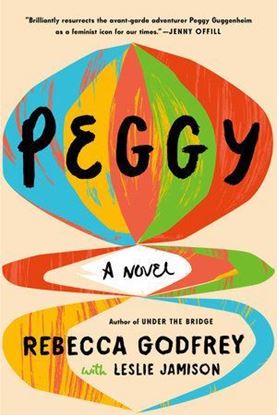
PEGGY
Venice, 1958. Peggy Guggenheim, heiress and now legendary art collector, sits in the sun at her white marble palazzo on the Grand Canal. She’s in a reflective mood, thinking back on her thrilling, tragic, nearly impossible journey from her sheltered, old-fashioned family in New York to here: iconoclast and independent woman.
Rebecca Godfrey’s Peggy is a blazingly fresh interpretation of a woman who defies every expectation to become an original. The daughter of two Jewish dynasties, Peggy finds her cloistered life turned upside down at fourteen, when her beloved father perishes on the Titanic. His death prompts Peggy to seek a life of passion and personal freedom and, above all, to believe in the transformative power of art. We follow Peggy as she makes her way through the glamorous but sexist and anti-Semitic art worlds of New York and Europe and meet the numerous men who love her (and her money) while underestimating her intellect, talent, and vision. Along the way, Peggy must balance her loyalty to her family with her need to break free from their narrow, snobbish ways and the unexpected restrictions that come with vast fortune.
1,150
1,450
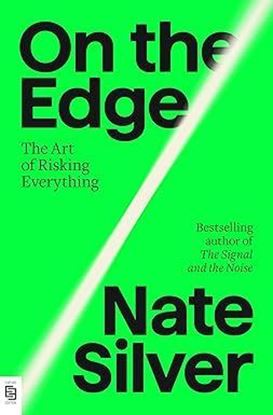
ON THE EDGE (EXP)
In the bestselling The Signal and the Noise, Nate Silver showed how forecasting would define the age of Big Data. Now, in this timely and riveting new book, Silver investigates “the River,” the community of like-minded people whose mastery of risk allows them to shape—and dominate—so much of modern life.
These professional risk-takers—poker players and hedge fund managers, crypto true believers and blue-chip art collectors—can teach us much about navigating the uncertainty of the twenty-first century. By immersing himself in the worlds of Doyle Brunson, Peter Thiel, Sam Bankman-Fried, Sam Altman, and many others, Silver offers insight into a range of issues that affect us all, from the frontiers of finance to the future of AI.
Most of us don’t have traits commonly found in the River: high tolerance for risk, appreciation of uncertainty, affinity for numbers—paired with an instinctive distrust of conventional wisdom and a competitive drive so intense it can border on irrational. For those in the River, complexity is baked in, and the work is how to navigate it. People in the River have increasing amounts of wealth and power in our society, and understanding their mindset—and the flaws in their thinking— is key to understanding what drives technology and the global economy today.
Taking us behind the scenes from casinos to venture capital firms, and from the FTX inner sanctum to meetings of the effective altruism movement, On the Edge is a deeply reported, all-access journey into a hidden world of power brokers and risk-takers.
1,450