850
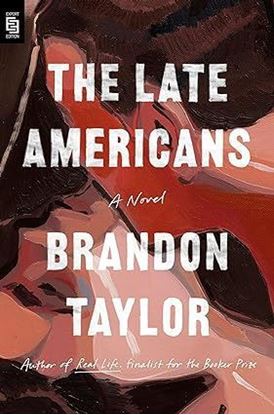
THE LATE AMERICANS
In the shared and private spaces of Iowa City, a loose circle of lovers and friends encounter, confront, and provoke one another in a volatile year of self-discovery. At the group’s center are Ivan, a dancer turned aspiring banker who dabbles in amateur pornography; Fatima, whose independence and work ethic complicates her relationships with friends and a trusted mentor; and Noah, who “didn’t seek sex out so much as it came up to him like an anxious dog in need of affection.” These three are buffeted by a cast of poets, artists, landlords, meat-packing workers, and mathematicians who populate the cafes, classrooms, and food-service kitchens of Iowa City, sometimes to violent and electrifying consequence. Finally, as each prepares for an uncertain future, the group heads to a cabin to bid goodbye to their former lives—a moment of reckoning that leaves each of them irrevocably altered.
850

850
THE WOMAN IN THE CASTELLO
Rome, 1965: Aspiring actress Silvia Whitford arrives at Rome’s famed Cinecittà Studios from Los Angeles, ready for her big break and a taste of la dolce vita. Instead, she learns that the movie in which she was cast has been canceled. Desperate for money, Silvia has only one choice: seek out the Italian aunt she has never met.
Gabriella Conti lives in a crumbling castello on the edge of a volcanic lake. Silvia’s mother refuses to explain the rift that drove the sisters apart, but Silvia is fascinated by Gabriella, a once-famous actress who still radiates charisma. And the eerie castle inspires Silvia’s second chance when it becomes the location for a new horror movie, aptly named The Revenge of the Lake Witch and she lands a starring role.
Silvia immerses herself in the part of an ingenue tormented by the ghost of her beautiful, seductive ancestor. But when Gabriella abruptly vanishes, the movie’s make believe terrors seep into reality. No one else on set seems to share Silvia’s suspicions. Yet as she delves into Gabriella’s disappearance, she triggers a chain of events that illuminate dark secrets in the past and a growing menace in the present…
850
850
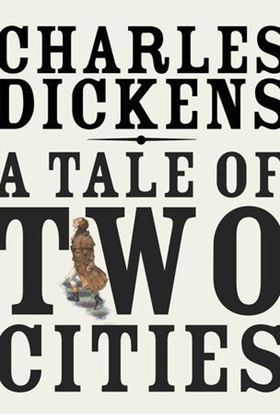
A TALE OF TWO CITIES
Set against the backdrop of the French Revolution, A Tale of Two Cities is one of Charles Dickens’s most popular and dramatic stories.
It begins on a muddy English road in an atmosphere charged with mystery and it ends in the Paris of the Revolution with one of the most famous acts of self-sacrifice in literature. In between lies one of Dickens’s most exciting books—a historical novel that, generation after generation, has given readers access to the profound human dramas that lie behind cataclysmic social and political events. Famous for its vivid characters, including the courageous French nobleman Charles Darnay, the vengeful revolutionary Madame Defarge, and cynical Englishman Sydney Carton, who redeems his ill-spent life in a climactic moment at the guillotine (“It is a far, far better thing that I do, than I have ever done”), the novel is also a powerful study of crowd psychology and the dark emotions aroused by the Revolution, illuminated by Dickens’s lively comedy.
850
850
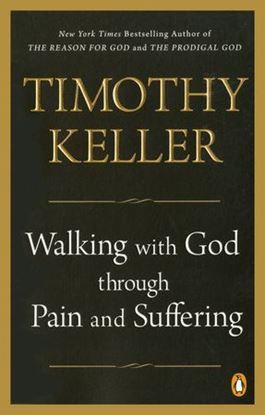
WALKING WITH GOD THROUGH PAIN AND SUFFE
The question of why God would allow pain and suffering in the world has vexed believers and nonbelievers for millennia. Timothy Keller, whose books have sold millions of copies to both religious and secular readers, takes on this enduring issue and shows that there is meaning and reason behind our pain and suffering, making a forceful and ground-breaking case that this essential part of the human experience can be overcome only by understanding our relationship with God.
As the pastor of Redeemer Presbyterian Church in Manhattan, Timothy Keller is known for his unique insights into religion and culture. Keller's series of books has guided countless readers in their spiritual journeys. Walking with God through Pain and Suffering uses biblical wisdom and personal stories of overcoming adversity to bring a much-needed, fresh viewpoint to this important issue.
850
850
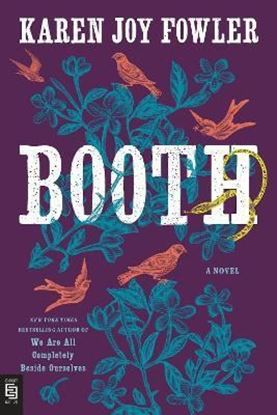
BOOTH
In 1822, a secret family moves into a secret cabin some thirty miles northeast of Baltimore, to farm, to hide, and to bear ten children over the course of the next sixteen years. Junius Booth—breadwinner, celebrated Shakespearean actor, and master of the house in more ways than one—is at once a mesmerizing talent and a man of terrifying instability. One by one the children arrive, as year by year, the country draws frighteningly closer to the boiling point of secession and civil war.
As the tenor of the world shifts, the Booths emerge from their hidden lives to cement their place as one of the country’s leading theatrical families. But behind the curtains of the many stages they have graced, multiple scandals, family triumphs, and criminal disasters begin to take their toll, and the solemn siblings of John Wilkes Booth are left to reckon with the truth behind the destructively specious promise of an early prophecy.
850
850
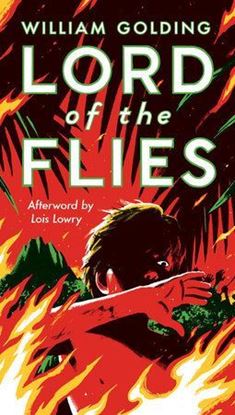
LORD OF THE FLIES (MM)
When `Lord of the Flies` appeared in 1954 it received unprecedented reviews for a first novel. Critics used such phrases as `beautifully writeen, tragic and provocative... vivid and enthralling... this beautiful and desperate book... completely convincing and often very frightening... its progress is magnificient... like a fragment of nightmare... a dizzy climax of terror... the terrible spell of this book...` E.M. Forster chose it as the Outstanding Novel of the Year. `Time and Tide` touched upon perhaps the most important facet of this book when it said, `It is not only a first-rate adventure but a parable of our times, ` and articles on this and subsequent Golding novels have stressed these twin aspects of Golding: a consummate control of the novel form, and a superb all-encompassing vision of reality which communicates itself with a power reminiscent of Conrad.
850