


995
796
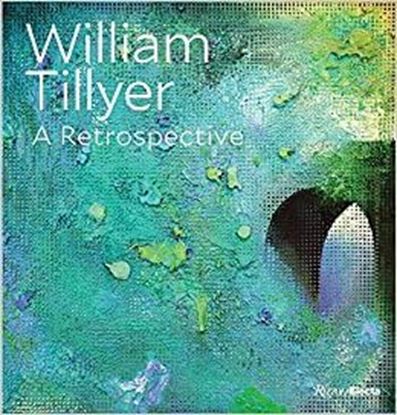
WILLIAM TILLYER. A RETROSPECTIVE (OF3)
The extraordinary paintings and watercolors of this contemporary British abstract artist, deeply influenced by the romantic English landscape tradition of Constable and Turner.
This is the first major look at the work of the renowned yet intensely private and reclusive artist William Tillyer (b. 1938), best known for his abstract oil paintings, watercolors, and prints. Tillyer’s skill and hugely varied body of work make him one of Britain’s most respected artists, in the same generation as Lucian Freud and David Hockney. Tillyer is finally getting the recognition he deserves.
While Tillyer’s paintings are largely abstract, they are based on the landscape of North Yorkshire, where he has lived and worked for most of his life. The book covers Tillyer’s experiments with nontraditional materials and techniques—his 3D panels, cut canvases, constructed works with found objects, printmaking with a wide range of processes, and paintings on wire mesh.
995
796
995
796
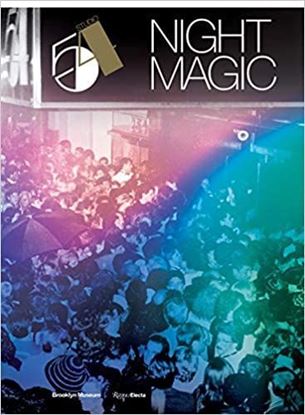
STUDIO 54. NIGHT MAGIC (B) (OF3)
There has never been--and will never be--another nightclub to rival the sheer glamour, energy, and wild creativity that was Studio 54. This catalog accompanies an exhibition at the Brooklyn Museum exploring how Studio 54 was a unique zeitgeist of an era.
From the moment it opened in 1977, Studio 54 celebrated spectacle and promised a never-ending parade of anything goes. Although it existed for only three years, it served as a catalyst that brought together some of the most famous, creative, and strangest people in the world. It quickly became known for its all-ages celebrity guest list and its uniquely chic clientele of superstars and freaks of all races and sexual preferences who would often show up half-dressed or in costume. From the cutting-edge lighting displays and sound system to its elaborate sets that would change on a whim, altering the environment and ambiance, it was the beginning of nightclub as performance art.
Now, the Brooklyn Museum is staging the first exhibition featuring the nightclub as a bellwether of New York City cultural life. More than 650 objects--spanning fashion, photography, drawings, film, and music--as well as video, film, and soundtrack, create an immersive experience, with an exhibition design inspired by the club's original lighting and atmosphere. Highlights include never-before-published costume sketches by artist Antonio Lopez and newly discovered set designs, as well as ephemera salvaged by the original club staff and interviews with the cultural luminaries who were there.
Telling the story of this legendary club, as well as serving as a companion to the exhibition, Studio 54: Night Magic serves as a document of the era, depicting the wild energy and provocative creativity of this seminal cultural moment.
995
796

995
796
BOB CREWE. SIGHT AND SOUND (OF3)
The first book to explore the extraordinary musical life and remarkable paintings of one of America's greatest ever songwriters.
Best known for having written and produced some of the seminal records of American popular culture--from 'Big Girls Don't Cry' for the Four Seasons to 'Silence is Golden' for the Tremeloes and 'Lady Marmalade' for LaBelle--Bob Crewe was a multifaceted artist for whom a passion for painting and the visual arts provided a lifelong counterbalance to music.
Collected here are more than 80 of Bob Crewe's artworks, stretching from his first forays into abstract expressionism in the 1950s and 1960s to more complex, tactile compositions made on his full-time return to painting in the 1990s--accompanied by archival images and ephemera that reflect Crewe's simultaneous contribution to popular music.
Essays by Jessica May and Peter Plagens explore the development of an artist whose influences ranged from Rauschenberg and Johns to Warhol and Bacon; legendary record producer Andrew Loog Oldham captures the period of radical experimentalism in which Crewe wrote many of the most memorable songs in the canon of modern pop; and Donald Albrecht's introduction ties together the many complementary aspects of Crewe's personal and creative lives.
995
796
995
796
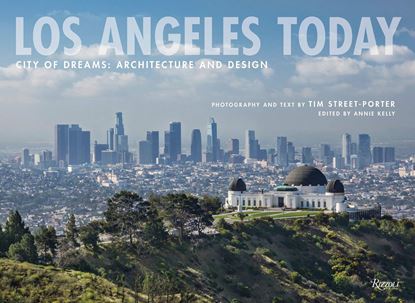
LOS ANGELES TODAY (OF3)
The time is right for a fresh look at this incomparable sunny city. Longtime Angeleno Tim Street-Porter chronicles today's vibrant buildings, coastline, and gardens of this glamorous global metropolis.
Visit Los Angeles with a photographer who knows how to get the lighting right to highlight the spectacular architecture of the city. Stylish museums, such as the Broad, and a flourishing Arts District illustrate the explosive art scene, while Hollywood's Chateau Marmont and the historic Beverly Hills neighborhood add a chic dynamism. Across town, Culver City, home to the tech industry, features blocks of futuristic architecture by Eric Owen Moss. The modernist homes by Richard Neutra and John Lautner, as well as Frank Lloyd Wright's Hollyhock House, are shown against dramatic backdrops of sky and sea. The visual sweep of this oversize book also encompasses the Los Angeles of film and television.
Los Angeles is a city of dreams, and Los Angeles Today is a glorious portrait of the city in its infinite variety.
995
796

995
796
EL TIGRE Y LA GUITARRA
El tigre y la guitarra es la historia de Yoichiro Yamada, un japonés que vino a España para ser guitarrista flamenco y jamás regresó a su país. Terminó abducido por dos mundos idílicos y en principio opuestos: el del flamenco que amaba y el de los samuráis de los que era descendiente. En su deriva no supo encontrar la salida a su propio laberinto. «¡Vuelve a casa!», le pedían sus amigos. Pero se negaba: no podía regresar porque no se había convertido en el guitarrista que soñó. El tigre y la guitarra nos habla del choque de universos paralelos, de pasiones y de obsesiones, pero también de hasta dónde nos arrastran nuestros pensamientos, del fracaso y de cómo los sueños que perseguimos pueden acabar persiguiéndonos.
995
796
995
796
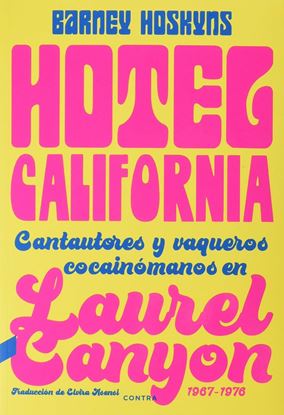
HOTEL CALIFORNIA. CANTAUTORES Y VAQUEROS
A mediados de los sesenta, la música popular norteamericana dio un giro copernicano cuando la fábrica de hits de Nueva York se vio desplazada por los himnos aterciopelados y edénicos que empezaron a brotar de Los Ángeles de la mano del genial productor Phil Spector y grupos como los Beach Boys, los Byrds o The Mamas and the Papas. A partir de ese momento, una serie de artistas, que empezaron a reivindicarse como cantautores de sus propios temas, encontraron en las colinas californianas de Laurel Canyon y en sus alrededores un paraíso virginal —en plena naturaleza pero a un paso del fragor de la gran ciudad— donde establecerse, echar raíces y dar rienda suelta a sus canciones de corte intimista y reivindicativo. Locales como el Troubadour, en La Cienega Boulevard, empezaron a ser frecuentados por la nueva horda de músicos, que aspiraban a tocar sus canciones en directo frente a la exigente audiencia, formada en buena parte por los propios músicos y aspirantes a estrellas. Se iría así fraguando una de las eras doradas del rock norteamericano, que empresarios de la música como un joven y aguerrido David Geffen y su socio Elliot Roberts convertirían casi de la noche a la mañana en un emporio. De este modo, sellos como Warner/Reprise, dirigidos por los linces Mo Ostin y Joe Smith, o Asylum, del tándem Geffen/Roberts, apostaron por un repertorio de folk rock y nuevo country que vio nacer a cantautores y grupos de la talla de Neil Young, Joni Mitchell, Gram Parsons, Crosby, Stills & Nash, Jackson Browne, Linda Ronstadt, James Taylor, The Flying Burrito Brothers, The Eagles o Fleetwood Mac, entre muchos otros, que se convertirían en el nuevo canon del rock y el folk de la música norteamericana a base de música introspectiva y de raíces. Sin embargo, el idealismo, la solidaridad y el talento no tardarían en dar paso a un pandemónium de celos, consumo exacerbado de drogas y sobredosis, relaciones sentimentales tormentosas, éxitos clamorosos y caídas en picado que convirtieron el paraíso en un infierno de egoísmo y capitalismo desbocado que preconizó las maneras que la industria musical desarrollaría a partir de ese momento. Esta es la historia de los artistas de aquella generación, que alumbraron algunas de las mejores canciones de todos los tiempos y cuyo legado sigue más vigente que nunca.
995
796