1,500
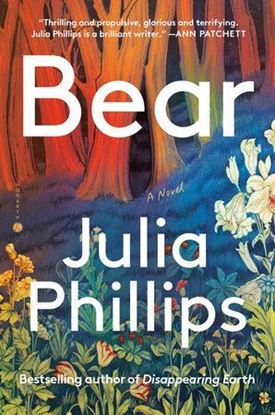
BEAR
They were sisters and they would last past the end of time.
Sam and Elena dream of another life. On the island off the coast of Washington where they were born and raised, they and their mother struggle to survive. Sam works on the ferry that delivers wealthy mainlanders to their vacation homes while Elena bartends at the local golf club, but even together they can’t earn enough to get by, stirring their frustration about the limits that shape their existence.
Then one night on the boat, Sam spots a bear swimming the dark waters of the channel. Where is it going? What does it want? When the bear turns up by their home, Sam, terrified, is more convinced than ever that it’s time to leave the island. But Elena responds differently to the massive beast. Enchanted by its presence, she throws into doubt the desire to escape and puts their long-held dream in danger.
A story about the bonds of sisterhood and the mysteries of the animals that live among us—and within us—Bear is a propulsive, mythical, richly imagined novel from one of the most acclaimed young writers in America.
1,500
700
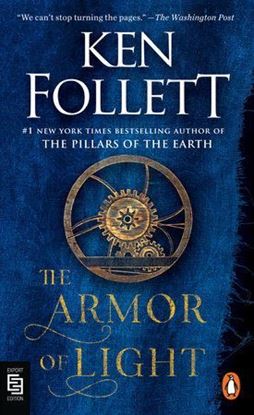
THE ARMOR OF LIGHT (EXP) (MM)
The Spinning Jenny was invented in 1770, and with that, a new era of manufacturing and industry changed lives everywhere within a generation. A world filled with unrest wrestles for control over this new world order: A mother’s husband is killed in a work accident due to negligence; a young woman fights to fund her school for impoverished children; a well-intentioned young man unexpectedly inherits a failing business; one man ruthlessly protects his wealth no matter the cost, all the while war cries are heard from France, as Napoleon sets forth a violent master plan to become emperor of the world. As institutions are challenged and toppled in unprecedented fashion, ripples of change ricochet through our characters’ lives as they are left to reckon with the future and a world they must rebuild from the ashes of war.
700
1,850
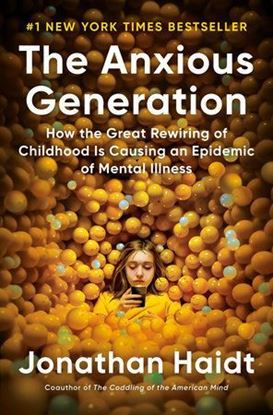
THE ANXIOUS GENERATION
After more than a decade of stability or improvement, the mental health of adolescents plunged in the early 2010s. Rates of depression, anxiety, self-harm, and suicide rose sharply, more than doubling on many measures. Why?
In The Anxious Generation, social psychologist Jonathan Haidt lays out the facts about the epidemic of teen mental illness that hit many countries at the same time. He then investigates the nature of childhood, including why children need play and independent exploration to mature into competent, thriving adults. Haidt shows how the “play-based childhood” began to decline in the 1980s, and how it was finally wiped out by the arrival of the “phone-based childhood” in the early 2010s. He presents more than a dozen mechanisms by which this “great rewiring of childhood” has interfered with children’s social and neurological development, covering everything from sleep deprivation to attention fragmentation, addiction, loneliness, social contagion, social comparison, and perfectionism. He explains why social media damages girls more than boys and why boys have been withdrawing from the real world into the virtual world, with disastrous consequences for themselves, their families, and their societies.
1,850
1,450
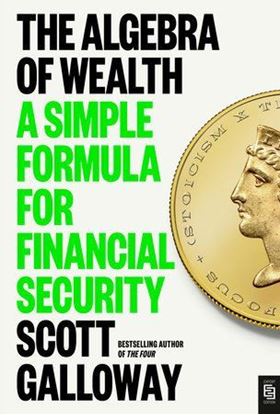
THE ALGEBRA OF WEALTH
Today’s workers have more opportunities and mobility than any generation before. They also face unprecedented challenges, including inflation, labor and housing shortages, and climate volatility. Even the notion of retirement is undergoing a profound rethink, as our lifespans extend and our relationship with work evolves. In this environment, the tried-and-true financial advice our parents followed is no longer enough. It’s time for a new playbook.
1,450
1,300
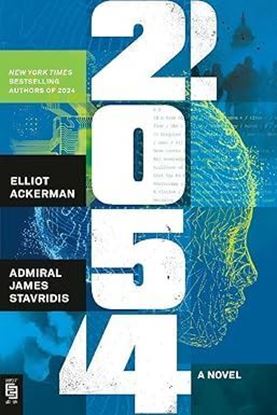
2054
It is twenty years after the catastrophic war between the United States and China that brought down the old American political order. A new party has emerged in the US, one that’s held power for over a decade. Efforts to cement its grip have resulted in mounting violent resistance. The American president has control of the media, but he is beginning to lose control of the streets. Many fear he’ll stop at nothing to remain in the White House. Suddenly, he collapses in the middle of an address to the nation. After an initial flurry of misinformation, the administration reluctantly announces his death. A cover-up ensues, conspiracy theories abound, and the country descends into a new type of civil war.
1,300
1,300
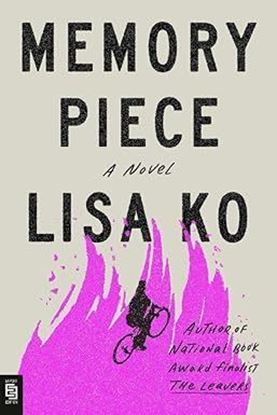
MEMORY PIECE
In the early 1980s, Giselle Chin, Jackie Ong, and Ellen Ng are three teenagers drawn together by their shared sense of alienation and desire for something different. “Allied in the weirdest parts of themselves,” they envision each other as artistic collaborators and embark on a future defined by freedom and creativity.
By the time they are adults, their dreams are murkier. As a performance artist, Giselle must navigate an elite social world she never conceived of. As a coder thrilled by the internet’s early egalitarian promise, Jackie must contend with its more sinister shift toward monetization and surveillance. And as a community activist, Ellen confronts the increasing gentrification and policing overwhelming her New York City neighborhood. Over time their friendship matures and changes, their definitions of success become complicated, and their sense of what matters evolves.
Moving from the predigital 1980s to the art and tech subcultures of the 1990s to a strikingly imagined portrait of the 2040s, Memory Piece is an innovative and audacious story of three lifelong friends as they strive to build satisfying lives in a world that turns out to be radically different from the one they were promised.
1,300