

1,250
MY NAME IS EMILIA DEL VALLE (EXP)
In San Francisco in 1866, an Irish nun, abandoned following a torrid relationship with a Chilean aristocrat, gives birth to a daughter named Emilia del Valle. Raised by a loving stepfather, Emilia grows into an independent thinker and a self-sufficient young woman.
To pursue her passion for writing, she is willing to defy societal norms. At the age of seventeen, she begins to publish pulp fiction using a man’s pen name. When these fictional worlds can no longer satisfy her sense of adventure, she turns to journalism, convincing an editor at The Daily Examiner to hire her. There she is paired with another talented reporter, Eric Whelan.
As she proves herself, her restlessness returns, until an opportunity arises to cover a brewing civil war in Chile. She seizes it, as does Eric, and while there, she meets her estranged father and delves into the violent confrontation in the country where her roots lie. As she and Eric discover love, the war escalates and Emilia finds herself in extreme danger, fearing for her life and questioning her identity and her destiny.
1,250
1,250
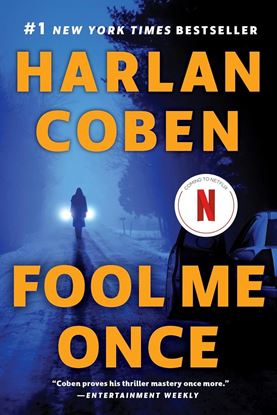
FOOL ME ONCE (MOVIE-TI)
Former special ops pilot Maya, home from the war, sees an unthinkable image captured by her nanny cam while she is at work: her two-year-old daughter playing with Maya’s husband, Joe—who was brutally murdered two weeks earlier. The provocative question at the heart of the mystery: Can you believe everything you see with your own eyes, even when you desperately want to? To find the answer, Maya must finally come to terms with deep secrets and deceit in her own past before she can face the unbelievable truth about her husband—and herself.
1,250
1,250
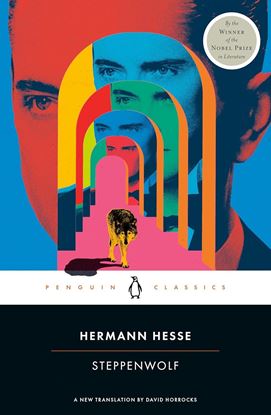
STEPPENWOLF
At first glance, Harry Haller seems like a respectable, educated man. In reality, he is the Steppenwolf: wild, strange, alienated from society, and repulsed by the modern age. But as he is drawn into a series of dreamlike and sometimes savage encounters—accompanied by, among others, Mozart, Goethe, and the bewitching Hermione—the misanthropic Haller undergoes a spiritual, even psychedelic, journey, and ultimately discovers a higher truth and the possibility of happiness.
1,250
1,250
THE GREAT GATSBY
Young, handsome, and fabulously rich, Jay Gatsby seems to have everything. But at his mansion east of New York City, where the party never seems to end, one thing will always be out of reach: the married Daisy Buchanan, whose house is visible from Gatsby’s just across the bay. A brilliant evocation of the Roaring Twenties and a satire of a postwar America obsessed with wealth and status, The Great Gatsby is a novel whose power remains undiminished after a century.
1,250
1,250
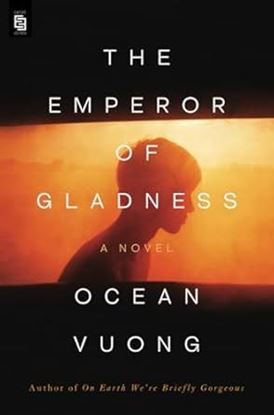
THE EMPEROR OF GLADNESS
One late summer evening in the post-industrial town of East Gladness, Connecticut, nineteen-year-old Hai stands on the edge of a bridge in pelting rain, ready to jump, when he hears someone shout across the river.
1,250

1,250
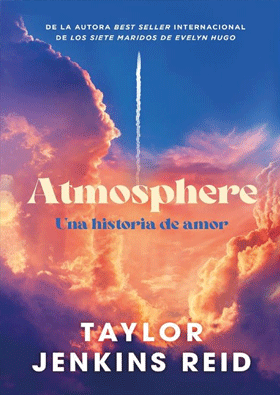
ATMOSPHERE. A LOVE STORY (EXP)
Joan Goodwin has been obsessed with the stars for as long as she can remember. Thoughtful and reserved, Joan is content with her life as a professor of physics and astronomy at Rice University and as aunt to her precocious niece, Frances. That is, until she comes across an advertisement seeking the first women scientists to join NASA’s Space Shuttle program. Suddenly, Joan burns to be one of the few people to go to space.
Selected from a pool of thousands of applicants in the summer of 1980, Joan begins training at Houston’s Johnson Space Center, alongside an exceptional group of fellow candidates: Top Gun pilot Hank Redmond and scientist John Griffin, who are kind and easy-going even when the stakes are highest; mission specialist Lydia Danes, who has worked too hard to play nice; warm-hearted Donna Fitzgerald, who is navigating her own secrets; and Vanessa Ford, the magnetic and mysterious aeronautical engineer, who can fix any engine and fly any plane.
As the new astronauts become unlikely friends and prepare for their first flights, Joan finds a passion and a love she never imagined. In this new light, Joan begins to question everything she thinks she knows about her place in the observable universe.
1,250