
1,500
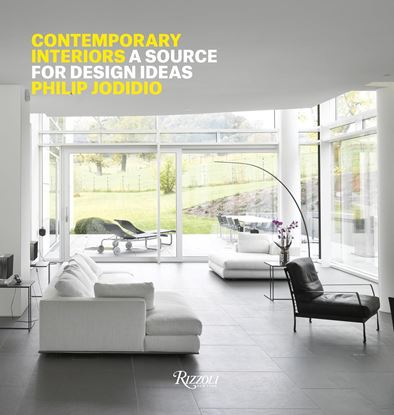
CONTEMPORARY INTERIORS
An excellent addition to contemporary interiors category: a package of exceptional value combined with renowned author Philip Jodidio's exceptional eye, this book includes the most cutting-edge, effective, and appealing breakthroughs in home architecture within the past five years.
A stunning collection of outstanding works of contemporary residential architecture from around the world. Contemporary Interiors is the perfect source of inspiration for homeowners and architects alike.
1,500
1,995
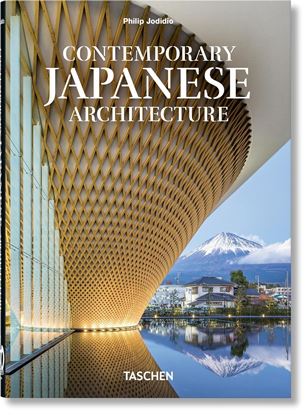
CONTEMPORARY JAPANESE ARC. (45TH) (INT)
Japan's contemporary architecture has long been among the most inventive in the world, recognized for sustainability and infinite creativity. No fewer than eight Japanese architects have won the Pritzker Prize.
Since Osaka World Expo ’70 highlighted contemporary forms, Japan has been a key player in global architecture. Tadao Ando's geometry put Japanese building on the map, bridging East and West. After his concrete buildings, figures like Kengo Kuma, Shigeru Ban, and Kazuyo Sejima pioneered a more sustainable approach. Younger generations have taken new directions, in harmony with nature, traditional building, and an endless search for forms.
Presenting the latest in Japanese building, this book links this unique creativity to Japan's high population density, modern economy, long history, and continual disasters in the form of earthquakes. Accepting ambiguity, constant change, and catastrophe is a key to understanding how Japanese architecture differs from that of Europe or America.
1,995
4,200
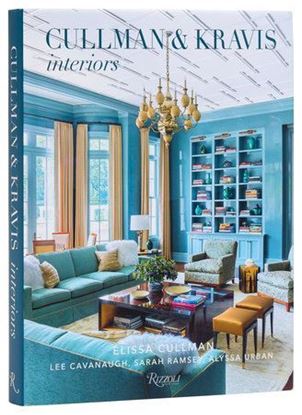
CULLMAN & KRAVIS: INTERIORS
Ceaseless in its pursuit to create “an alchemy of old and new,” the highly esteemed firm of Cullman & Kravis is renowned for its ability to fashion modern, cohesive, richly layered homes rooted in tradition and the respect for function and decoration. Utilizing their decades of experience, they build out rooms from the finest classical foundations, then infuse bold, stylish, and modish elements, mixing exquisite antiques with contemporary art to create truly dynamic spaces conceived to stand the test of time.
4,200
1,995
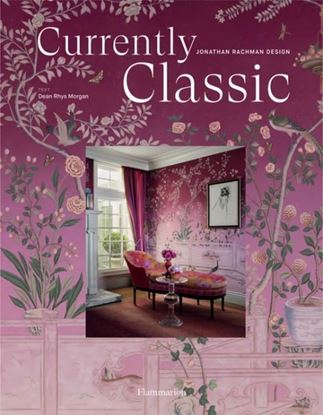
CURRENTLY CLASSIC
Jonathan Rachman's instantly classic designs come to life in vibrant and sumptuous color in this first monograph on the Sumatran-born, San Francisco-based interior decorator.
Interior decorator Jonathan Rachman opens the doors to his universe in this volume illustrating his eclectic, vividly colorful, and markedly refined style, through various projects undertaken for prestigious clients.
Born on the island of Sumatra in Indonesia, trained in Switzerland, and today based out of San Francisco, Rachman injects his projects with his own wide-reaching, worldly experience, his explorations into provincial flea markets, and his taste for textiles, leather goods, handicrafts, and art objects. In each of his designs, he combines the best materials from the East and the West, devising personalized plans for his clients and creating a timeless approach to interior design.
With a lively color palette, luxurious materials, and an incredible attention to detail, Rachman has received multiple awards and acclaim for his work from renowned publications such as Vogue, Elle, and Harper's Bazaar.
1,995
1,950
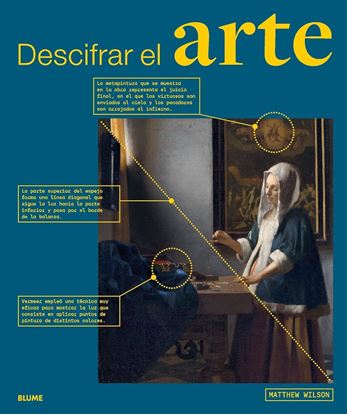
DESCIFRAR EL ARTE
* Una innovadora propuesta al analizar obras de arte: una búsqueda visual que deconstruye 50 creaciones clave para descubrir los elementos que componen una obra maestra. * Una introducción a la historia de la cultura visual que presenta nuevas tipologías artísticas y ofrece una visión renovada de los objetos conocidos. * 50 obras que abarcan un extensísimo periodo, que va desde las primeras imágenes creadas por humanos que conocemos, que datan de hace unos 30 000 años, hasta una instalación en la frontera entre México y Estados Unidos realizada en 2017. Un libro que pretende disolver las barreras entre los distintos tipos de artefactos culturales, de forma que junto a la pintura y la escultura ―que a menudo se consideran las formas artísticas tradicionales― se analizan dibujos, fotografías, grabados, ornamentos, máscaras, miniaturas y carteles. Como objetivo secundario, se establecen vínculos entre el arte «occidental» y el del resto del mundo. La historia del arte es un tema apasionante, repleto de reglas complejas y de palabras técnicas. Ni siquiera los más avezados diletantes están a salvo del eterno enigma que plantea la forma de pensar el arte. Este libro le ayudará a resolverlo.
1,950
3,500
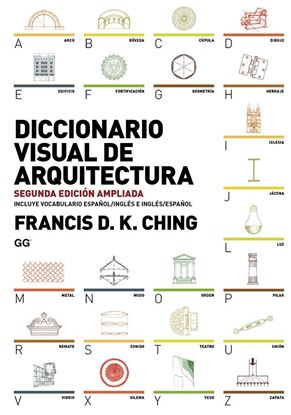
DICCIONARIO VISUAL DE ARQUITECTURA
La extensa y reconocida aportación de Francis D. K. Ching al mundo del dibujo arquitectónico sería incompleta si el célebre maestro no hubiera hecho una incursión en el ámbito de los diccionarios visuales. Este volumen nos brinda precisamente su particular contribución al universo de la terminología arquitectónica y, alejándose de los diccionarios alfabéticos al uso, Ching compone un diccionario visual sistemático que reúne más de 7.000 definiciones organizadas en 66 conceptos básicos del diseño arquitectónico. El resultado es una amplia panorámica gráfica y conceptual de la terminología del ámbito de la arquitectura y de las interrelaciones que se establecen entre los términos. Al final del volumen, el diccionario incorpora asimismo la lista alfabética en español de los términos definidos, así como su traducción al inglés y viceversa, de manera que el lector podrá realizar consultas de términos precisos también por orden alfabético. Un diccionario fundamental, ya clásico, de los ámbitos de la arquitectura y la construcción.
3,500