
1,250
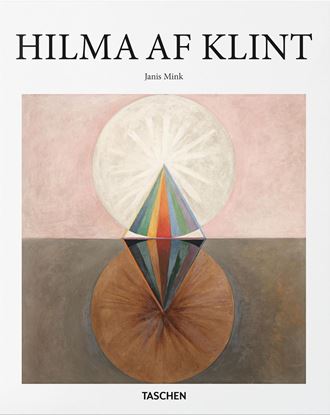
HILMA AF KLINT
Hilma af Klint painted as though she was channeling the universe. Fascinated from childhood by botany and mathematics, she began her career painting landscapes and portraits, but other preoccupations stirred within her: questions of spirit, unseen energies, patterns too vast for the eye alone.
Her art was inseparable from her spiritual practice. With a circle of female artists called The Five, she held séances, heard voices from "High Masters," and was inspired by the Theosophical Society and Rudolf Steiner’s theories. Working tirelessly to map life’s hidden dimensions, she would paint to the point of physical collapse.
By 1906, her canvases featured radiant geometries of spirals and orbs, impregnated with symbols, letters, and words, anticipating the later embrace of abstraction by Kandinsky, Malevich, Mondrian, and others. Her vast painted cycles―like her works for the Temple and The Ten Largest―often depicted dualities: inside and out, the earthly and the esoteric, man and woman, good and evil.
Living as a vegetarian, questioning the fixity of gender, af Klint was clearly before her time, yet very much of it too, and pretty much uncelebrated in her day. Her prodigious output lay unseen for decades, locked away by her own instruction. Only in the 1980s did the world begin to recognize her as a true pioneer of abstract art.
1,250
1,250
THEODORE DE BRY THE NEW WORLD.45TH ED
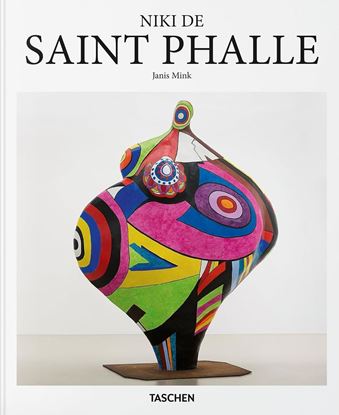
A key contributor to Nouveau Réalisme in early 1960s Paris, Niki de Saint Phalle (1930-2002) worked alongside artists such as Arman, Yves Klein, and Jean Tinguely, scavenging real objects in place of traditional art materials. She connected art to life by instrumentalizing household items, machine parts, and even toys for her early assemblages. Saint Phalle created her first shooting painting, or Tir, in 1961, and went on to conduct these performances in such varied locations as the Impasse Ronsin in Paris, a garden in Amsterdam, a sandpit outside Stockholm, and the Malibu Hills. Reliefs made of plaster, small objects, paint, wood, and wire were punctured by the bullets of a gun.
1,250
1,600
THE ILLUSTRATOR- ING.- BIB. UNIVERSALIS
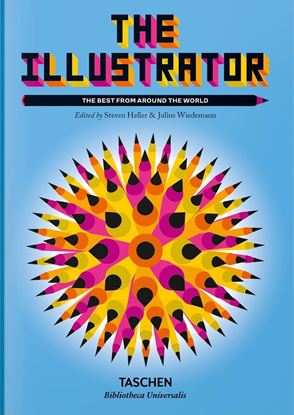
For the last couple of years, Steven Heller and Julius Wiedemann have traced the latest developments in illustration around the globe—and for all those who thought digital heralded the end of an era, they’re here to set the record straight.
There were extraordinary eras before mass media changed our viewing habits, back in the day when illustration was the primary means of illuminating the word on paper—all the way to today, when we get our words and images on screens as small as a watch face. In this environment, today’s designers and artists are holding their own brilliantly. Illustration is more free and varied than ever, and it is ubiquitous in all kinds of media, from paper to screen to books, packages, clothing, cars, and restaurants.
1,600
1,600
MICHELANGELO. PAINTINGS, SCULPTURES AND
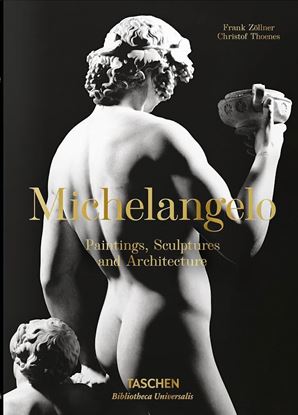
Before reaching the tender age of 30, Michelangelo Buonarroti (1475–1564) had already sculpted Pietà and David, two of the most famous sculptures in the entire history of art. As a sculptor, painter, draftsman, and architect, the achievements of this Italian master are unique—no artist before or after him has ever produced such a vast, multifaceted, and wide-ranging œuvre.
This fresh TASCHEN edition traces Michelangelo’s ascent to the cultural elite of the Renaissance. Ten richly illustrated chapters cover the artist’s paintings, sculptures, and architecture, including a close analysis of the artist’s tour de force frescoes in the Sistine Chapel.Full-page reproductions and enlarged details allow readers to appreciate the finest details in the artist’s repertoire, while the book’s biographical essay considers Michelangelo’s more personal traits and circumstances, such as his solitary nature, his thirst for money and commissions, his immense wealth, and his skill as a property investor.
1,600
4,995
THE SARTORIALIST. MILANO
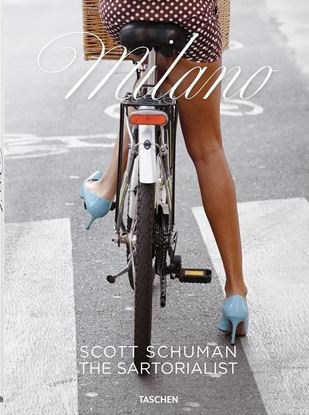
In 2005, Scott Schuman transformed fashion photography forever when he founded the blog The Sartorialist. The idea was simple: to open a dialogue between fashion and daily life, by shooting locals in public spaces. But in the lineage of Bill Cunningham and August Sander, that unpretentious, radical emphasis on “real people”—off the runway, out of the studio—elevated people-watching to an art and street style to high fashion, long before Instagram. In Milan, Schuman found a muse dressed for the task.
Milano chronicles nearly twenty years of his devotion to the inimitable Milanese and their bustling, stylish city, first as a visitor, then as a local. Featuring a foreword by the late Giorgio Armani and an extensive interview unpacking Schuman’s unique approach to capturing fashion in the wild, the photos are so cinematically composed, it’s a wonder they were shot on the move. Schuman seems to pause Milano, not only those shoppers, skaters, and smokers who might have the time but those without it: Miuccia Prada, Emiliano Salci, Luciano Barbera, the Sozzani sisters, all caught here in the same streets and |caffés. What emerges is a street-view history of modern Milanese fashion, by an American with the open mind to see the elegance overlooked by locals born to it and missed in stiffer fashion shoots—the beauty in the authentic, unpredictable styles combined only by those under no pressure to conform. Young and old, they pose while Milan flies by on bikes, Vespas, and trams, amid a dazzle of marble, frescos, sculptures, spires, columns, ornate palazzi and brutalist facades, local markets, florists, vertical gardens, iconic hangouts like Bar Basso and Marchesi 1824, espressos, handbags, high heels, and suits in every color imaginable. From the canals of Naviglio Grande to the cobblestones of Via Brera to the glass ceiling of “the Galleria Vittorio Emanuele II” and Milano Centrale, the city’s blend of architectural styles is seen as a radiant reflection of its people.
4,995
6,500
NORMAN FOSTER. NETWORKS
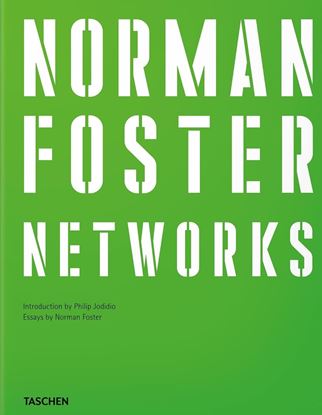
Norman Foster. Networks offers a rare first-person insight into the ideas, influences, and connections that have shaped one of the world’s greatest architects. Penned and curated by Foster himself, it brings together eight immersive essays in which he explores architecture not as a professional pursuit, but a nexus of passions, disciplines, and lived experience. In Roots, Foster examines his modest start in Manchester alongside his lifelong fascination with aviation, tracing the formative threads that underpin his work. Flight emerges as both obsession and metaphor, informing his pursuit of lightness, efficiency, and technical elegance. His deep attachment to the Alpine landscape―where he lives in a self-designed home of the future―reveals how place, climate, and topography continue to shape his thinking. Nature, Art, and Making are explored as essential creative partners to his architectural practice. The essays on Place and Cities widen the lens, considering memory, identity, and civic life, and how buildings collectively shape the public realm. Illustrated with nearly 1,000 photographs, sketches, artworks, film stills, and other cultural references, this extraordinary book is both a visual atlas and an intellectual framework―a self-exploration of the thinking behind such iconic works as Apple Park in Cupertino, the Reichstag in Berlin, the British Museum’s Great Court in London, the Millau Viaduct in France, and the Zayed National Museum in Abu Dhabi. It brings into focus the ideas, curiosities, and connections that define this colossus of modern architecture.
6,500
6,500
REMBRANDT. OBRA PICTORICA COMPLETA
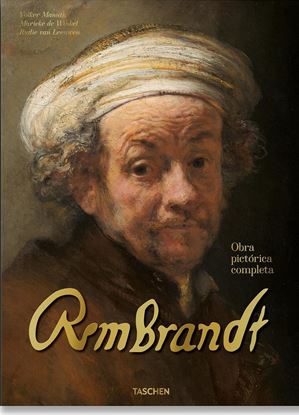
The Dutch Golden Age of painting spawned some of history’s greatest artists and artisans, but few can boast the genius and legacy of Rembrandt Harmensz. van Rijn (1606–1669). Despite never leaving his native Netherlands, Rembrandt projected his oeuvre past the boundaries of his own experience, producing some of art’s most diverse and impactful works across portraiture, biblical, allegorical, landscape, and genre scenes. In all their forms, Rembrandt’s paintings are built of intricacies—the totality of each subtle facial wrinkle, gaze, or figure amounting to an emotional force that stands unmatched among his contemporaries and artistic progeny alike.
6,500
3,995
GREAT ESCAPES LATIN AMERICA. THE HOTEL B
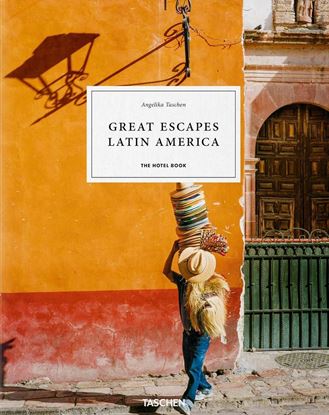
Latin America is a cradle of ancient civilizations like those of the Incas, Maya and Aztecs, and later became the goal of European explorers and immigrants. It looks back on a long history, often full of contrasts and contradictions, but also has a very special multicultural atmosphere. This book presents unique, almost breathtakingly beautiful landscapes and places with extraordinary hotels. Short texts and practical information complement the superb photos.The places to stay shown here include the Anavilhanas Jungle Lodge in the Brazilian Amazon and the Uxua on the beach of Trancoso, for which a Dutch designer has transformed historic buildings into villas in ethnic style. Big Bang in Uruguay is a wonderful place for glamping between the ocean and the forest. The elegant vacation destinations of this country are home to the Fasano Punta del Este by the architect Isay Weinfeld and the Posada Ayana, where the American Land Art star James Turrell has installed one of his famous Skyspaces on the estate.This journey also goes to the Explora El Chaltén at the foot of Monte Fitz Roy in rugged Patagonia, to the Tierra Atacama in the world’s driest desert in Chile, to the mid-century classic Antumalal, and to Easter Island, guarded since time immemorial by the huge stone sculptures of the Moai.
3,995
2,995
ART FOR ALL. HISTORIA DEL ARTE
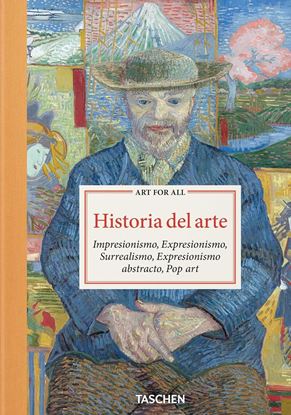
A comprehensive volume covering five seminal genres that shaped art, from the late 19th century and well into the 20th: Impressionism, Expressionism, Surrealism, Abstract Expressionism and Pop Art. Each approach was distinct in aesthetic and philosophy, but all had immediate impact and enduring influence. Many great names were indelibly associated with one, some explored several during their careers.
Impressionism, led by Monet and Renoir, focused on light and color, capturing fleeting moments and challenging academic art's rigidity. Expressionism was driven by artists like Edvard Munch and Wassily Kandinsky to convey raw emotion, distorting reality to reflect the angst of human experience. Surrealists, like Salvador Dalí and René Magritte, explored the subconscious, dreams, and the irrational, blending reality with fantasy across art, literature, and film. With Jackson Pollock and Mark Rothko leading the charge, Abstract Expressionism emphasized spontaneity and emotion through bold, gestural brushstrokes, and established New York as the post-war art world’s new Mecca.
2,995
6,500
ZAHA HADID. COMPLETE WORKS 1979-TODAY 20
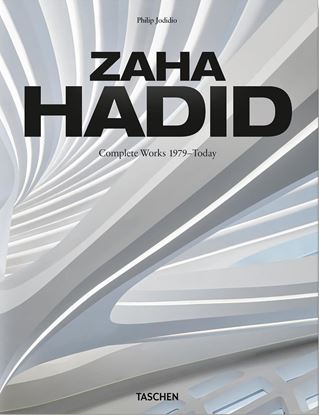
Zaha Hadid (1950 - 2016) was a revolutionary architect. For years, she was widely acclaimed and won numerous prizes despite building practically nothing. Some even said her work was simply impossible to build. Yet, during the latter years of her life, Hadid’s daring visions became a reality, bringing a new and unique architectural language to cities and structures such as the Port House in Antwerp, the Al Janoub Stadium near Doha, Qatar, and the spectacular new airport terminal in Beijing.
By her untimely death in 2016, Hadid was firmly established among architecture’s finest elite, working on projects in Europe, China, the Middle East, and the United States. She was the first female architect to win both the Pritzker Prize for architecture and the prestigious RIBA Royal Gold Medal, with her long-time Partner Patrik Schumacher now the leader of Zaha Hadid Architects and in charge of many new projects.
6,500