

1,995
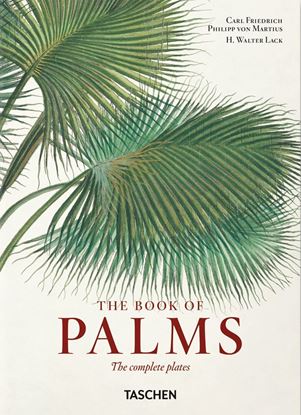
MARTIUS. EL LIBRO DE LAS P. (45TH) (IEP)
El 15 de diciembre de 1868, Carl Friedrich Philipp von Martius (1794-1868), profesor de botánica en la Universidad de Múnich y director del Royal Botanic Garden, fue llevado a la tumba en un ataúd cubierto de hojas de palmera recién cortadas. Las frondas eran un guiño a Historia natural de las palmeras: una obra en tres volúmenes, una obra excepcional que publicó entre 1823 y 1853.
Este tesoro enciclopédico formado por 240 ilustraciones cromolitográficas exquisitas se inspiró en las expediciones de Martius por Brasil y Perú. Entre 1817 y 1820 recorrió, junto al zoólogo Johann Baptist von Spix, más de 2.250 kilómetros por la cuenca amazónica para investigar la historia natural y las tribus nativas.
1,995
2,400
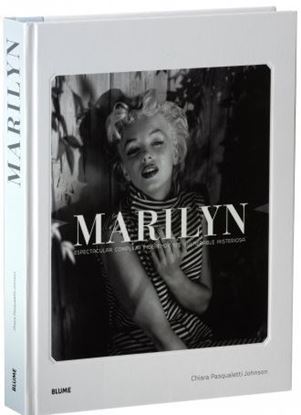
MARYLIN
La leyenda de Marilyn Monroe nunca deja de fascinar. Hoy, tanto como ayer, es la estrella de cine que más admiración mundial ha suscitado a lo largo de la historia.
Una seductora irresistible, pero también «la chica normal que conquista Hollywood», de estilo sexi, sugerente y provocador, y un cabello rubio platino. Se convirtió en el símbolo de toda una época y estuvo casada o se la vinculó con algunos de los hombres más famosos y poderosos del mundo, desde el campeón de béisbol Joe DiMaggio al dramaturgo Arthur Miller, o incluso John F. Kennedy.
Pero su radiante sonrisa escondía el dolor de una infancia difícil y su desesperada necesidad de amor.
2,400
1,850
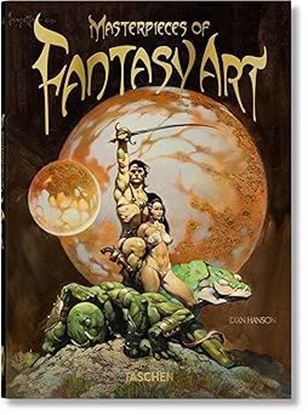
MASTERPIECES OF FANTASY ART. (40TH ED.)
Fantasy art, that colorful blend of myth, muscle and sexy maidens, took off in 1923 with the launch of Weird Tales magazine, was reinvigorated in the 1960s with The Lord of the Rings, Conan the Barbarian paperbacks with Frank Frazetta covers, and the late ’60s emergence of fantasy psychedelia. It went big in the ’70s with the role-playing game Dungeons & Dragons, the brilliant French magazine Métal Hurlant, and the first Star Wars film. The number of active artists peaked in that decade, but a new generation of fans discovered the genre through fantasy trading card games in the ’90s, leading to a massive interest in the art form today.
1,850
1,250
MATISSE. CUT-OUTS
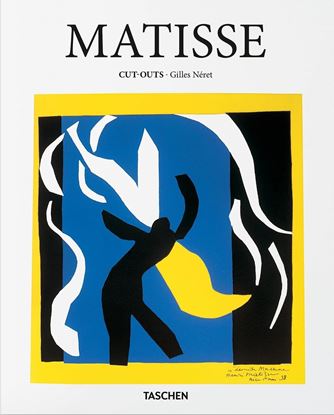
Henri Matisse (1869–1954) was a fighting spirit. Despite a cancer diagnosis in 1941, increasing frailty, and the confines of a wheelchair, the indomitable Frenchman never stopped in his quest to make art. With what he called une seconde vie, a second life, he embarked on a remarkable collage period, cutting and pasting pieces of colored paper into gouaches découpées of birds, plants, flowers, and the female form.Emphasizing color and contrast, the cut-out technique generated both striking lines and vivid juxtapositions. In works such as Icarus (1943), The Blue Nude (1952), The Snail (1953), and The Sheaf (1953), clean forms and elemental structures power a compositional force that belies the work’s decorative appeal, at once tightly organized and infectious with joie de vivre. As his work progressed, Matisse’s excitement with his results fueled ever-larger pieces, advancing from small works to vast wall-sized murals.As his final years approached, Matisse reveled in the simplicity and brilliance of these pieces, avowing, “Only what I created after the illness constitutes my real self: free, liberated…” In this essential introductory book, we revisit this joyful final chapter of Matisse’s long and prodigious career, examining how the cut-outs encapsulated the artist’s many years exploring the possibilities of composition, form, and color.
1,250
1,995
MATISSE. CUT-POUTS. (45TH) (INT)
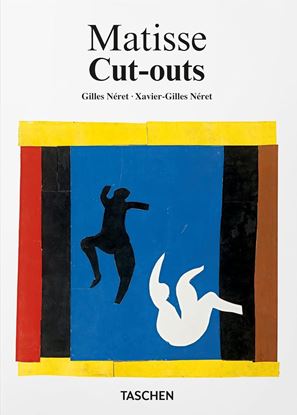
Toward the end of his monumental career as a painter, sculptor, and lithographer, an elderly, sickly Matisse was unable to stand and use a paintbrush for long. In this late phase of his life—he was almost 80 years of age—he developed the technique of “carving into color,” creating bright, bold paper cut-outs. Though dismissed by some contemporary critics as the folly of a senile old man, these gouaches decoupées (gouache cut-outs) in fact represented a revolution in modern art, a whole new medium that reimagined the age-old conflict between color and line.This edition of the first volume of our original award-winning XXL book provides a thorough historical context to Matisse’s cut-outs, tracing their roots to his 1930 trip to Tahiti and continuing through to his final years in Nice. It includes many photos of Matisse, as well as some rare images by Henri Cartier-Bresson and the filmmaker F. W. Murnau, with texts by Matisse, publisher E. Tériade, the poets Louis Aragon, Henri Michaux, and Pierre Reverdy, and Matisse’s son-in-law Georges Duthuit.In their deceptive simplicity, the cut-outs achieved both a sculptural quality and an early minimalist abstraction, which would profoundly influence generations of artists to come. Exuberant, multi-hued, and often grand in scale, these works are true pillars of 20th-century art, and as bold and innovative to behold today as they were in Matisse’s lifetime.
1,995
1,250
MAX ERNST (BA-ART) (E)
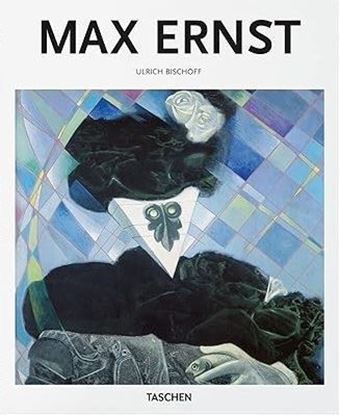
Max Ernst (1891-1976) transformó todo lo que tocó con una originalidad artística sin igual. Se convirtió en una de las figuras más importantes del dadaísmo y del surrealismo que ensanchó las fronteras del arte y rompió con la visión limitada de la cultura de su tiempo. Impulsado por la reacción a los horrores de la Primera Guerra Mundial, se convirtió en un pionero del movimiento dadaísta. La cancelación de la famosa exposición dadá en Colonia por “obscenidad” llevó a Ernst a pasar el resto de su vida en París, donde entró en contacto con los surrealistas.Por encima de todo, Ernst destaca por la variedad de estilos y técnicas que empleó. Su obra abarca desde la pintura, el dibujo y la escultura, pasando por textos y escenografías, hasta novelas de collage y el desarrollo de su propia técnica de frottage. Durante la Segunda Guerra Mundial, Ernst, como muchos de sus colegas, se convirtió en un “extranjero indeseable” y se vio obligado a emigrar, aunque regresó a Francia después de la guerra. Siguió desarrollando una carrera que abarcó décadas, y en 1954 recibió el Gran Premio de Pintura en la Bienal de Venecia.Este libro es un viaje por la magia, la intensidad y la fantasía. Es una puerta de entrada a la mente y el mundo complejo de Max Ernst.
1,250