

1,850
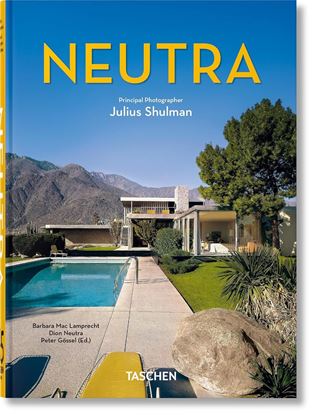
NEUTRA. 45TH ED.
Originally from Vienna, Richard Neutra came to America early in his career, settling in California. His influence on postwar architecture is undisputed, the sunny climate and rich landscape being particularly suited to his cool, sleek modern style.
Neutra had a keen appreciation for the relationship between people and nature; his trademark plate glass walls and ceilings which turn into deep overhangs have the effect of connecting the indoors with the outdoors. His ability to incorporate technology, aesthetics, science, and nature into his designs brought him to the forefront of Modernist architecture.
1,850
6,500
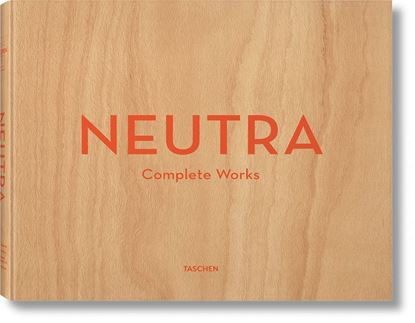
NEUTRA. COMPLETE WORKS (GB)
Originally from Vienna, Richard Neutra came to America early in his career, settling in California. His influence on postwar architecture is undisputed, the sunny climate and rich landscape being particularly suited to his cool, sleek modern style.
Neutra had a keen appreciation for the relationship between people and nature; his trademark plate glass walls and ceilings which turn into deep overhangs have the effect of connecting the indoors with the outdoors. His ability to incorporate technology, aesthetics, science, and nature into his designs brought him to the forefront of Modernist architecture.
6,500
2,200
1,750
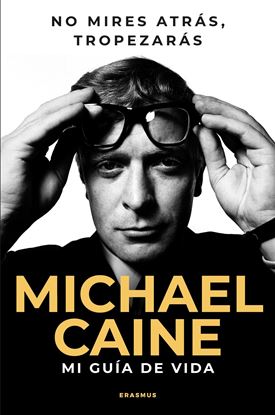
NO MIRES ATRAS, TROPEZARAS
SUS PELÍCULAS, SUS AMIGOS, SUS AFICIONES, SUS CONSEJOS Y SU RECETA PARA SER FELIZ A sus 90 años, Michael Caine, leyenda viva del cine, comparte con su inconfundible humor y sabiduría las lecciones que le ha dado una vida plena delante y detrás de las cámaras. Con ingenio y franqueza, habla de sus películas más queridas, de los amigos que marcaron su camino, de sus pasiones y del arte de mantenerse joven de espíritu. Siempre me hacen preguntas: los fans, otros actores, mis amigos, mis nietos.? Quieren saber cómo he conseguido durar tanto tiempo, cómo llevo la fama, por qué elegí ciertas películas, cuáles son mis favoritas, o qué actores admiro. También preguntan qué me motiva a seguir adelante, qué me hace levantarse cada mañana con ilusión y si alguna vez pienso jubilarme. (La respuesta es: ¡no!). Este libro es el testimonio optimista y luminoso de una vida bien vivida. Un canto a la alegría, al trabajo bien hecho y a la importancia de mantener la curiosidad, el humor y la esperanza —a cualquier edad.
1,750
6,500
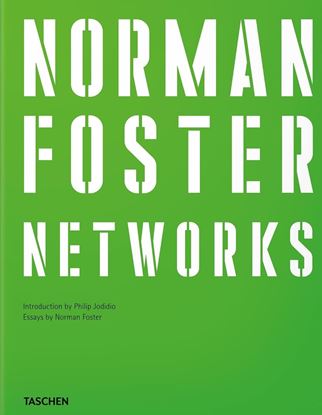
NORMAN FOSTER. NETWORKS
Norman Foster. Networks offers a rare first-person insight into the ideas, influences, and connections that have shaped one of the world’s greatest architects. Penned and curated by Foster himself, it brings together eight immersive essays in which he explores architecture not as a professional pursuit, but a nexus of passions, disciplines, and lived experience. In Roots, Foster examines his modest start in Manchester alongside his lifelong fascination with aviation, tracing the formative threads that underpin his work. Flight emerges as both obsession and metaphor, informing his pursuit of lightness, efficiency, and technical elegance. His deep attachment to the Alpine landscape―where he lives in a self-designed home of the future―reveals how place, climate, and topography continue to shape his thinking. Nature, Art, and Making are explored as essential creative partners to his architectural practice. The essays on Place and Cities widen the lens, considering memory, identity, and civic life, and how buildings collectively shape the public realm. Illustrated with nearly 1,000 photographs, sketches, artworks, film stills, and other cultural references, this extraordinary book is both a visual atlas and an intellectual framework―a self-exploration of the thinking behind such iconic works as Apple Park in Cupertino, the Reichstag in Berlin, the British Museum’s Great Court in London, the Millau Viaduct in France, and the Zayed National Museum in Abu Dhabi. It brings into focus the ideas, curiosities, and connections that define this colossus of modern architecture.
6,500
995
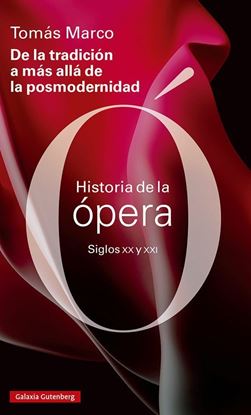
OPERA SIGLO XX Y XXI. DE LA TRADICION A
La ópera 'no es una reliquia del pasado'; es un mundo vivo en el que se reflejan los cambios culturales y sociales. Así lo demuestra Tomás Marco en esta ambiciosa cartografía mundial del genero que recorre el último siglo y cuarto, aproximadamente, de su historia. De Puccini, Strauss y Janác?ek hasta Pedro Halffter, Michel van der Aa, Toshio Hosokawa o Rachel Peters, pasando por Schönberg, Britten o Stockhausen, a lo largo de estas páginas asistimos, fascinados, a la disolución de su forma decimonónica hasta sus mutaciones más experimentales. No se había escrito antes una obra de esta envergadura sobre la ópera de nuestros días. 'Durante el siglo XX, todo, sometido a una presión tremenda, saltó por los aires. Fue una lucha sin cuartel. Había que encontrar nuevos caminos que permitieran la supervivencia del genero. Se siguieron viejas fórmulas, se crearon otras nuevas, algunos creyeron que la ópera estaba muerta, que ya no servía, y se negaron a componer obras líricas; otros -la mayoría- aceptaron el reto y consiguieron en algunos casos resultados formidables.
995