


900
THE POWER OF REGRET
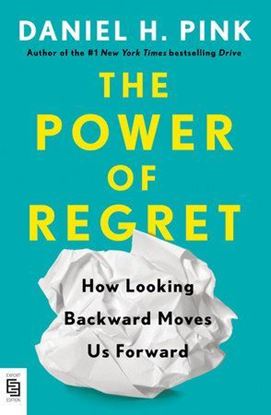
Everybody has regrets, Daniel H. Pink explains in The Power of Regret. They’re a universal and healthy part of being human. And understanding how regret works can help us make smarter decisions, perform better at work and school, and bring greater meaning to our lives.
Drawing on research in social psychology, neuroscience, and biology, Pink debunks the myth of the “no regrets” philosophy of life. And using the largest sampling of American attitudes about regret ever conducted as well as his own World Regret Survey—which has collected regrets from more than 15,000 people in 105 countries—he lays out the four core regrets that each of us has. These deep regrets offer compelling insights into how we live and how we can find a better path forward.
As he did in his bestsellers Drive, When, and A Whole New Mind, Pink lays out a dynamic new way of thinking about regret and frames his ideas in ways that are clear, accessible, and pragmatic. Packed with true stories of people's regrets as well as practical takeaways for reimagining regret as a positive force, The Power of Regret shows how we can live richer, more engaged lives.
900
700
THE RABBIT HUTCH
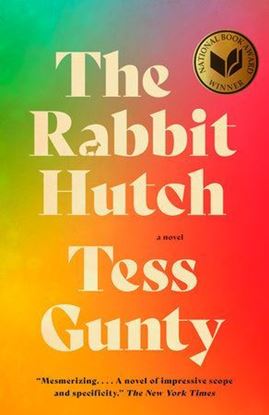
The automobile industry has abandoned Vacca Vale, Indiana, leaving its residents behind, too. In a run-down apartment building on the edge of town, commonly known as the Rabbit Hutch, lives one of these people, a young girl named Blandine Watkins, who The Rabbit Hutch centers around. Hauntingly beautiful and unnervingly bright, Blandine lives alongside three teenage boys, all recently aged out of the state foster-care system, all of them madly in love with Blandine. Plagued by the structures, people, and places that not only failed her but actively harmed her, Blandine pays no mind to their affection. All she wants is an escape, a true bodily escape like the mystics describe in the books she reads.
700

995
THE SECOND COMING
When 13-year-old Jolie Aspern drops her phone onto the subway tracks in 2011, her estranged dad, Ethan, seems like the furthest thing from her mind. A convicted felon and recovering addict, Ethan has always struggled to see past himself. But then a call from his ex makes him fear their daughter's in deeper trouble than anyone realizes. Believing he's the only one who can save her, he decides to return to New York with a gift: the whole of his life, its hard-won triumphs and harrowing mistakes . . .
So begins the intimate epic of Jolie and Ethan: child and adult, apart and together, different yet the same. Their journey toward each other will face opposition from grandparents and siblings and friends. It will strain connections with roommates and benefactors and a probation officer desperate to help. It will push Jolie out past her depth with a mysterious admirer, and Ethan in over his head with his first love, Jolie's mom. But as father and daughter struggle to find their footing, new vistas beckon: from a surf break in mid-'90s Delaware to group therapy during the great recession, from an encampment at Occupy Wall Street to a HoJo on Maryland's Eastern Shore, from the heights of the Brooklyn Bridge to horizons seldom seen in fiction.
995

995
THE SECRET
A string of mysterious deaths. A long-classified mission. A young MP with nothing to lose.
1992. All across the United States respectable, upstanding citizens are showing up dead. These deaths could be accidents, and they don’t appear to be connected—until a fatal fall from a high-floor window attracts some unexpected attention.
That attention comes from the secretary of defense. All of a sudden he wants an interagency task force to investigate. And he wants Jack Reacher as the army’s representative. If Reacher gets a result, great. If not, he’s a convenient fall guy.
But office politics isn’t Reacher’s thing. Three questions quickly emerge: Who’s with him, who’s against him, and will the justice he dispenses be the official kind . . . or his own kind?
995
1,995
THE SECRET OF SECRETS (HC)
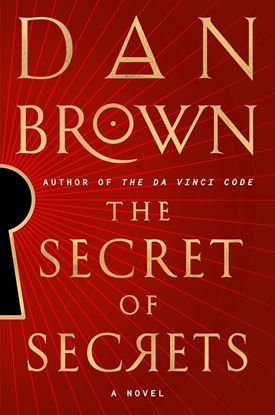
Robert Langdon, esteemed professor of symbology, travels to Prague to attend a groundbreaking lecture by Katherine Solomon—a prominent noetic scientist with whom he has recently begun a relationship. Katherine is on the verge of publishing an explosive book that contains startling discoveries about the nature of human consciousness and threatens to disrupt centuries of established belief. But a brutal murder catapults the trip into chaos, and Katherine suddenly disappears along with her manuscript. Langdon finds himself targeted by a powerful organization and hunted by a chilling assailant sprung from Prague’s most ancient mythology. As the plot expands into London and New York, Langdon desperately searches for Katherine . . . and for answers. In a thrilling race through the dual worlds of futuristic science and mystical lore, he uncovers a shocking truth about a secret project that will forever change the way we think about the human mind.
1,995

995
THE SEVENTH VEIL OF SALOME
1950s Hollywood: Every actress wants to play Salome, the star-making role in a big-budget movie about the legendary woman whose story has inspired artists since ancient times.
So when the film’s mercurial director casts Vera Larios, an unknown Mexican ingenue, in the lead role, she quickly becomes the talk of the town. Vera also becomes an object of envy for Nancy Hartley, a bit player whose career has stalled and who will do anything to win the fame she believes she richly deserves.
Two actresses, both determined to make it to the top in Golden Age Hollywood—a city overflowing with gossip, scandal, and intrigue—make for a sizzling combination.
But this is the tale of three women, for it is also the story of the princess Salome herself, consumed with desire for the fiery prophet who foretells the doom of her stepfather, Herod: a woman torn between the decree of duty and the yearning of her heart.
Before the curtain comes down, there will be tears and tragedy aplenty in this sexy Technicolor saga.
995
1,350
THE SHACK
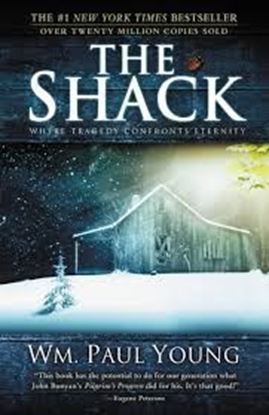
Mackenzie Allen Philip's youngest daughter, Missy, has been abducted during a family vacation and evidence that she may have been brutally murdered is found in an abandoned shack deep in the Oregon wilderness. Four years later, in the midst of his Great Sadness, Mack receives a suspicious note, apparently from God, inviting him back to that shack for a weekend. Against his better judgment he arrives at the shack on a wintry afternoon and walks back into his darkest nightmare. What he finds there will change Mack's world forever. In a world where religion seems to grow increasingly irrelevant THE SHACK wrestles with the timeless Where is God in a world so filled with unspeakable pain? The answers Mack gets will astound you and perhaps transform you as much as it did him.
1,350
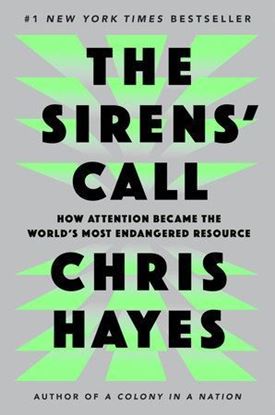
1,750
THE SIRENS' CALL
We all feel it—the distraction, the loss of focus, the addictive focus on the wrong things for too long. We bump into the zombies on their phones in the street, and sometimes they’re us. We stare in pity at the four people at the table in the restaurant, all on their phones, and then we feel the buzz in our pocket. Something has changed utterly: for most of human history, the boundary between public and private has been clear, at least in theory. Now, as Chris Hayes writes, “With the help of a few tech firms, we basically tore it down in about a decade.” Hayes argues that we are in the midst of an epoch-defining transition whose only parallel is what happened to labor in the nineteenth century: attention has become a commodified resource extracted from us, and from which we are increasingly alienated. The Sirens’ Call is the big-picture vision we urgently need to offer clarity and guidance.
1,750
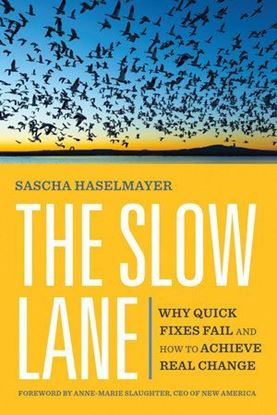
1,450
THE SLOW LANE
Avoid the speed trap! Discover how changemakers can find lasting solutions to urgent social problems through a proven 5-step process for listening thoughtfully, building broad support, and exploring unconventional options.
Society celebrates leaders who promise fast, easy solutions to the world’s problems—but quick fixes are just mirages that fade, leaving us with the same broken systems. The truth is, effective social change happens through slow, intentional actions.
1,450