800
640
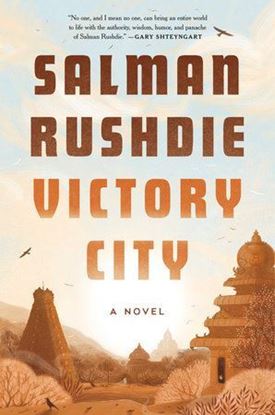
VICTORY CITY
In the wake of an unimportant battle between two long-forgotten kingdoms in fourteenth-century southern India, a nine-year-old girl has a divine encounter that will change the course of history. After witnessing the death of her mother, the grief-stricken Pampa Kampana becomes a vessel for a goddess, who begins to speak out of the girl’s mouth. Granting her powers beyond Pampa Kampana’s comprehension, the goddess tells her that she will be instrumental in the rise of a great city called Bisnaga—“victory city”—the wonder of the world.
Over the next 250 years, Pampa Kampana’s life becomes deeply interwoven with Bisnaga’s, from its literal sowing from a bag of magic seeds to its tragic ruination in the most human of ways: the hubris of those in power. Whispering Bisnaga and its citizens into existence, Pampa Kampana attempts to make good on the task that the goddess set for her: to give women equal agency in a patriarchal world. But all stories have a way of getting away from their creator, and Bisnaga is no exception. As years pass, rulers come and go, battles are won and lost, and allegiances shift, the very fabric of Bisnaga becomes an ever more complex tapestry—with Pampa Kampana at its center.
800
640
800
640
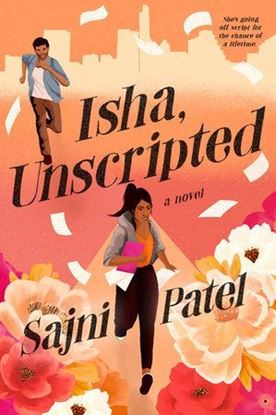
ISHA, UNSCRIPTED
Isha Patel is the black sheep of the family. She doesn’t have a “prestigious” degree or a “real” career, and her parents never fail to remind her. But that’s okay because she commiserates with her cousin, best friend, and fellow outcast, Rohan.
When Isha has a breakthrough getting her script in front of producers, it doesn’t go according to plan. Instead of letting her dreams fall through the cracks, Rohan convinces her to snag a pitch session with an Austinite high-profile celeb: the one and only Matthew McConaughey, who also happened to be her professor at the University of Texas years ago—he has to remember her, right?
Chasing Matthew McConaughey isn’t easy. Isha needs a drink or two to muster up courage, and she gets a little help from the cutest bartender she’s ever encountered. But when the search for the esteemed actor turns into a night of hijinks and unexpected—albeit fun—chaos, everything falls apart. Isha’s dreams seem farther than ever, but she soon realizes who she really needs to face and that her future may just be alright, alright, alright.
800
640
800
640
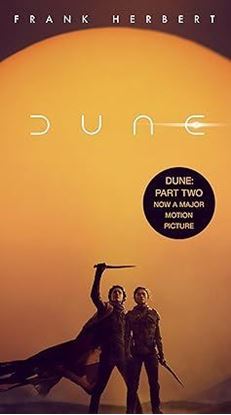
DUNE (MOVIE TIE-IN) (MM)
Set on the desert planet Arrakis, Dune is the story of Paul Atreides−who would become known as Maud’Dib—and of a great family’s ambition to bring to fruition humankind’s most ancient and unattainable dream.
A stunning blend of adventure and mysticism, environmentalism and politics.
800
640

800
640
800
640
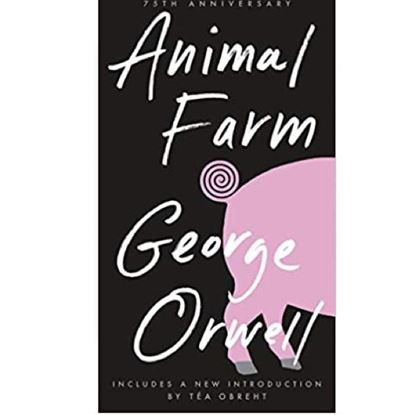
ANIMAL FARM
George Orwell's timeless and timely allegorical novela scathing satire on a downtrodden societys blind march towards totalitarianism. All animals are equal, but some animals are more equal than others. A farm is taken over by its overworked, mistreated animals. With flaming idealism and stirring slogans, they set out to create a paradise of progress, justice, and equality. Thus the stage is set for one of the most telling satiric fables ever penneda razor-edged fairy tale for grown-ups that records the evolution from revolution against tyranny to a totalitarianism just as terrible. When Animal Farm was first published, Stalinist Russia was seen as its target. Today it is devastatingly clear that wherever and whenever freedom is attacked, under whatever banner, the cutting clarity and savage comedy of George Orwells masterpiece have a meaning and message still ferociously fresh.
800
640
800
640
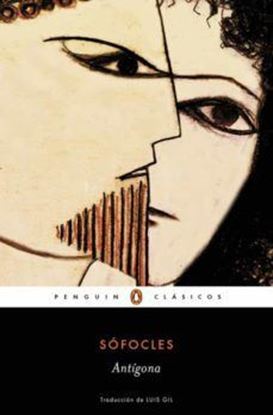
ANTIGONA
Antígona, hija del rey Edipo, se debate entre ceñirse a la ley impuesta o infringirla para honrar a su difunto hermano
Antígona está basada en el mito de la mujer que se atrevió a enfrentarse a los hombres para lograr sus propósitos. En esencia, la trama de la obra plantea una reflexión sobre la tiranía, las razones del estado y los dilemas de conciencia. Representada por primera vez en el año 442 a.C., Sófocles utilizó personajes arquetípicos para contraponer dos nociones opuestas del deber: el respeto a las normas religiosas frente a las civiles, caracterizadas unas por Antígona y las otras por Creonte.
Esta edición cuenta con la traducción y el prólogo Luis Gil, profesor emérito en la Universidad Complutense de Madrid. Incluye, además, el estudio en forma de epílogo realizado por los profesores de comunicación audiovisual de la Universidad Pompeu Fabra Jordi Balló y Xavier Pérez.
«Y ¿qué derecho divino he transgredido? Mas ¿por qué he de poner, desdichada de mí, mi vista aún en los dioses? ¿A qué aliado puedo invocar?»
800
640