2,900
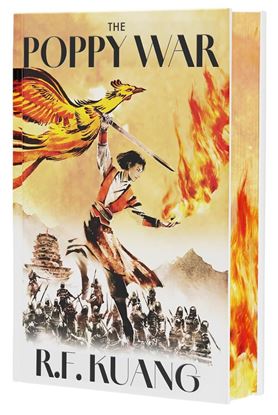
THE POPPY WAR COLLECTOR'S ED. (1) (HC)
When Rin aced the Keju—the Empire-wide test to find the most talented youth to learn at the Academies—it was a shock to everyone: to the test officials, who couldn’t believe a war orphan from Rooster Province could pass without cheating; to Rin’s guardians, who believed they’d finally be able to marry her off and further their criminal enterprise; and to Rin herself, who realized she was finally free of the servitude and despair that had made up her daily existence. That she got into Sinegard—the most elite military school in Nikan—was even more surprising.
But surprises aren’t always good.
Because being a dark-skinned peasant girl from the south is not an easy thing at Sinegard. Targeted from the outset by rival classmates for her color, poverty, and gender, Rin discovers she possesses a lethal, unearthly power—an aptitude for the nearly mythical art of shamanism. Exploring the depths of her gift with the help of a seemingly insane teacher and psychoactive substances, Rin learns that gods long thought dead are very much alive—and that mastering control over those powers could mean more than just surviving school.
2,900
2,900
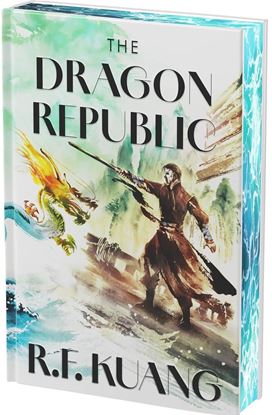
THE DRAGON REPUBLIC (2) DELUXE COLLECTOR
The war is over.
The war has just begun.
Three times throughout its history, Nikan has fought for its survival in the bloody Poppy Wars. Though the third battle has ended, the war still rages for Rin. Haunted by the atrocity she committed to save her people, the shaman and warrior is on the run from her guilt, the opium addiction that holds her like a vise, and the murderous commands of the fiery Phoenix—the vengeful god who has blessed Rin with fearsome power.
While the young warrior welcomes death, she must remain alive until she avenges the traitorous Empress who betrayed her homeland. Rin’s only hope is to join forces with the enemy of her enemy—the powerful Dragon Warlord, who plots to destroy the Empress.
2,900
2,900
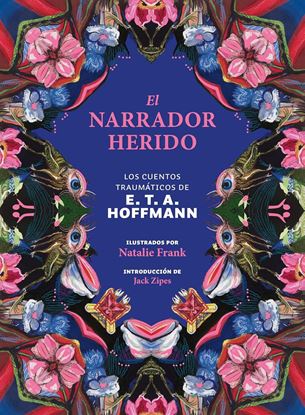
EL NARRADOR HERIDO
E. T. A. Hoffmann (1776-1822) fue uno de los más grandes autores románticos alemanes de fantasía y pionero del género del horror gótico. En El narrador herido, Jack Zipes, especialista en cuentos de hadas, arroja luz sobre cómo la vida de traumas personales de Hoffmann dio forma a su escritura e inspiró sus innovadoras historias. Zipes ha seleccionado cinco de los relatos más influyentes del escritor alemán: El caldero dorado, El hombre de la arena, Cascanueces y el rey de los ratones, El niño misterioso y Las minas de Falun; en ellos explora temas e inventa personajes que se mueven entre la realidad, los sueños y la fantasía. La edición se enriquece de manera genial con los pasteles de tiza y gouache de Natalie Frank, llenos de fuerza, que revelan esos mundos paralelos de Hoffmann en dibujos compuestos a página completa y en los márgenes, pensados exclusivamente para esta edición. El narrador herido presenta, pues, el trabajo atemporal de Hoffmann a una nueva generación de lectores.
2,900