
800
JANE & EDWARD
A former foster kid, Jane has led a solitary life as a waitress in the suburbs, working hard to get by. Tired of years of barely scraping together a living, Jane takes classes to become a legal assistant and shortly after graduating accepts a job offer at a distinguished law firm in downtown Toronto. Everyone at the firm thinks she is destined for failure because her boss is the notoriously difficult Edward Rosen, the majority stakeholder of Rosen, Haythe & Thornfield LLP. But Jane has known far worse trials and refuses to back down when economic freedom is so close at hand.
Edward has never been able to keep an assistant—he’s too loud, too messy, too ill-tempered. There’s something about the quietly competent, delightfully sharp-witted Jane that intrigues him though. As their orbits overlap, their feelings begin to develop—first comes fondness and then something more. But when Edward’s secrets put Jane’s independence in jeopardy, she must face long-ignored ghosts from her past and decide if opening her heart is a risk worth taking.
800
800
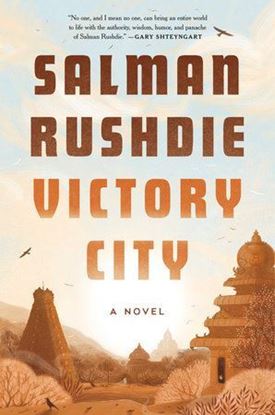
VICTORY CITY
In the wake of an unimportant battle between two long-forgotten kingdoms in fourteenth-century southern India, a nine-year-old girl has a divine encounter that will change the course of history. After witnessing the death of her mother, the grief-stricken Pampa Kampana becomes a vessel for a goddess, who begins to speak out of the girl’s mouth. Granting her powers beyond Pampa Kampana’s comprehension, the goddess tells her that she will be instrumental in the rise of a great city called Bisnaga—“victory city”—the wonder of the world.
Over the next 250 years, Pampa Kampana’s life becomes deeply interwoven with Bisnaga’s, from its literal sowing from a bag of magic seeds to its tragic ruination in the most human of ways: the hubris of those in power. Whispering Bisnaga and its citizens into existence, Pampa Kampana attempts to make good on the task that the goddess set for her: to give women equal agency in a patriarchal world. But all stories have a way of getting away from their creator, and Bisnaga is no exception. As years pass, rulers come and go, battles are won and lost, and allegiances shift, the very fabric of Bisnaga becomes an ever more complex tapestry—with Pampa Kampana at its center.
800
800
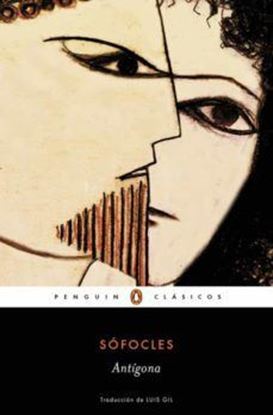
ANTIGONA
Antígona, hija del rey Edipo, se debate entre ceñirse a la ley impuesta o infringirla para honrar a su difunto hermano
Antígona está basada en el mito de la mujer que se atrevió a enfrentarse a los hombres para lograr sus propósitos. En esencia, la trama de la obra plantea una reflexión sobre la tiranía, las razones del estado y los dilemas de conciencia. Representada por primera vez en el año 442 a.C., Sófocles utilizó personajes arquetípicos para contraponer dos nociones opuestas del deber: el respeto a las normas religiosas frente a las civiles, caracterizadas unas por Antígona y las otras por Creonte.
Esta edición cuenta con la traducción y el prólogo Luis Gil, profesor emérito en la Universidad Complutense de Madrid. Incluye, además, el estudio en forma de epílogo realizado por los profesores de comunicación audiovisual de la Universidad Pompeu Fabra Jordi Balló y Xavier Pérez.
«Y ¿qué derecho divino he transgredido? Mas ¿por qué he de poner, desdichada de mí, mi vista aún en los dioses? ¿A qué aliado puedo invocar?»
800