


995
OLD BABES IN THE WOOD
The two intrepid sisters of the title story grapple with loss and memory on a perfect summer evening; “Impatient Griselda” explores alienation and miscommunication with a fresh twist on a folkloric classic; and “My Evil Mother” touches on the fantastical, examining a mother-daughter relationship in which the mother purports to be a witch. At the heart of the collection are seven extraordinary stories that follow a married couple across the decades, the moments big and small that make up a long life of uncommon love—and what comes after.
995

995
UNNATURAL HISTORY
Los Angeles is a city of stark contrast, the palaces of the affluent coexisting uneasily with the hellholes of the mad and the needy. That shadow world and the violence it breeds draw brilliant psychologist Dr. Alex Delaware and Detective Milo Sturgis into an unsettling case of altruism gone wrong.
On a superficially lovely morning, a woman shows up for work with her usual enthusiasm. She’s the newly hired personal assistant to a handsome, wealthy photographer and is ready to greet her boss with coffee and good cheer. Instead, she finds him slumped in bed, shot to death.
The victim had recently received rave media attention for his latest project: images of homeless people in their personal “dream” situations, elaborately costumed and enacting unfulfilled fantasies. There are some, however, who view the whole thing as nothing more than crass exploitation, citing token payments and the victim’s avoidance of any long-term relationships with his subjects.
Has disgruntlement blossomed into homicidal rage? Or do the roots of violence reach down to the victim’s family—a clan, sired by an elusive billionaire, that is bizarre in its own right?
Then new murders arise, and Alex and Milo begin peeling back layer after layer of intrigue and complexity, culminating in one of the deadliest threats they’ve ever faced.
995
995
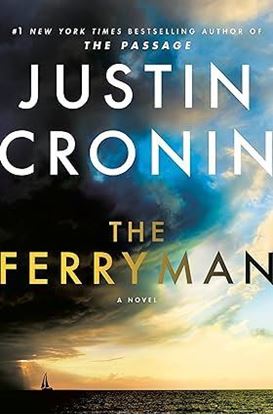
THE FERRYMAN
Founded by the mysterious genius known as the Designer, the archipelago of Prospera lies hidden from the horrors of a deteriorating outside world. In this island paradise, Prospera’s lucky citizens enjoy long, fulfilling lives until the monitors embedded in their forearms, meant to measure their physical health and psychological well-being, fall below 10 percent. Then they retire themselves, embarking on a ferry ride to the island known as the Nursery, where their failing bodies are renewed, their memories are wiped clean, and they are readied to restart life afresh.
Proctor Bennett, of the Department of Social Contracts, has a satisfying career as a ferryman, gently shepherding people through the retirement process—and, when necessary, enforcing it. But all is not well with Proctor. For one thing, he’s been dreaming—which is supposed to be impossible in Prospera. For another, his monitor percentage has begun to drop alarmingly fast. And then comes the day he is summoned to retire his own father, who gives him a disturbing and cryptic message before being wrestled onto the ferry.
995

995
THE MIDNIGHT NEWS
It is 1940 and twenty-year-old Charlotte Richmond watches from her attic window as enemy planes fly over London. Still grieving her beloved brother, who never returned from France, she is trying to keep herself out of trouble: holding down a typist job at the Ministry of Information, sharing gin and confidences with her best friend, Elena, and dodging her overbearing father.
On her way to work she often sees the boy who feeds the birds—a source of unexpected joy amid the rubble of the Blitz. But every day brings new scenes of devastation, and after yet another heartbreaking loss Charlotte has an uncanny sense of foreboding. Someone is stalking the darkness, targeting her friends. And now he’s following her.
As grief and suspicion consume her, Charlotte’s nerves become increasingly frayed. She no longer knows whom to trust. She can’t even trust herself . . .
995
995
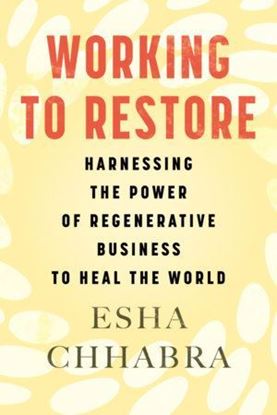
WORKING TO RESTORE
Political upheaval and social turmoil have peeled back the glitzy layers of capitalism to reveal an uncomfortable truth: historically, businesses have sourced materials from remote corners of the globe and moved millions of people and tons of cargo around the clock—all in the name of profit. Yet many of today’s startups are rewriting the rules of business: how it’s done, by whom, and, most importantly, for what purpose. Journalist Esha Chhabra draws on her decades of reporting to explore not only the “feel good, do good” factors of these restorative enterprises but also the nuanced realities and promise of regenerative business operations.
995
995
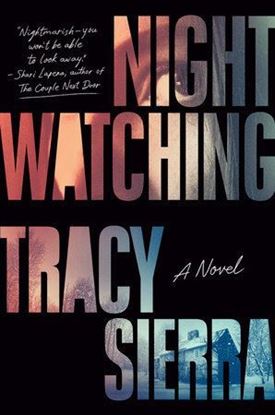
NIGHTWATCHING
Home alone with her young children during a blizzard, a mother tucks her son back into bed in the middle of the night. She hears a noise—old houses are always making some kind of noise. But this sound is disturbingly familiar: it’s the tread of footsteps, unusually heavy and slow, coming up the stairs.
She sees the figure of a man appear down the hallway, shrouded in the shadows. Terrified, she quietly wakes her children and hustles them into the oldest part of the house, a tiny, secret room concealed behind a wall. There they hide as the man searches for them, trying to tempt the children out with promises and scare the mother into surrender.
In the suffocating darkness, the mother struggles to remain calm, to plan. Should she search for a weapon or attempt escape? But then she catches another glimpse of him. That face. That voice. And at once she knows her situation is even more dire than she’d feared, because she knows exactly who he is—and what he wants.
995

995
OUT THERE SCREAMING: AN ANTHOLOGY OF NEW
A cop begins seeing huge, blinking eyes where the headlights of cars should be that tell him who to pull over. Two freedom riders take a bus ride that leaves them stranded on a lonely road in Alabama where several unsettling somethings await them. A young girl dives into the depths of the Earth in search of the demon that killed her parents. These are just a few of the worlds of Out There Screaming, Jordan Peele’s anthology of all-new horror stories by Black writers. Featuring an introduction by Peele and an all-star roster of beloved writers and new voices, Out There Screaming is a master class in horror, and—like his spine-chilling films—its stories prey on everything we think we know about our world . . . and redefine what it means to be afraid.
995

995
SECOND ACT
As the head of a prestigious movie studio for nearly two decades, Andy Westfield has had every conceivable professional luxury: a stunning office on the forty-fourth floor, a loyal assistant who can all but read his mind, access to a private jet and company cars. The son of Hollywood royalty, Andy always put his career before his marriage, and now, besides his daughter and young grandchildren, it’s the only thing he truly loves.
But then Andy’s world is upended. The studio is sold, and the buyer’s son demands the top seat. Out of a job and humiliated, Andy spirals. When his head clears, he decides to get as far away from Los Angeles as possible until the dust settles and he can find a new way forward.
Andy signs a six-month rental agreement for a luxurious home in a tiny, forgotten coastal town two hours from London. When he arrives, he hires a local woman to help get his affairs in order. A former journalist, Violet Smith is at a crossroads as well, and this temporary job is exactly what she needs to tide her over. But when Violet leaves the manuscript of her unfinished novel behind after work one day, Andy lets his curiosity get the best of him and is captivated by a story that begs to be adapted for the big screen. Could this be the miracle they’ve both been looking for?
In Second Act, Danielle Steel presents a heartening tale of how challenging times give way to opportunities and an original outline does not always contain the perfect ending.
995

995
THE SECRET
A string of mysterious deaths. A long-classified mission. A young MP with nothing to lose.
1992. All across the United States respectable, upstanding citizens are showing up dead. These deaths could be accidents, and they don’t appear to be connected—until a fatal fall from a high-floor window attracts some unexpected attention.
That attention comes from the secretary of defense. All of a sudden he wants an interagency task force to investigate. And he wants Jack Reacher as the army’s representative. If Reacher gets a result, great. If not, he’s a convenient fall guy.
But office politics isn’t Reacher’s thing. Three questions quickly emerge: Who’s with him, who’s against him, and will the justice he dispenses be the official kind . . . or his own kind?
995