

1,450
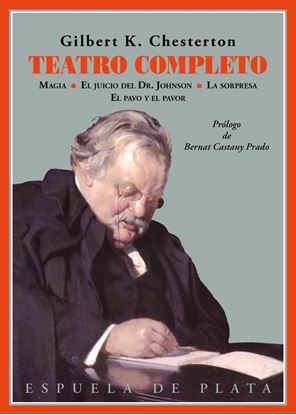
TEATRO COMPLETO
Además de haber publicado cuentos, novelas, poemas y ensayos, Gilbert Keith Chesterton también escribió teatro. Lo hizo a instancias de su buen amigo George Bernard Shaw, quien, después de insistirle mucho, logró convencerlo de que tenía algo que aportar al teatro inglés. En este volumen de Teatro completo se reúnen las únicas cuatro obras teatrales que Chesterton escribió: Magia (1913), El juicio del Dr. Johnson (1927), La sorpresa (1932), y el sainete navideño El pavo y el pavor (1930). En todas ellas se desarrollan de formas inesperadas algunas de las características fundamentales de su obra, como son su estilo paradójico, su antitradicionalismo acérrimo, su liberalismo radical y su capacidad de asombro. Sin duda, ningún género mejor que el del teatro para encarnar el espíritu de un autor que creía que tanto más contradictorias son las cosas cuanto más nos acercamos a la verdad. «Necesario, divertido, estimulante, a ratos perturbador y a ratos una pura majadería, este libro no solo completa el rompecabezas literario que representa G. K. Chesterton, sino que abruma con chispazos e ideas que atañen a la más inmediata actualidad política y religiosa. Increíble incluso para ser Chesterton». Jordi Gracia
1,450
1,450
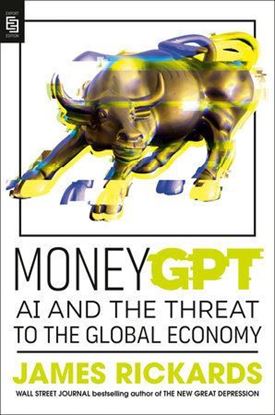
MONEYGPT
In November 2022, OpenAI released GPT-4 in a chatbot form to the public. In just two months, it claimed 100 million users—the fastest app to ever reach this benchmark. Since then, AI has become an all-consuming topic, popping up on the news, in ads, on your messenger apps, and in conversations with friends and family. But as AI becomes ubiquitous and grows at an ever-increasing pace, what does it mean for the financial markets?
In MoneyGPT, Wall Street veteran and former advisor to the Department of Defense James Rickards paints a comprehensive picture of the danger AI poses to the global financial order, and the insidious ways in which AI will threaten national security. Rickards shows how, while AI is touted to increase efficiency and lower costs, its global implementation in the financial world will actually cause chaos, as selling begets selling and bank runs happen at lightning speed. AI further benefits malicious actors, Rickards argues, because without human empathy or instinct to intervene, threats like total nuclear war that once felt extreme are now more likely. And throughout all this, we must remain vigilant on the question of whose values will be promoted in the age of AI. As Rickards predicts, these systems will fail when we rely on them the most.
1,450
1,450
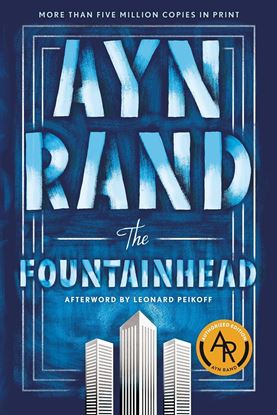
THE FOUNTAINHEAD
This modern classic is the story of intransigent young architect Howard Roark, whose integrity was as unyielding as granite...of Dominique Francon, the exquisitely beautiful woman who loved Roark passionately, but married his worst enemy...and of the fanatic denunciation unleashed by an enraged society against a great creator. As fresh today as it was then, Rand’s provocative novel presents one of the most challenging ideas in all of fiction that man’s ego is the fountainhead of human progress..
1,450

1,450
THE DRAGON REPUBLIC (2) (PB)
The war is over.
The war has just begun.
Three times throughout its history, Nikan has fought for its survival in the bloody Poppy Wars. Though the third battle has just ended, shaman and warrior Rin cannot forget the atrocity she committed to save her people. Now she is on the run from her guilt, the opium addiction that holds her like a vice, and the murderous commands of the fiery Phoenix—the vengeful god who has blessed Rin with her fearsome power.
Though she does not want to live, she refuses to die until she avenges the traitorous Empress who betrayed Rin’s homeland to its enemies. Her only hope is to join forces with the powerful Dragon Warlord, who plots to conquer Nikan, unseat the Empress, and create a new republic.
But neither the Empress nor the Dragon Warlord are what they seem. The more Rin witnesses, the more she fears her love for Nikan will force her to use the Phoenix’s deadly power once more.
Because there is nothing Rin won’t sacrifice to save her country . . . and exact her vengeance.
1,450
1,450
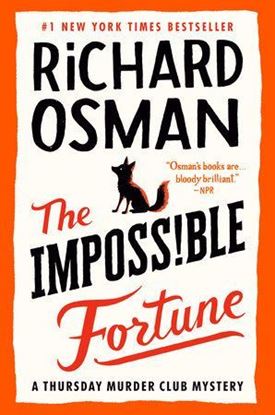
THE IMPOSSIBLE FORTUNE
Who’s got time to think about murder when there’s a wedding to plan?
It’s been a quiet year for the Thursday Murder Club. Joyce is busy with table plans and first dances. Elizabeth is grieving. Ron is dealing with family troubles, and Ibrahim is still providing therapy to his favorite criminal.
But when Elizabeth meets Nick, a wedding guest asking for her help, she finds the thrill of the chase is ignited once again. And when Nick disappears without a trace, his cagey business partner becomes the gang’s next stop. It seems the duo have something valuable—something worth killing for.
Joyce’s daughter, Joanna, jumps into the fray to help the gang as they seek answers: Has someone kidnapped Nick? And what’s this uncrackable code they keep hearing about? Plunged back into action once more, can the four friends solve the puzzle and a murder in time?
1,450
1,450
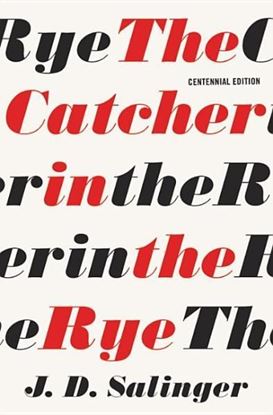
THE CATCHER IN THE RYE
"If you really want to hear about it, the first thing you'll probably want to know is where I was born, and what my lousy childhood was like, and how my parents were occupied and all before they had me, and all that David Copperfield kind of crap, but I don't feel like going into it, if you want to know the truth."
The hero-narrator of The Catcher in the Rye is an ancient child of sixteen, a native New Yorker named Holden Caufield. Through circumstances that tend to preclude adult, secondhand description, he leaves his prep school in Pennsylvania and goes underground in New York City for three days.
1,450