
1,450
CORSARIOS DE LEVANTE (ALATRISTE 6)
Durante casi dos años serví con el capitán Alatriste en las galeras de Nápoles. Por eso hablaré ahora de escaramuzas, corsarios, abordajes, matanzas y saqueos. Así conocerán vuestras mercedes el modo en que el nombre de mi patria era respetado, temido y odiado también en los mares de Levante. Contaré que el diablo no tiene color, ni nación, ni bandera; y cómo, para crear el infierno en el mar o en la tierra, no eran menester más que un español y el filo de una espada. En eso, como en casi todo, mejor nos habría ido haciendo lo que otros, más atentos a la prosperidad que a la reputación, abriéndonos al mundo que habíamos descubierto y ensanchado, en vez de enrocarnos en las sotanas de los confesores reales, los privilegios de sangre, la poca afición al trabajo, la cruz y la espada, mientras se nos pudrían la inteligencia, la patria y el alma. Pero nadie nos permitió elegir. Al menos, para pasmo de la Historia, supimos cobrárselo caro al mundo, acuchillándolo hasta que no quedamos uno en pie. Dirán vuestras mercedes que ése es magro consuelo, y tienen razón. Pero nos limitábamos a hacer nuestro oficio sin entender de gobiernos, filosofías ni teologías. Pardiez. Éramos soldados.
1,450
1,450
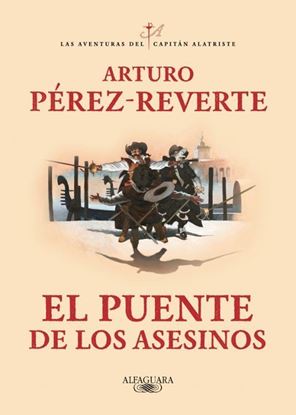
EL PUENTE DE LOS ASESINOS (ALATRISTE 7)
Acompañado del joven Íñigo Balboa, a Alatriste le ordenan intervenir en una conjura crucial para la corona española: un golpe de mano en Venecia para asesinar al dogo durante la misa de Navidad del año 1627, e imponer por la fuerza un gobierno favorable a la corte del rey católico en ese estado de Italia. Para Alatriste y sus camaradas -el veterano Sebastián Copons y el peligroso moro Gurriato, entre otros-, la misión se presenta difícil, arriesgada y llena de sorpresas. Suicida, tal vez; pero no imposible.
Diego Alatriste bajó del carruaje y miró en torno, desconfiado. Tenía por sana costumbre, antes de entrar en un sitio incierto, establecer por dónde iba a irse, o intentarlo, si las cosas terminaban complicándose. El billete que le ordenada acompañar al hombre de negro estaba firmado por el sargento mayor del tercio de Nápoles, y no admitía discusión alguna; pero nada más se aclaraba en él.
1,450

1,450
MISION EN PARIS (ALATRISTE 8)
Sonaba la medianoche en los relojes de París cuando entraron por la puerta de Saint-Jacques cuatro jinetes tan seguros de sí mismos como el trote firme de sus caballos».
Es medianoche. Íñigo Balboa, que forma parte de los Correos Reales del rey católico, aguarda expectante la llegada del capitán Alatriste, de Francisco de Quevedo y de Sebastián Copons a París, donde se encuentra para entregar unos despachos al conde de Guadalmedina. Hace casi un año que no se reúnen, cuando acabó la arriesgada encomienda que tuvieron que afrontar en Venecia. Son tiempos complejos para Francia: desde hace unos meses, los hugonotes de La Rochela, con apoyo inglés, están viviendo un duro asedio por parte de las fuerzas francesas a las órdenes del cardenal Richelieu. Por mediación de Quevedo, Alatriste y sus amigos se ven envueltos en una peligrosa misión secreta ideada por el conde-duque de Olivares. Esta vez el objetivo es de tal magnitud, que la aventura a la que se enfrentan podría cambiar para siempre el curso de los acontecimientos.
1,450

1,450
NADA BUENO GERMINA
En los años convulsos de la España de principios del siglo xx, mientras el país se desangra entre el hambre, la violencia y la amenaza de una epidemia, Sebastián Costa y Antonia Monterroso huyen hacia delante, atravesando Jaén, Córdoba, Madrid y Valladolid con la promesa de un futuro al otro lado del Atlántico. Él, un veterano de guerra convertido en atracador; ella, una mujer forjada en la supervivencia y la ambición. Juntos forman una alianza marcada por la sed de riqueza, la desconfianza y un deseo tan intenso como peligroso.
Pero las deudas con el pasado nunca quedan saldadas. En su camino han dejado cadáveres, enemigos y un rastro de sangre que otros están decididos a seguir. Entre la persecución de quienes ansían verlos caer y las grietas que se abren entre ellos, la duda se cierne sobre su vida: ¿hasta dónde estarán dispuestos a llegar para ser libres? Porque en un mundo donde la violencia echa raíces y la redención es solo un espejismo, pronto descubrirán que bajo tierra seca nada bueno germina.
1,450

1,450
EL IMPERIO SANGRIENTO (1) LA SANGRE DE
En un Imperio gobernado por la nigromancia, los hechiceros muertos son la fuente de su poder. Sus cadáveres son encadenados y drenados de su magia para alimentar el insaciable deseo de conquista imperial.
Arienne nació con magia y ha aceptado su oscuro destino. Sin embargo, cuando empieza a oír en su mente la voz de un hechicero muerto hace mucho tiempo, escucha atentamente. Quizás haya otro futuro para ella, si está dispuesta a luchar por él.
A kilómetros de distancia, bajo un volcán, un dragón de siete ojos también lleva las cadenas del Imperio. Antes de la opresión imperial, era el guardián sagrado de su pueblo. Loran, una espadachina viuda, es la primera en arrodillarse ante el dragón en décadas. Llega con una súplica desesperada y se marcha con una espada forjada con el colmillo del dragón y un propósito que cambiará su destino.
En el corazón de la capital imperial, Caine es conocido como un hombre que hace que las cosas sucedan. Cuando su mejor amiga y mentora es asesinada, no dejará piedra sin remover para encontrar a los responsables, aunque eso signifique provocar una guerra.
1,450

1,450
ESTA CUERPA MIA (MAPA DE LAS LENGUAS)
Con el nombre de Leonardo a cuestas y una estética andrógina, la protagonista llega a Tijuana, estafada por un grupo de tratantes. Bautizada como Mónica y cobijada por Rosy, una especie de madre adoptiva, se siente plena y aprende los trucos del que será su mundo: un lugar lleno de traiciones, felicidad, euforia y adicciones. Un par de años después, Mónica pasará de la seguridad de los hoteles y posadas a la hostilidad de la calle y de la Jungla, el lugar más sórdido y desconocido de Tijuana. Con la cuerpa reseca y la voz de su madre en mente, consigue lamerse las heridas y volver a casa. El regreso será un viacrucis y la llegada una bendición. También, será el verdadero inicio.
Esta cuerpa mía es una novela honesta y desparpajada, llena de humor y de música, de amor y sororidad, pero con espacio para el dolor y el odio. Está llena de drogas, peligro e hipocresías; de inyecciones de aceite, lentejuelas y tacones altos; de sexo en las esquinas, hoteles y espacios virtuales. Uri Bleier escribe una novela que huele a calle, sabe a playa y suena a cumbia; una historia que su personaje monta a galope con toda su fiereza y ternura.
1,450