
1,450
1,160
THE DRAGON REPUBLIC (2) (PB)
The war is over.
The war has just begun.
Three times throughout its history, Nikan has fought for its survival in the bloody Poppy Wars. Though the third battle has just ended, shaman and warrior Rin cannot forget the atrocity she committed to save her people. Now she is on the run from her guilt, the opium addiction that holds her like a vice, and the murderous commands of the fiery Phoenix—the vengeful god who has blessed Rin with her fearsome power.
Though she does not want to live, she refuses to die until she avenges the traitorous Empress who betrayed Rin’s homeland to its enemies. Her only hope is to join forces with the powerful Dragon Warlord, who plots to conquer Nikan, unseat the Empress, and create a new republic.
But neither the Empress nor the Dragon Warlord are what they seem. The more Rin witnesses, the more she fears her love for Nikan will force her to use the Phoenix’s deadly power once more.
Because there is nothing Rin won’t sacrifice to save her country . . . and exact her vengeance.
1,450
1,160
1,450
1,160
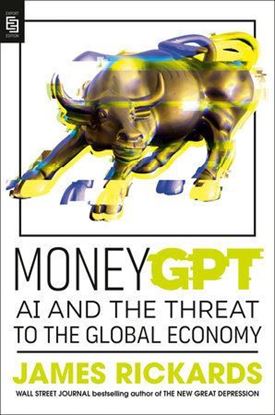
MONEYGPT
In November 2022, OpenAI released GPT-4 in a chatbot form to the public. In just two months, it claimed 100 million users—the fastest app to ever reach this benchmark. Since then, AI has become an all-consuming topic, popping up on the news, in ads, on your messenger apps, and in conversations with friends and family. But as AI becomes ubiquitous and grows at an ever-increasing pace, what does it mean for the financial markets?
In MoneyGPT, Wall Street veteran and former advisor to the Department of Defense James Rickards paints a comprehensive picture of the danger AI poses to the global financial order, and the insidious ways in which AI will threaten national security. Rickards shows how, while AI is touted to increase efficiency and lower costs, its global implementation in the financial world will actually cause chaos, as selling begets selling and bank runs happen at lightning speed. AI further benefits malicious actors, Rickards argues, because without human empathy or instinct to intervene, threats like total nuclear war that once felt extreme are now more likely. And throughout all this, we must remain vigilant on the question of whose values will be promoted in the age of AI. As Rickards predicts, these systems will fail when we rely on them the most.
1,450
1,160
1,450
1,160
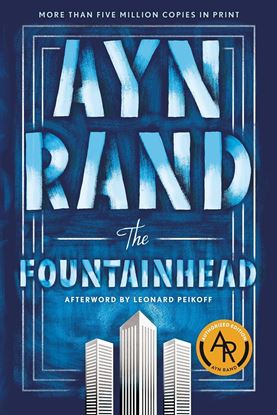
THE FOUNTAINHEAD
This modern classic is the story of intransigent young architect Howard Roark, whose integrity was as unyielding as granite...of Dominique Francon, the exquisitely beautiful woman who loved Roark passionately, but married his worst enemy...and of the fanatic denunciation unleashed by an enraged society against a great creator. As fresh today as it was then, Rand’s provocative novel presents one of the most challenging ideas in all of fiction that man’s ego is the fountainhead of human progress..
1,450
1,160
1,450
1,160
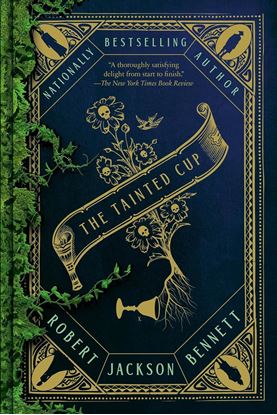
THE TAINTED CUP (PB)
In Daretana’s greatest mansion, a high imperial officer lies dead—killed, to all appearances, when a tree erupted from his body. Even here at the Empire’s borders, where contagions abound and the blood of the leviathans works strange magical changes, it’s a death both terrifying and impossible.
Assigned to investigate is Ana Dolabra, a detective whose reputation for brilliance is matched only by her eccentricities. Rumor has it that she wears a blindfold at all times, and that she can solve impossible cases without even stepping outside the walls of her home.
At her side is her new assistant, Dinios Kol, magically altered in ways that make him the perfect aide to Ana’s brilliance. Din is at turns scandalized, perplexed, and utterly infuriated by his new superior—but as the case unfolds and he watches Ana’s mind leap from one startling deduction to the next, he must admit that she is, indeed, the Empire’s greatest detective.
1,450
1,160

1,450
1,160
ONE DAY, EVERYONE WILL HAVE ALWAYS A.
On Oct 25th, after just three weeks of the bombardment of Gaza, Omar El Akkad put out a “One day, when it’s safe, when there’s no personal downside to calling a thing what it is, when it’s too late to hold anyone accountable, everyone will have always been against this.” This tweet was viewed over 10 million times.
One Day Everyone Will Have Always Been Against This chronicles the deep fracture which has occurred for Black, brown, indigenous Americans, as well as the upcoming generation, many of whom had clung to a thread of faith in western ideals, in the idea that their countries, or the countries of their adoption, actually attempted to live up to the values they espouse.
1,450
1,160
1,450
1,160
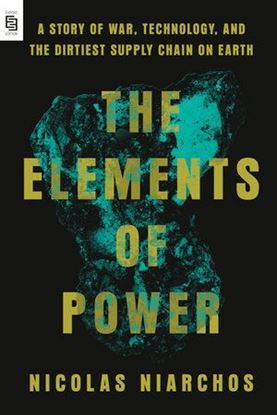
THE ELEMENTS OF POWER
Congo is rich. Swaths of the war-torn African country lack basic infrastructure, and, after many decades of colonial occupation, its people are officially among the poorest in the world. But hidden beneath the soil are vast quantities of cobalt, lithium, copper, tin, tantalum, tungsten, and other treasures. Recently, this veritable periodic table of resources has become extremely valuable because these metals are essential for the global “energy transition”—the plan for wealthy nations to wean themselves off fossil fuels by shifting to sustainable forms of energy, such as solar and wind. The race to electrify the world’s economy has begun, and China has a considerable head start. From Indonesia to South America to Central Africa, Beijing has invested in mines and infrastructure for decades. But the U.S. has begun fighting back with massive investments of its own, as well as sanctions and disruptive tariffs.
In this rush for green energy, the world has become utterly reliant on resources unearthed far away and willfully blind to the terrible political, environmental, and social consequences of their extraction. If the Democratic Republic of the Congo possesses such riches, why are its children routinely descending deep into treacherous mines to dig with the most rudimentary of tools, or in some cases their bare hands? Why are Indonesia’s seas and skies being polluted in a rush for battery metals? Why is the Western Sahara, a source for phosphates, still being treated like a colony? Who must pay the price for progress?
1,450
1,160