

1,450
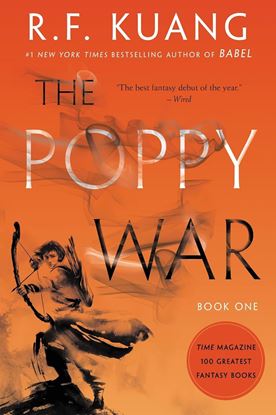
THE POPPY WAR (1) (PB)
When Rin aced the Keju—the Empire-wide test to find the most talented youth to learn at the Academies—it was a shock to everyone: to the test officials, who couldn’t believe a war orphan from Rooster Province could pass without cheating; to Rin’s guardians, who believed they’d finally be able to marry her off and further their criminal enterprise; and to Rin herself, who realized she was finally free of the servitude and despair that had made up her daily existence. That she got into Sinegard—the most elite military school in Nikan—was even more surprising.
But surprises aren’t always good.
Because being a dark-skinned peasant girl from the south is not an easy thing at Sinegard. Targeted from the outset by rival classmates for her color, poverty, and gender, Rin discovers she possesses a lethal, unearthly power—an aptitude for the nearly-mythical art of shamanism. Exploring the depths of her gift with the help of a seemingly insane teacher and psychoactive substances, Rin learns that gods long thought dead are very much alive—and that mastering control over those powers could mean more than just surviving school.
For while the Nikara Empire is at peace, the Federation of Mugen still lurks across a narrow sea. The militarily advanced Federation occupied Nikan for decades after the First Poppy War, and only barely lost the continent in the Second. And while most of the people are complacent to go about their lives, a few are aware that a Third Poppy War is just a spark away . . .
Rin’s shamanic powers may be the only way to save her people. But as she finds out more about the god that has chosen her, the vengeful Phoenix, she fears that winning the war may cost her humanity . . . and that it may already be too late.
1,450
1,450
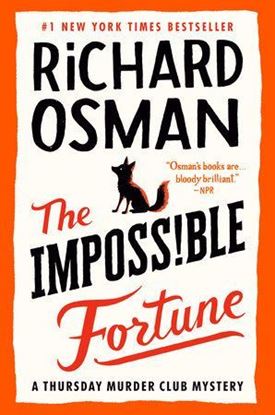
THE IMPOSSIBLE FORTUNE
Who’s got time to think about murder when there’s a wedding to plan?
It’s been a quiet year for the Thursday Murder Club. Joyce is busy with table plans and first dances. Elizabeth is grieving. Ron is dealing with family troubles, and Ibrahim is still providing therapy to his favorite criminal.
But when Elizabeth meets Nick, a wedding guest asking for her help, she finds the thrill of the chase is ignited once again. And when Nick disappears without a trace, his cagey business partner becomes the gang’s next stop. It seems the duo have something valuable—something worth killing for.
Joyce’s daughter, Joanna, jumps into the fray to help the gang as they seek answers: Has someone kidnapped Nick? And what’s this uncrackable code they keep hearing about? Plunged back into action once more, can the four friends solve the puzzle and a murder in time?
1,450
1,450
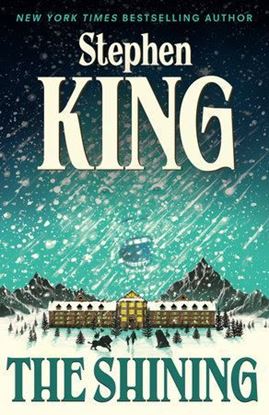
THE SHINING (PB)
Jack Torrance’s new job at the Overlook Hotel is the perfect chance for a fresh start. As the off-season caretaker at the atmospheric old hotel, he’ll have plenty of time to spend reconnecting with his family and working on his writing. But as the harsh winter weather sets in, the idyllic location feels ever more remote . . . and more sinister. And the only one to notice the strange and terrible forces gathering around the Overlook is Danny Torrance, a uniquely gifted five-year-old.
1,450
1,450
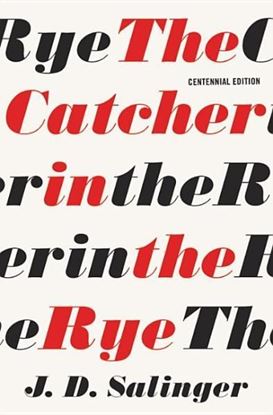
THE CATCHER IN THE RYE
"If you really want to hear about it, the first thing you'll probably want to know is where I was born, and what my lousy childhood was like, and how my parents were occupied and all before they had me, and all that David Copperfield kind of crap, but I don't feel like going into it, if you want to know the truth."
The hero-narrator of The Catcher in the Rye is an ancient child of sixteen, a native New Yorker named Holden Caufield. Through circumstances that tend to preclude adult, secondhand description, he leaves his prep school in Pennsylvania and goes underground in New York City for three days.
1,450
1,450
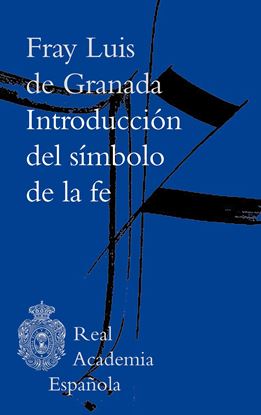
INTRODUCCION AL SIMBOLO DE LA FE (RAE)
Fray Luis de Granada hace en la Introducción del símbolo de la fe, escrita entre 1583 y 1585, un compendio de lo que todo cristiano debe saber, a la manera de los catecismos, a base de preguntas y respuestas. La originalidad del autor se encuentra en la extensa introducción donde explica los temas principales de la doctrina católica, como pueden ser la creación o la redención, destacando sus virtudes frente a los movimientos heréticos que se vivían entonces.
Cuán admirable cosa es que una pepita tan pequeña de una naranja tenga dentro de sí virtud para que della nazca un árbol tan hermoso como es un naranjo, tan oloroso cuando está florido, y tan vistoso cuando está cargado de fruto. Ni es menor maravilla que en un piñoncillo esté virtud para producir un tan grande árbol como es un pino. Crece aún esta maravilla ?como el Salvador declara en el Evangelio? en el granico de mostaza, el cual, siendo tan pequeño, tiene virtud para que dél nazca un árbol tan grande que se puedan asentar en sus ramas las aves del aire. ¿Quién, pues, fue poderoso para poner en cosa tan pequeña virtud tan grande? Pues desta virtud que hay en las semillas se aprovecha el Apóstol para persuadir el misterio de la resurrección.
1,450
1,450
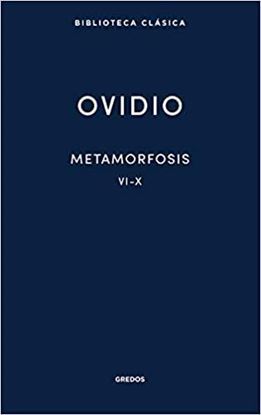
METAMORFOSIS VI-X
Epopeya mitológica por excelencia, las Metamorfosis es una de las obras magnas de Ovidio. El conjunto de relatos memorables que han servido a lo largo de los siglos como materia de innumerables refacciones por parte de las artes y las ciencias merecía una cuidada edición crítica como la que presenta la Biblioteca Clásica Gredos. Este es el segundo volumen de los tres que integran una de las traducciones más actuales al español y que está llamada a convertirse en un referente ineludible de la tradición ovidiana.
Publicado originalmente en la BCG con el número 400, este volumen presenta la traducción de los libros VI-X de las Metamorfosis de Ovidio realizada por José Carlos Fernández Corte y Josefa Cantó Llorca (Universidad de Salamanca) y revisada por ellos para esta edición.
1,450