950
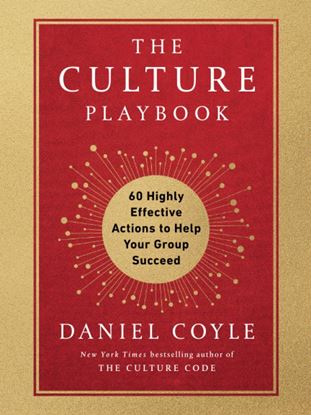
THE CULTURE PLAYBOOK
As an entrepreneur and founder of an investment bank led by women, | found The Culture Playbook to be an invaluable asset, providing tools and techniques as 1 work to unleash my team's full power and potential in an ever-evolving workplace. Daniel Coyle has given us all a game plan for success.”
950
950
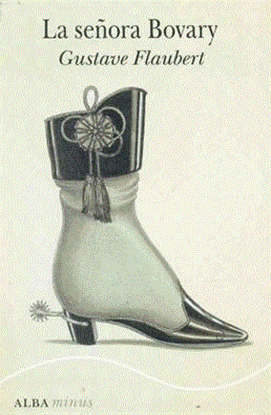
LA SEÑORA BOVARY (TB) (ALBA)
«Será el primer caso, creo, de novela en que se hace burla de la heroína y de su galán. Pero la ironía no perjudica al pathos; al contrario, la ironía subraya el aspecto patético», escribió Gustave Flaubert en el largo proceso de redacción (1851-1856) de La señora Bovary. Alarmados por su «invencible tendencia al lirismo», algunos amigos le habían aconsejado centrarse en «un tema banal, uno de esos sucesos que abundan en la vida burguesa». Al final, tanta sujeción al «tema banal» y tanta refutación del «lirismo», volcadas en la historia de un adulterio en una ciudad de provincias, le valieron un proceso por «ofensa a la moral y a la religión».
950
950
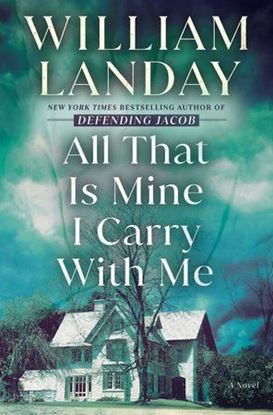
ALL THAT IS MINE I CARRY WITH ME
One afternoon in November 1975, ten-year-old Miranda Larkin comes home from school to find her house eerily quiet. Her mother is missing. Nothing else is out of place. There is no sign of struggle. Her mom’s pocketbook remains in the front hall, in its usual spot.
So begins a mystery that will span a lifetime. What happened to Jane Larkin?
Investigators suspect Jane’s husband. A criminal defense attorney, Dan Larkin would surely be an expert in outfoxing the police.
But no evidence is found linking him to a crime, and the case fades from the public’s memory, a simmering, unresolved riddle. Jane’s three children—Alex, Jeff, and Miranda—are left to be raised by the man who may have murdered their mother.
Two decades later, the remains of Jane Larkin are found. The investigation is awakened. The children, now grown, are forced to choose sides. With their father or against him? Guilty or innocent? And what happens if they are wrong?
950
950
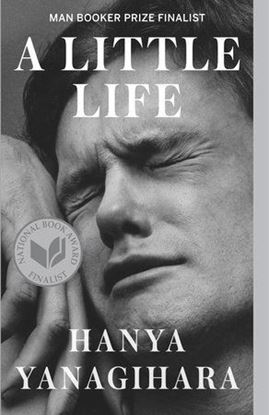
A LITTLE LIFE (PB)
A Little Life follows four college classmates—broke, adrift, and buoyed only by their friendship and ambition—as they move to New York in search of fame and fortune. While their relationships, which are tinged by addiction, success, and pride, deepen over the decades, the men are held together by their devotion to the brilliant, enigmatic Jude, a man scarred by an unspeakable childhood trauma. A hymn to brotherly bonds and a masterful depiction of love in the twenty-first century, Hanya Yanagihara’s stunning novel is about the families we are born into, and those that we make for ourselves.
950

950
BORROW MY HEART
Wren is used to being called a control freak. She doesn’t care; sticking to the list of rules she created for herself helps her navigate life. But when a cute guy named Asher walks through the door of her neighborhood coffee shop, the rulebook goes out the window.
Asher is cute, charming . . . and being catfished by his online crush. So Wren makes an uncharacteristically impulsive decision—she pretends to be the girl he’s waiting for to save him from embarrassment. Suddenly she’s fake-dating a boy she knows nothing about. And it’s . . . amazing.
It’s not long before Asher has her breaking even more of her own rules. But will he forgive her when he finds out she’s not who she says she is? Wren’s not so sure. . . . After all, rules exist for a reason.
950
950
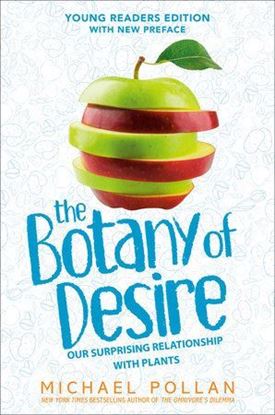
BOTANY OF DESIRE YOUNG READERS
In this entertaining young readers edition of the environmental studies classic, Michael Pollan demonstrates how people and domesticated plants have formed a reciprocal relationship. He links four fundamental human desires—sweetness, beauty, energy, and control—with the plants that satisfy them: the apple, the tulip, coffee, and the potato. In telling the stories of four familiar species, Pollan illustrates how the plants have evolved to satisfy humankind’s most basic yearnings. And just as we’ve benefited from these plants, we have also helped them to thrive.
950