


800
ISHA, UNSCRIPTED
Isha Patel is the black sheep of the family. She doesn’t have a “prestigious” degree or a “real” career, and her parents never fail to remind her. But that’s okay because she commiserates with her cousin, best friend, and fellow outcast, Rohan.
When Isha has a breakthrough getting her script in front of producers, it doesn’t go according to plan. Instead of letting her dreams fall through the cracks, Rohan convinces her to snag a pitch session with an Austinite high-profile celeb: the one and only Matthew McConaughey, who also happened to be her professor at the University of Texas years ago—he has to remember her, right?
Chasing Matthew McConaughey isn’t easy. Isha needs a drink or two to muster up courage, and she gets a little help from the cutest bartender she’s ever encountered. But when the search for the esteemed actor turns into a night of hijinks and unexpected—albeit fun—chaos, everything falls apart. Isha’s dreams seem farther than ever, but she soon realizes who she really needs to face and that her future may just be alright, alright, alright.
800

800
VICTORY CITY
In the wake of an unimportant battle between two long-forgotten kingdoms in fourteenth-century southern India, a nine-year-old girl has a divine encounter that will change the course of history. After witnessing the death of her mother, the grief-stricken Pampa Kampana becomes a vessel for a goddess, who begins to speak out of the girl’s mouth. Granting her powers beyond Pampa Kampana’s comprehension, the goddess tells her that she will be instrumental in the rise of a great city called Bisnaga—“victory city”—the wonder of the world.
Over the next 250 years, Pampa Kampana’s life becomes deeply interwoven with Bisnaga’s, from its literal sowing from a bag of magic seeds to its tragic ruination in the most human of ways: the hubris of those in power. Whispering Bisnaga and its citizens into existence, Pampa Kampana attempts to make good on the task that the goddess set for her: to give women equal agency in a patriarchal world. But all stories have a way of getting away from their creator, and Bisnaga is no exception. As years pass, rulers come and go, battles are won and lost, and allegiances shift, the very fabric of Bisnaga becomes an ever more complex tapestry—with Pampa Kampana at its center.
800
800
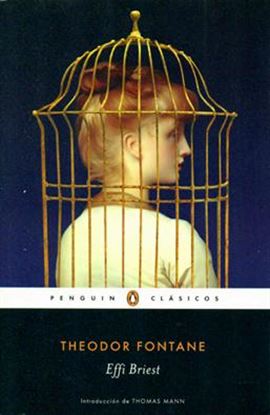
EFFI BRIEST (PENGUIN)
El ambiente plúmbeo y la rigidez moral que caracterizan a la aristocracia prusiana no logran someter la vitalidad de la joven Effi Briest, que cede a la tentación del adulterio sabiendo perdida su oportunidad de ser feliz. Su marido, el barón Von Innstetten, no se siente especialmente ofendido, pero no tendrá más remedio que hacer valer su autoridad por la presión de las normas sociales. Theodor Fontane se basó en un hecho real para retratar los conflictos de la recién creada nación alemana, tan dispuesta como reacia a asumir los nuevos modelos de subjetividad y progreso. Este volumen recoge la fiel y canónica traducción que en su día realizara F. de Ocampo. Asimismo, al texto de Fontane lo precede la formidable introducción firmada por el Premio Nobel de Literatura Thomas Mann, declarado admirador de la obra del máximo representante del realismo alemán.
800

800
LA GUERRA DE LAS MUJERES (PENGUIN)
En medio de la guerra de la Fronda, dos mujeres, como dos mosqueteras, se enfrentan con todas sus armas: sus belleza, su gran capacidad para la intriga, su amor y sus celos, sin renegar del coraje ni de sus dotes militares. Una es Nanon de Lartigues, la astuta y encendida amante del duque d´Épernon, fiel a Ana de Austria y al cardenal Mazarino. La otra es la rubia y valerosa Claire de Cambes, que sostiene la rebelión de los príncipes de Condé con inteligencia y sagacidad. Su enemistad se convierte en el eje de una historia llena de acción e intriga, una rara avis en la obra de Alexandre Dumas que aquí presenta y vierte a nuestra lengua el escritor y crítico Mauro Armiño.
800

800
EL RETRATO DE DORIAN GRAY (PENG)(BOL)
Basil Hallward había terminado el retrato. El joven Dorian, al verlo, no pudo más que desear, desde su frívola inocencia, que fuera su imagen la que envejeciera y se corrompiera con el paso de los años mientras él permanecía intacto. Y así fue: a partir de entonces, Dorian Gray conservó el aspecto puro de los inocentes. Pero ¿a qué precio?
800

800
GO TELL THE BEES THAT I AM GONE
War leaves nobody alone. Neither the past, the present, nor the future offers true safety, and the only refuge is what you can protect: your family, your friends, your home.
Jamie Fraser and Claire Randall were torn apart by the Jacobite Rising in 1746, and it took them twenty years of loss and heartbreak to find each other again. Now it’s 1779, and Claire and Jamie are finally reunited with their daughter, Brianna, her husband, Roger, and their children, and are rebuilding their home on Fraser’s Ridge—a fortress that may shelter them against the winds of war as well as weather.
But tensions in the Colonies are great: Battles rage from New York to Georgia and, even in the mountains of the backcountry, feelings run hot enough to boil Hell’s teakettle. Jamie knows that loyalties among his tenants are split and it won’t be long before the war is on his doorstep.
Brianna and Roger have their own worry: that the dangers that provoked their escape from the twentieth century might catch up to them. Sometimes they question whether risking the perils of the 1700s—among them disease, starvation, and an impending war—was indeed the safer choice for their family.
800