
800
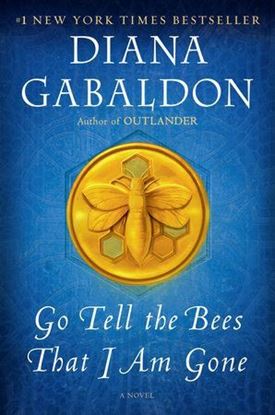
GO TELL THE BEES THAT I AM GONE
War leaves nobody alone. Neither the past, the present, nor the future offers true safety, and the only refuge is what you can protect: your family, your friends, your home.
Jamie Fraser and Claire Randall were torn apart by the Jacobite Rising in 1746, and it took them twenty years of loss and heartbreak to find each other again. Now it’s 1779, and Claire and Jamie are finally reunited with their daughter, Brianna, her husband, Roger, and their children, and are rebuilding their home on Fraser’s Ridge—a fortress that may shelter them against the winds of war as well as weather.
But tensions in the Colonies are great: Battles rage from New York to Georgia and, even in the mountains of the backcountry, feelings run hot enough to boil Hell’s teakettle. Jamie knows that loyalties among his tenants are split and it won’t be long before the war is on his doorstep.
Brianna and Roger have their own worry: that the dangers that provoked their escape from the twentieth century might catch up to them. Sometimes they question whether risking the perils of the 1700s—among them disease, starvation, and an impending war—was indeed the safer choice for their family.
800

1,200
GOOD OMENS (PB)
According to The Nice and Accurate Prophecies of Agnes Nutter, Witch (the world's only completely accurate book of prophecies, written in 1655, before she exploded), the world will end on a Saturday. Next Saturday, in fact. Just before dinner.
So the armies of Good and Evil are amassing, Atlantis is rising, frogs are falling, tempers are flaring. Everything appears to be going according to Divine Plan. Except a somewhat fussy angel and a fast-living demon—both of whom have lived amongst Earth's mortals since The Beginning and have grown rather fond of the lifestyle—are not actually looking forward to the coming Rapture.
And someone seems to have misplaced the Antichrist . . .
1,200
1,350
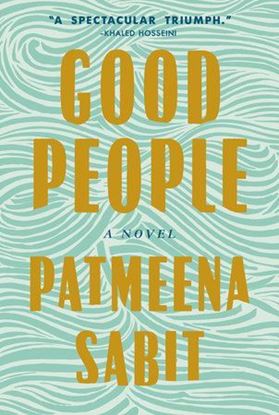
GOOD PEOPLE: A NOVEL
The Sharaf family is the picture of success. Prosperous, rich, happy. They came to this country as refugees with nothing more than the clothes on their backs. And now, after years of hard work, they live in the most exclusive neighborhood, their growing family attending the most prestigious schools. Zorah, the eldest daughter, is the apple of her father’s eye.
When an unthinkable tragedy strikes, everyone is left reeling and the family is thrust into the court of public opinion. There is talk that behind closed doors the Sharafs’ happy household was anything but. Did the Sharaf family achieve the American dream? Or was the image of the model immigrant family just a façade?
1,350
800
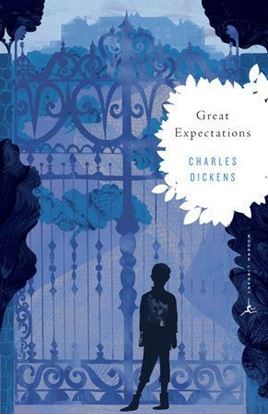
GREAT EXPECTATIONS (MODERN LIBRARY)
Pip, a poor orphan being raised by a cruel sister, does not have much in the way of great expectations—until he is inexplicably elevated to wealth by an anonymous benefactor. Full of unforgettable characters—including a terrifying convict named Magwitch, the eccentric Miss Havisham, and her beautiful but manipulative niece, Estella, Great Expectations is a tale of intrigue, unattainable love, and all of the happiness money can’t buy. “Great Expectations has the most wonderful and most perfectly worked-out plot for a novel in the English language,” according to John Irving, and J. Hillis Miller declares, “Great Expectations is the most unified and concentrated expression of Dickens’s abiding sense of the world, and Pip might be called the archetypal Dickens hero.”
800

1,500
GREAT FEAR ON THE MOUNTAIN
Teeming with tension, this immersive, rhapsodic story transports readers to the Swiss mountainside, bringing to mind the writing of Thomas Mann while offering character studies as vivid and bracing as Eudora Welty’s.
Feed is running low in a rural village in Switzerland. The town council meets to decide whether or not to ascend a chimerical mountain in order to access the open pastures that have enough grass to “feed seventy animals all summer long.” The elders of the town protest, warning of the dangers and the dreadful lore that enfolds the mountain passageways like thick fog.
They’ve seen it all before, reckoning with the loss of animals and men who have tried to reach the pastures nearly twenty years ago. The younger men don’t listen, making plans to set off on their journey despite all warnings. Strange things happen. Spirits wrestle with headstrong young men. As the terror of life on the mountain builds, Ramuz’s writing captures the rural dialog and mindsets of the men.
One of the most talented translators working today, Bill Johnston captures the careful and sublime twists and turns of the original in his breathtaking translation.
1,500

1,350
HALF HIS AGE
The highly anticipated, funny, sad, thrilling novel about sex, class, desire, and power - and the (often misguided) lengths we'll go to to get what we want, from Jennette McCurdy, the three-million copy, Sunday Times bestselling author of "I'm Glad My Mom Died".
1,350