
700
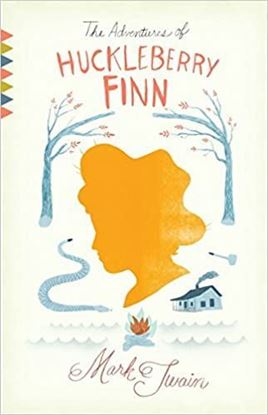
THE ADVENTURES OF HUCKLEBERRY FINN
Long cherished by readers of all ages, The Adventures of Huckleberry Finn is both a hilarious account of an incorrigible truant and a powerful parable of innocence in conflict with the fallen adult world.
The mighty Mississippi River of the antebellum South gives the novel both its colorful backdrop and its narrative shape, as the runaways Huck and Jim—a young rebel against civilization allied with an escaped slave—drift down its length on a flimsy raft. Their journey, at times rollickingly funny but always deadly serious in its potential consequences, takes them ever deeper into the slave-holding South, and our appreciation of their shared humanity grows as we watch them travel physically farther from yet morally closer to the freedom they both passionately seek.
700

750
THE AGE OF INNOCENCE
The return of the beautiful Countess Olenska into the rigidly conventional society of New York sends reverberations throughout the upper reaches of society. Newland Archer, an eligible young man of the establishment is about to announce his engagement to May Welland, a pretty ingénue, when May's cousin, Countess Olenska, is introduced into their circle. The Countess brings with her an aura of European sophistication and a hint of scandal, having left her husband and claimed her independence. Her sorrowful eyes, her tragic worldliness and her air of unapproachability attract the sensitive Newland and, almost against their will, a passionate bond develops between them. But Archer's life has no place for passion and, with society on the side of May and all she stands for, he finds himself drawn into a bitter conflict between love and duty.
750
1,200
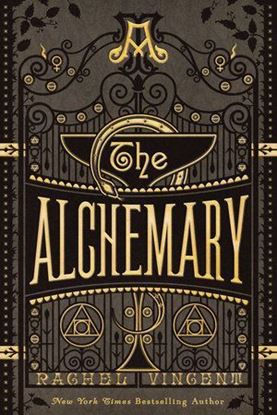
THE ALCHEMARY
Naked, knowing little more than her name, Amber Fallbrook does not recognize the stone tower she’s awoken in, or the vast, glittering ocean beyond its window. Turning, she finds a very a different view: a beautiful, nearly nude man stirring in her bed. He is a stranger, as is the man who barges into the room seconds later, clearly expecting to find Amber alone.
Who are they? Who is she? Why can’t she remember?
Shocked to discover that she’s in her dormitory room at the Alchemary—the realm’s prestigious university dedicated to the study of alchemy—Amber has no recollection of having been one of the school’s top students for the past two years. The two men—brothers—are her childhood friends, even if “friends” is not exactly the energy in the room.
One brother claims he wants to protect her, and the other to help her recover her memory. But nothing is at it seems at the Alchemary. Not the intentions of her classmates and faculty, not the stunning, labyrinthine campus, not the two brothers she’s increasingly attracted to—maybe not even Amber herself.
Despite her memory loss, Amber rejoins her classes and prepares for the deadly Alchemary Trials alongside the other Mastery-level students. But as invigorating as the flowing language and symbology of alchemy is, she can’t help but notice that for an institution shining light on the quest for human perfection there are a lot of dark shadows in its winding corridors.
1,200

1,150
THE ALCHEMIST
This story, dazzling in its powerful simplicity and soul-stirring wisdom, is about an Andalusian shepherd boy named Santiago who travels from his homeland in Spain to the Egyptian desert in search of a treasure buried near the Pyramids. Along the way he meets a Gypsy woman, a man who calls himself a king, and an alchemist, all of whom point Santiago in the direction of his quest. No one knows what the treasure is, or if Santiago will be able to surmount the obstacles in his path. But what starts out as a journey to find worldly goods turns into a discovery of the treasure found within.
Lush, evocative, and deeply humane, the story of Santiago is an eternal testament to the transforming power of our dreams and the importance of listening to our hearts.
1,150
1,850
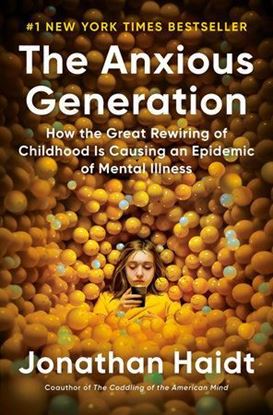
THE ANXIOUS GENERATION
After more than a decade of stability or improvement, the mental health of adolescents plunged in the early 2010s. Rates of depression, anxiety, self-harm, and suicide rose sharply, more than doubling on many measures. Why?
In The Anxious Generation, social psychologist Jonathan Haidt lays out the facts about the epidemic of teen mental illness that hit many countries at the same time. He then investigates the nature of childhood, including why children need play and independent exploration to mature into competent, thriving adults. Haidt shows how the “play-based childhood” began to decline in the 1980s, and how it was finally wiped out by the arrival of the “phone-based childhood” in the early 2010s. He presents more than a dozen mechanisms by which this “great rewiring of childhood” has interfered with children’s social and neurological development, covering everything from sleep deprivation to attention fragmentation, addiction, loneliness, social contagion, social comparison, and perfectionism. He explains why social media damages girls more than boys and why boys have been withdrawing from the real world into the virtual world, with disastrous consequences for themselves, their families, and their societies.
1,850

1,350
THE ART OF SPENDING MONEY
Most of us don’t know how to spend money. We chase things that impress others but leave us cold. Or we save endlessly, afraid to spend on what would actually make life better. We confuse admiration with envy, comfort with excess, and utility with status.
The Art of Spending Money doesn't provide budgets, hacks, or one-size-fits-all solutions. It gives you understanding of how your relationship with money shapes your decisions—and how to reshape it so money works for you.
Morgan Housel’s work has helped millions rethink how they earn, save, and invest. Now he turns his attention to the other side of the equation: how to spend. With insight and warmth, he shows why the most valuable return on investment is peace of mind, why expectations matter more than income, and why doing well with money has less to do with spreadsheets and more to do with self-awareness.
This book isn’t about getting rich. It’s about getting the most out of what you already have—and learning to want what’s worth wanting.
1,350