

2,900
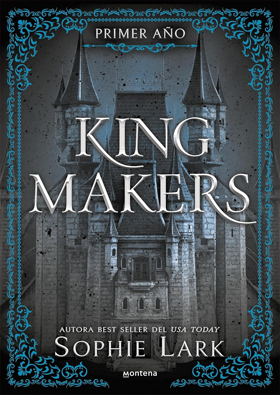
THE POPPY WAR COLLECTOR'S ED. (1) (HC)
When Rin aced the Keju—the Empire-wide test to find the most talented youth to learn at the Academies—it was a shock to everyone: to the test officials, who couldn’t believe a war orphan from Rooster Province could pass without cheating; to Rin’s guardians, who believed they’d finally be able to marry her off and further their criminal enterprise; and to Rin herself, who realized she was finally free of the servitude and despair that had made up her daily existence. That she got into Sinegard—the most elite military school in Nikan—was even more surprising.
But surprises aren’t always good.
Because being a dark-skinned peasant girl from the south is not an easy thing at Sinegard. Targeted from the outset by rival classmates for her color, poverty, and gender, Rin discovers she possesses a lethal, unearthly power—an aptitude for the nearly mythical art of shamanism. Exploring the depths of her gift with the help of a seemingly insane teacher and psychoactive substances, Rin learns that gods long thought dead are very much alive—and that mastering control over those powers could mean more than just surviving school.
2,900
900
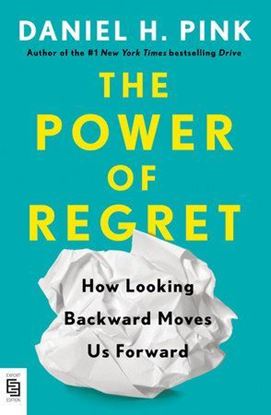
THE POWER OF REGRET
Everybody has regrets, Daniel H. Pink explains in The Power of Regret. They’re a universal and healthy part of being human. And understanding how regret works can help us make smarter decisions, perform better at work and school, and bring greater meaning to our lives.
Drawing on research in social psychology, neuroscience, and biology, Pink debunks the myth of the “no regrets” philosophy of life. And using the largest sampling of American attitudes about regret ever conducted as well as his own World Regret Survey—which has collected regrets from more than 15,000 people in 105 countries—he lays out the four core regrets that each of us has. These deep regrets offer compelling insights into how we live and how we can find a better path forward.
As he did in his bestsellers Drive, When, and A Whole New Mind, Pink lays out a dynamic new way of thinking about regret and frames his ideas in ways that are clear, accessible, and pragmatic. Packed with true stories of people's regrets as well as practical takeaways for reimagining regret as a positive force, The Power of Regret shows how we can live richer, more engaged lives.
900
700
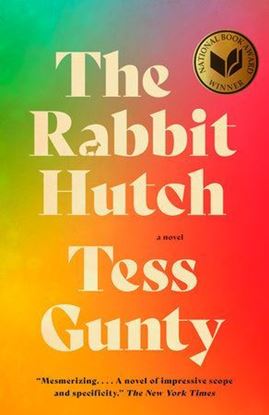
THE RABBIT HUTCH
The automobile industry has abandoned Vacca Vale, Indiana, leaving its residents behind, too. In a run-down apartment building on the edge of town, commonly known as the Rabbit Hutch, lives one of these people, a young girl named Blandine Watkins, who The Rabbit Hutch centers around. Hauntingly beautiful and unnervingly bright, Blandine lives alongside three teenage boys, all recently aged out of the state foster-care system, all of them madly in love with Blandine. Plagued by the structures, people, and places that not only failed her but actively harmed her, Blandine pays no mind to their affection. All she wants is an escape, a true bodily escape like the mystics describe in the books she reads.
700

600
THE SCARLET LETTER
At once retrospective and radically new, The Scarlet Letter portrays seventeenth-century Puritan New England, a time period irreversibly encoded in the American identity. Hawthorne built one of the most incisive and devastating human dramas ever written out of a community and its outcasts: Hester Prynne and Arthur Dimmesdale, one emblazoned with sin and the other distraught with hidden guilt; Pearl, a child born into ostracism; and Roger Chillingworth, driven to vengeance by hatred. Though these characters face a set of specifically troubling circumstances, their words and actions point to moral truths inherent in human affairs, independent of time and place.
600

995
THE SECOND COMING
When 13-year-old Jolie Aspern drops her phone onto the subway tracks in 2011, her estranged dad, Ethan, seems like the furthest thing from her mind. A convicted felon and recovering addict, Ethan has always struggled to see past himself. But then a call from his ex makes him fear their daughter's in deeper trouble than anyone realizes. Believing he's the only one who can save her, he decides to return to New York with a gift: the whole of his life, its hard-won triumphs and harrowing mistakes . . .
So begins the intimate epic of Jolie and Ethan: child and adult, apart and together, different yet the same. Their journey toward each other will face opposition from grandparents and siblings and friends. It will strain connections with roommates and benefactors and a probation officer desperate to help. It will push Jolie out past her depth with a mysterious admirer, and Ethan in over his head with his first love, Jolie's mom. But as father and daughter struggle to find their footing, new vistas beckon: from a surf break in mid-'90s Delaware to group therapy during the great recession, from an encampment at Occupy Wall Street to a HoJo on Maryland's Eastern Shore, from the heights of the Brooklyn Bridge to horizons seldom seen in fiction.
995

995
THE SECRET
A string of mysterious deaths. A long-classified mission. A young MP with nothing to lose.
1992. All across the United States respectable, upstanding citizens are showing up dead. These deaths could be accidents, and they don’t appear to be connected—until a fatal fall from a high-floor window attracts some unexpected attention.
That attention comes from the secretary of defense. All of a sudden he wants an interagency task force to investigate. And he wants Jack Reacher as the army’s representative. If Reacher gets a result, great. If not, he’s a convenient fall guy.
But office politics isn’t Reacher’s thing. Three questions quickly emerge: Who’s with him, who’s against him, and will the justice he dispenses be the official kind . . . or his own kind?
995