1,450
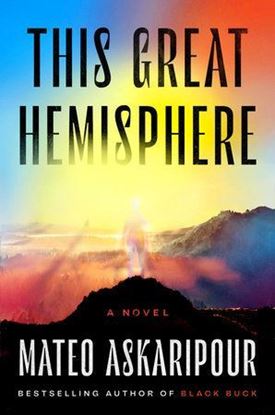
THIS GREAT HEMISPHERE
This Great Hemisphere is powerful, captivating novel about how far we’ll go to protect the ones we love. With the worldbuilding of N. K. Jemisin’s novels and blazing defiance of Naomi Alderman’s work, it is also a story about what happens when we resist the narratives others write about us.
Northwestern Hemisphere, 2529: an Earth on which half of people are now born literally invisible. Sweetmint, a young woman, is one of them and thus relegated to second-class citizenship. She has done everything right her entire life, from school to landing a highly sought-after apprenticeship. But all she has fought so hard to earn comes crashing down when she learns that her brother (whom she had presumed dead) is not only alive and well but also the primary suspect in a high-profile political murder.
1,450
1,250
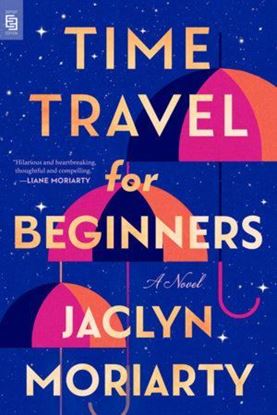
TIME TRAVEL FOR BEGINNERS
On a bustling road in Sydney, Australia, lies a nondescript storefront known simply as the Time Travel Agency. Inside, you’ll be welcomed by the smell of fresh-brewed coffee, a selection of baked goods…and the question, Where in time do you wish to go?
The guidelines are simple: you can go whenever you wish into the past, and there’s no fear of altering the present. Have tea with Jane Austen, scream at a Beatles concert, witness the Olympics in ancient Greece. Perhaps a more personal trip? Visit your long-lost grandmother, recapture the heady days of your youth, return to the idyllic time when your teen was a babbling baby—or watch yourself make the one decision that changed everything.
Is it a hoax? And if it’s real, what’s the catch?
When single mother Anna is offered a job at the agency, she glimpses the possibility of happiness. Meanwhile, Teddy’s a customer hoping to untangle his recently imploded marriage. And Jade, who has a deeply buried secret, despises the agency for offering false hope.
In Jaclyn Moriarty’s incandescent novel, Anna, Teddy, and Jade leap headlong into time, hurtling on a crash course toward one another. At turns entertaining and illuminating, Time Travel for Beginners explores the moments, big and small, that shape our destiny.
1,250

1,800
TO SIR PHILLIP, WITH LOVE (5) DELUXE C.
Sir Phillip knew that Eloise Bridgerton was a spinster, and so he’d proposed, figuring that she’d be homely and unassuming, and more than a little desperate for an offer of marriage. Except . . . she wasn’t. The beautiful woman on his doorstep was anything but quiet, and when she stopped talking long enough to close her mouth, all he wanted to do was kiss her . . . and more.
Did he think she was mad? Eloise Bridgerton couldn’t marry a man she had never met. But then she started thinking . . . and wondering . . . and before she knew it, she was in a hired carriage in the middle of the night, on her way to meet the man she hoped might be her perfect match. Except . . . he wasn’t. Her perfect husband wouldn’t be so moody and ill-mannered, and while Phillip was certainly handsome, he was a large brute of a man, rough and rugged, and totally unlike the London gentlemen vying for her hand. But when he smiled . . . and when he kissed her . . . the rest of the world simply fell away, and she couldn’t help but wonder . . . could this imperfect man be perfect for her?
1,800
1,100
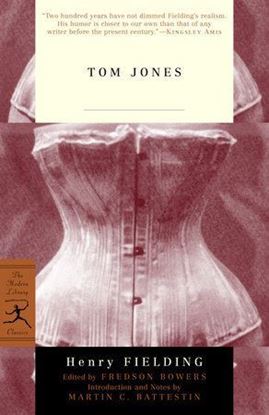
TOM JONES
Tom, a foundling, is discovered one evening by the benevolent Squire Allworthy and his sister Bridget and brought up as a son in their household; when his sexual escapades and general misbehavior lead them to banish him, he sets out in search of both his fortune and his true identity. Amorous, high-spirited, and filled with what Fielding called “the glorious lust of doing good,” but with a tendency toward dissolution, Tom Jones is one of the first characters in English fiction whose human virtues and vices are realistically depicted. This edition is set from the text of the Wesleyan Edition of the Works of Henry Fielding.
1,100
2,500
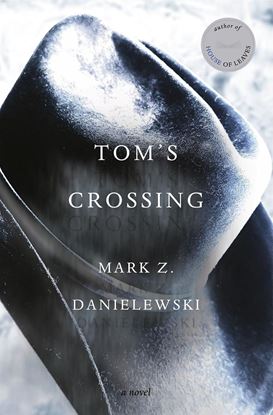
TOM S CROSSING
While folks still like to focus on the crimes that shocked the small city of Orvop, Utah, back in the fall of 1982, not to mention the trials that followed, far more remember the adventure that took place beyond municipal lines.
For sure no one expected the dead to rise, but they did. No one expected the mountain to fall either, but it did. No one expected an act of courage so great, and likewise so appalling, that it still staggers the heart and mind of anyone who knows anything about the Katanogos massif, to say nothing of Pillars Meadow.
As one Orvop high school teacher described that extraordinary feat just days before she died, Fer sure no one expected Kalin March to look Old Porch in the eye and tell him: You get what you deserve when you ride with cowards.
2,500

1,200
TOUGH GUY (3)
Pro hockey star Ryan Price may be an enforcer, but off the ice he struggles with anxiety. Recently traded to Toronto, he’s determined to make a fresh start in the city’s dynamic LGBTQ+ Village. The last thing he expects to find in his new neighborhood is a blast from his past in the fabulous form of Fabian Salah.
Aspiring musician Fabian loathes hockey. But that doesn’t stop him from being attracted to a certain burly ginger-bearded defenseman. He hasn’t forgotten the kiss they almost shared back in high school, and the chemistry between them has only intensified.
Fabian is more than happy to be Ryan’s guide to the gay scene in Toronto. Between dance clubs and art exhibits—and the most amazing sex—Ryan’s feeling something he hasn’t experienced in a long time: joy. But playing the role of the heavy on the ice has taken its toll on his body and mind, and a future with Fabian may mean hanging up his skates for good.
1,200