NOVEDADES








1,800
ROMANCING MISTER BRIDGERTON DELUXE C.
Penelope Featherington has secretly adored her best friend’s brother for ... well, it feels like forever. After half a lifetime of watching Colin Bridgerton from afar, she thinks she knows everything about him, until she stumbles across his deepest secret . . . and fears she doesn’t know him at all.
Colin Bridgerton is tired of being thought of as nothing but an empty-headed charmer, tired of the notorious gossip columnist Lady Whistledown, who can’t seem to publish an edition without mentioning him. But when Colin returns to London from a trip abroad, he discovers nothing in his life is quite the same—especially Penelope Featherington. The girl who was always simply there is suddenly the girl haunting his dreams. When he discovers that Penelope has secrets of her own, this elusive bachelor must decide . . . is she his biggest threat— or his promise of a happy ending?
1,800

1,800
AN OFFER FROM A GENTLEMAN DELUXE C.
Sophie Beckett never dreamed she’d be able to sneak into Lady Bridgerton’s famed masquerade ball—or that she would be spinning in the arms of her “Prince Charming”—the debonair and devastatingly handsome Benedict Bridgerton. But when the clock strikes midnight, Sophie’s enchanting evening ends. Since that night Benedict has been able to think of nothing but the bewitching young woman, and he’s sworn to find and wed his mystery miss. Yet will another unexpectedly steal his heart—and his chance for a fairy tale love?
1,800

1,800
THE DUKE AND I DELUXE COLLECTOR S ED.
In the ballrooms and drawing rooms of Regency London, rules abound. From their earliest days, children of aristocrats learn how to address an earl and curtsey before a prince—while other dictates of the ton are unspoken yet universally understood. A proper duke should be imperious and aloof. A young, marriageable lady should be amiable…but not too amiable.
Daphne Bridgerton has always failed at the latter. The fourth of eight siblings in her close-knit family, she has formed friendships with the most eligible young men in London. Everyone likes Daphne for her kindness and wit. But no one truly desires her. She is simply too deuced honestfor that, too unwilling to play the romantic games that captivate gentlemen.
Amiability is not a characteristic shared by Simon Basset, Duke of Hastings. Recently returned to England from abroad, he intends to shun both marriage and society—just as his callous father shunned Simon throughout his painful childhood. Yet an encounter with his best friend’s sister offers another option. If Daphne agrees to a fake courtship, Simon can deter the mamas who parade their daughters before him. Daphne, meanwhile, will see her prospects and her reputation soar.
The plan works like a charm—at first. But amid the glittering, gossipy, cut-throat world of London’s elite, there is only one certainty: love ignores every rule...
This novel includes the second epilogue, a peek at the story after the story.
1,800

1,800
PIEL DE CUERVO (EDICION ESPECIAL CANTOS)
Nía Blanco llega para revolucionar el panorama literario. Un romantasy con edición especial y cantos tintados que será el éxito del verano. ¿Te atreves a vestir la Piel de Cuervo?
Entrar en el Abismo es una sentencia, pero Lhyss ya está condenada.
Disfrazada como sus enemigos, Lhyss se une al plan suicida para descubrir la identidad del Príncipe Cuervo y vengarse de aquellos que le arrebataron a su hermana cinco años atrás. Su odio es lo único que la ha mantenido viva durante este tiempo, pero en el Abismo no existen las reglas y los secretos entre los participantes serán tan mortales como los monstruos que lo habitan.
Su plan es simple; sin embargo, el destino que la espera podría ser más oscuro de lo que jamás imaginó.
A veces, para destruir a un monstruo, debes convertirte en uno.
Aunque el amor ponga en peligro todos tus planes.
1,800
1,800
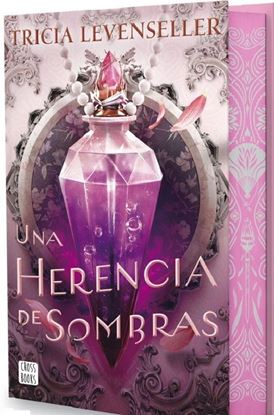
SOMBRAS 2. UNA HERENCIA DE SOMBRAS
Chrysantha Stathos escondió su inteligencia y ambición detrás de su belleza; nada la iba a apartar del título de duquesa que ansiaba. Ahora solo tiene que esperar a que muera su desagradable y anciano esposo para disfrutar de la libertad, el dinero y la seguridad que siempre quiso.
Cuando llega el momento, un hombre que afirma ser su nieto aparece y arruina todos sus planes. No importa lo atractivo que sea ni sus extraños poderes: Eryx Demos debe morir.
1,800

1,800
SEMPITERNO (TD) (ED.ESP) (ETEREO 2)
El mundo de Caleb se ha desmoronado. El tiempo transcurre, pero él sigue viviendo en esa misma noche. Sigue paralizado en ese mismo dolor. Su familia necesita que despierte. Él necesita buscarla. Y necesita encontrarla.
El mundo de Victoria se ha transformado. Intenta descubrir quién es, pero su antiguo yo sigue fragmentado en cientos de pedazos. El chico que la acompaña necesita que ella sea fuerte. Ella necesita entender por qué siente esa conexión con él. Y por qué una voz en lo más profundo de su cabeza le dice que tiene un hogar al que volver.
Huir ya no es una opción para nadie. La única posibilidad de supervivencia es enfrentar el pasado y desafiar el olvido.
1,800