
NOVEDADES










1,600
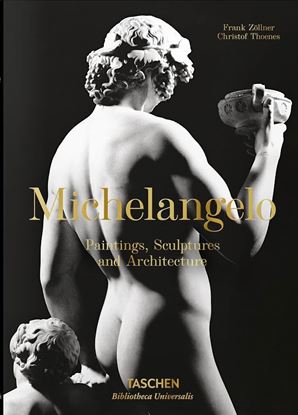
MICHELANGELO. PAINTINGS, SCULPTURES AND
Before reaching the tender age of 30, Michelangelo Buonarroti (1475–1564) had already sculpted Pietà and David, two of the most famous sculptures in the entire history of art. As a sculptor, painter, draftsman, and architect, the achievements of this Italian master are unique—no artist before or after him has ever produced such a vast, multifaceted, and wide-ranging œuvre.
This fresh TASCHEN edition traces Michelangelo’s ascent to the cultural elite of the Renaissance. Ten richly illustrated chapters cover the artist’s paintings, sculptures, and architecture, including a close analysis of the artist’s tour de force frescoes in the Sistine Chapel.Full-page reproductions and enlarged details allow readers to appreciate the finest details in the artist’s repertoire, while the book’s biographical essay considers Michelangelo’s more personal traits and circumstances, such as his solitary nature, his thirst for money and commissions, his immense wealth, and his skill as a property investor.
1,600
1,250
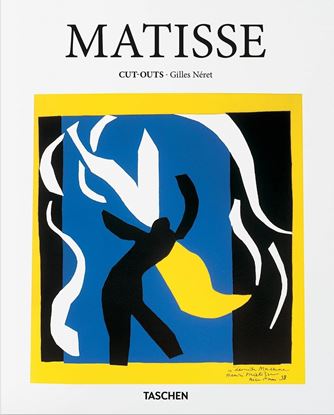
MATISSE. CUT-OUTS
Henri Matisse (1869–1954) was a fighting spirit. Despite a cancer diagnosis in 1941, increasing frailty, and the confines of a wheelchair, the indomitable Frenchman never stopped in his quest to make art. With what he called une seconde vie, a second life, he embarked on a remarkable collage period, cutting and pasting pieces of colored paper into gouaches découpées of birds, plants, flowers, and the female form.Emphasizing color and contrast, the cut-out technique generated both striking lines and vivid juxtapositions. In works such as Icarus (1943), The Blue Nude (1952), The Snail (1953), and The Sheaf (1953), clean forms and elemental structures power a compositional force that belies the work’s decorative appeal, at once tightly organized and infectious with joie de vivre. As his work progressed, Matisse’s excitement with his results fueled ever-larger pieces, advancing from small works to vast wall-sized murals.As his final years approached, Matisse reveled in the simplicity and brilliance of these pieces, avowing, “Only what I created after the illness constitutes my real self: free, liberated…” In this essential introductory book, we revisit this joyful final chapter of Matisse’s long and prodigious career, examining how the cut-outs encapsulated the artist’s many years exploring the possibilities of composition, form, and color.
1,250
1,250
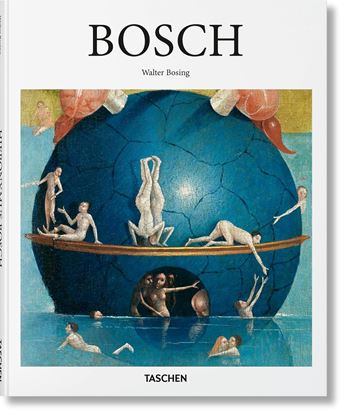
BOSCH (BA-ARCH)
As cryptic as they are compelling, the masterpieces of Hieronymus Bosch (c. 1450–1516) remain some of the most enduring enigmas of the art world. Their intricate, allegorical, and often startling content has captivated not only art historians, but also fashion designers, rock stars, writers, and punk rockers, as well as countless modern and contemporary artist successors.
Although rooted in the Old Netherlandish tradition, Bosch developed a highly subjective, richly suggestive style to render both the celestial bliss of heaven and the grotesque tortures of hell, most famously and meticulously excecuted in The Garden of Earthly Delights. Here, as in his other known works, his artistic language combined religious humility with a razor-sharp wit, often playing off pictorial versions of contemporary proverbs or figures of speech.
1,250
1,250
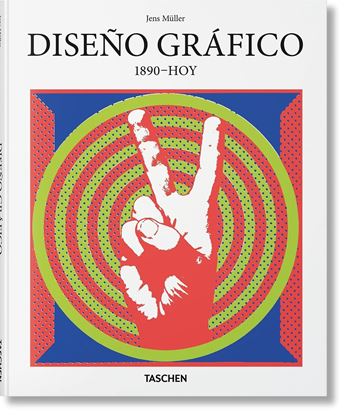
DISEÑO GRAFICO. 1890-HOY
A través de los turbulentos acontecimientos del último siglo y medio, el diseño gráfico ha destilado el espíritu de cada época con su síntesis vívida y ordenada de imagen e idea. Nos rodea en todo momento, ya sea en forma de embalajes minimalistas o de anuncios llenos de colorido, gráfica ambiental e interfaces elegantes: el diseño gráfico guarda relación tanto con el reflejo de las aspiraciones y los valores de la sociedad como con la transmisión de información.
Este vibrante compendio, que se publica ahora como parte de nuestra popular serie Basic Art, describe la evolución del diseño gráfico desde sus inicios en la década de 1890 hasta la actualidad. Con su amplio conocimiento de la disciplina, Jens Müller ha seleccionado cientos de ejemplos de todo el mundo, que se presentan organizados por décadas.
1,250
1,995
SHOES A-Z. 45TH ED.
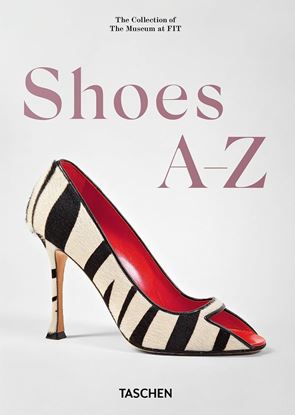
Step inside one of the world’s most enviable closets to celebrate the empowering, sensual, playful, and practical shoe. Hundreds of groundbreaking designs, ephemera, and sketches are featured in this volume, a follow-up to Fashion Designers A–Z, from the most coveted labels such as Christian Louboutin, Manolo Blahník, Gucci, Roger Vivier, and more.
1,995

1,995
SNEAKER FREAKER. THE ULTIMATE SNEAKER B.
Back in 2002, Simon “Woody” Wood was dreaming up schemes to get free sneakers. Two weeks later, he was the proud owner of Sneaker Freaker and his life was never the same.
From its early roots as a punk-style fanzine to today’s super-slick print and online operations, the fiercely independent publication has documented every collab, custom, limited edition, retro reissue, Quickstrike, Hyperstrike, and Tier Zero sneaker released over the last 20 years.
Woody’s original premise that Sneaker Freaker would be “funny and serious, meaningful and pointless at the same time” has certainly been vindicated in The Ultimate Sneaker Book. With more than 500 pages jam-packed with insider knowledge and his own irreverent observations, the insane historical detail and otaku-level minutiae is beyond obsessive.
1,995
1,995
RAFAEL. PINTURAS, FRESCOS, TAPICES. 45TH
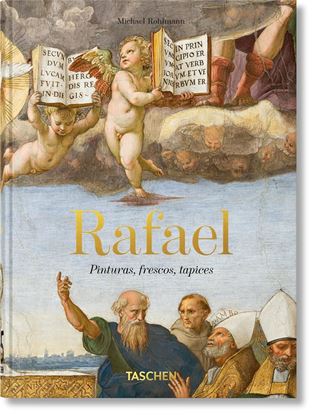
Junto con Miguel Ángel y Leonardo, Rafael (1483-1520) fue uno de los artistas más importantes del Alto Renacimiento italiano. En su breve vida realizó alrededor de 100 pinturas y nueve ciclos de frescos en los que abordó una variedad de temas inigualable: desde sensuales bellezas femeninas, mitos antiguos y retratos hasta ciclos históricos y escenas bíblicas. También realizó retablos y diseñó tapices para la Capilla Sixtina. Su Madonna Sixtina es una de las pinturas religiosas más reproducidas de todos los tiempos.
Rafael fue un aprendiz infatigable que no concebía la autocomplacencia ni se limitaba a repetir soluciones ya intentadas y comprobadas, sino que seguía únicamente el constante impulso hacia adelante de una imaginación inagotable. Transformó su tema central, la experiencia visionaria de la gracia divina, en una realidad pictórica visible. En especial su obra madura en Roma y sobre todo los frescos en el palacio Apostólico del Vaticano le aseguraron un lugar en la historia del arte. Admirado ya en vida como el artista más moderno de su tiempo, la maestría de Rafael allanaría el camino para el manierismo y la época barroca.
1,995
1,995
SEBASTIAO SALGADO. GENESIS. 45TH ED
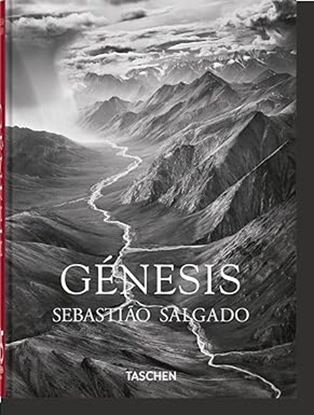
Un día como cualquier otro de 1970, Sebastião Salgado tomó por primera vez una cámara entre sus manos. Tenía entonces 26 años. Al mirar a través del visor tuvo una epifanía: de repente, la vida cobró sentido. A partir de aquel día (y pese a que tuvieron que pasar años de duro trabajo hasta que pudo ganarse la vida como fotógrafo), la cámara pasó a ser la herramienta a través de la cual interactuar con el mundo. Salgado, que «siempre ha preferido la paleta de claroscuros de las imágenes en blanco y negro», tomó muy pocas fotografías en color antes de renunciar por completo a este medio.
El fotógrafo Sebastião Salgado, que creció en una hacienda de Brasil, siente un profundo amor y respeto por la naturaleza; asimismo, es un hombre profundamente comprometido con la devastadora situación socioeconómica en la que, a menudo, se ven afectados los seres humanos. Entre los innumerables trabajos que Salgado ha producido durante su prestigiosa trayectoria, destacan tres proyectos de gran envergadura: Trabajadores (1993), que documenta la evanescente forma de vida de los obreros de todo el mundo, Éxodos (2000), un tributo a la emigración masiva provocada por la hambruna, los desastres naturales, el deterioro medioambiental y la presión demográfica; y esta nueva obra, GÉNESIS, que es el resultado de una épica expedición de ocho años para redescubrir montañas, desiertos, océanos, animales y pueblos que han eludido la impronta de la sociedad moderna: la tierra y la vida de un planeta aún virgen. «Alrededor del 46 % de la Tierra permanece en el estado en el que se hallaba en la época del Génesis —nos recuerda Salgado—. Debemos conservar lo existente.» El proyecto GÉNESIS, junto con el Instituto Terra, fundado por Lélia y Sebastião Salgado, se propone mostrar la belleza de nuestro planeta, revertir el daño que se le ha causado y conservarlo para el futuro.
1,995
1,995
ISSEY MIYAKE. 45TH ED.
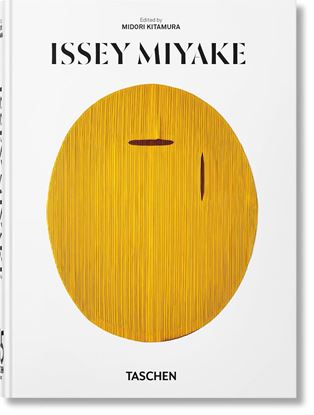
In 1983, Japanese designer Issey Miyake told The New Yorker that he aspired “to forge ahead, to break the mold.” With the boundary-defying fashion lines that followed, he not only broke molds, but recast clothing altogether. With a unique fusion of poetry and practicality, his creations blur the boundaries between tradition, modern technology, and everyday function.
This definitive history of Miyake’s clothes from 1960 to 2022 offers expert insight into the designer’s vision and daring. Initiated and conceived by Midori Kitamura, the book looks at the texture-driven originality of Miyake’s materials and techniques from the very earliest days of his career, before he had even established the Miyake Design Studio. Drawing on nearly 50 years of collaborative work with Miyake, Kitamura creates an encyclopedic reference of his material and technical innovations through the clothes based on A Piece of Cloth concept, Body Series of the 1980s, Miyake Pleats series, and such practical, everyday designs as Pleats Please pieces.
1,995