2,995
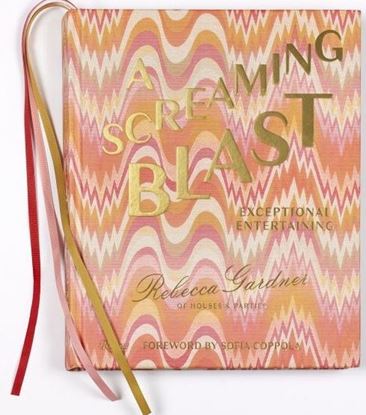
A SCREAMING BLAST
A swirl of elegantly offbeat parties and lush tablescapes, where ceramic snails creep under flower petals and chandelier girls covered in Swarovski crystals beckon guests to the dance floor: Gardner’s infectious irreverence shines in her glamorous approach to entertaining, where even the mundane is made delicious.
This book—like her parties—is a decadent feast for the eyes, with a foreword by Sofia Coppola and photography that captures the surprise and delight of Gardner’s hyperbolic entertaining style. From a brass band leading guests to dinner along the tracks of the Napa Valley Wine Train to a pink-poodle-themed holiday party with a bountiful buffet of retro desserts, the pages burst with entertainments, heavy pours, and flattering light as all the elements combine in a perfectly orchestrated yet seemingly effortless way that makes it impossible for guests not to have a screaming blast!
2,995
4,500
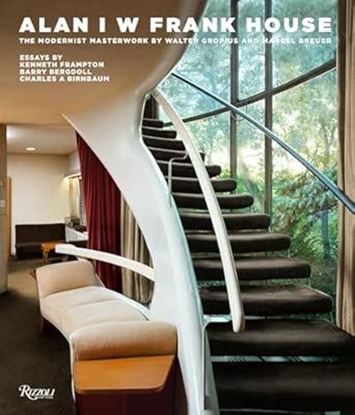
ALAN I W FRANK HOUSE: THE MODERNIST M.
The first book to feature this modernist masterpiece, one of Walter Gropius and Marcel Breuer's most important residential commissions.
Offering a rare opportunity to explore the largest and most luxurious house designed by Walter Gropius, founder of the Bauhaus, and Marcel Breuer, leading architect and furniture designer of the twentieth century, this beautifully designed volume celebrates the Alan I W Frank House in Pittsburgh, Pennsylvania.
Built in 1939-40, the house embodies the Bauhaus "total work of art" philosophy, with Gropius and Breuer having designed every aspect of the building and its site. Illustrations including new and archival images and the architects' plans and sketches highlight an exquisite balance of proportions and colors. Accompanying essays place this house firmly within the American modernist canon just as the Bauhaus celebrates its one-hundreth anniversary in 2019.
4,500
3,200
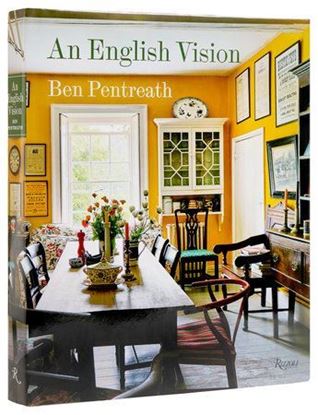
AN ENGLISH VISION
This is the first of Pentreath’s books to present his own output in its entirety—from his personal residences in Dorset, London, and Scotland that brought him international fame to many old and new houses that he has designed and some of the larger, town-scaled projects that make his practice unique in the world of traditional design. Although the results range from his colorful and romantic versions of the English country cottage to traditional splendor, there are underlying ideas that inform the breadth of his output—a sense of scale, proportion, craft, detail, sustainability, and appropriateness—that have a universal relevance today.
3,200
1,350
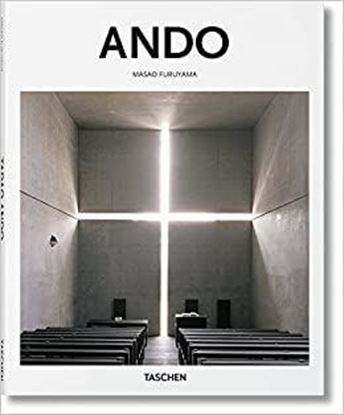
ANDO (BA-ARCH) (GB) (INT)
In this essential TASCHEN introduction to Tadao Ando we explore the hybrid of tradition, modernism, and function that allows his buildings to enchant architects, designers, fashion designers, and beyond. Through key projects including private homes, churches, museums, apartment complexes, and cultural spaces, we explore a uniquely monumental yet comforting aesthetic that draws as much on the calm restraint of Japanese tradition as the compelling modernist vocabularies of Bauhaus and Le Corbusier.
With featured projects in Japan, France, Italy, Spain, and the United States, we see not only Ando’s global reach but also his refined sensitivity for the environs: the play of light through windows, and, in particular, the interaction of buildings with water. From the mesmerizing Church of the Light in Osaka to the luminous Punta della Dogana Contemporary Art Center in Venice, this is a radiant tour through a distinctly contemporary form as much as a timeless appeal of light, elements, and equilibrium.
1,350
1,750
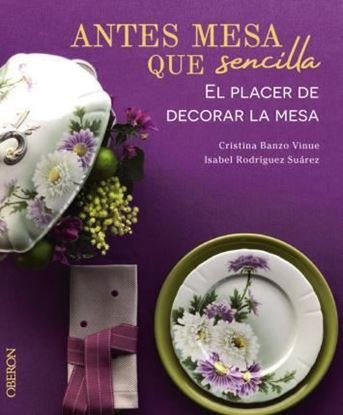
ANTES MESA QUE SENCILLA. EL PLACER DE DE
Este libro invita a buscar la armonía y el contraste sobre el espacio finito de una mesa. La mesa es el lugar donde se conjugan la cultura, el gusto, la educación y las costumbres y puedes reinventarla sin grandes artificios, con lo que está al alcance de tu mano y anida en tu cabeza. Más allá de la superficie del tablero, es un espacio que invita al diálogo amable y a la felicidad compartida. Te acercamos un pequeño manual de primeros auxilios que reúne todos los secretos, trucos y consejos decisivos para adentrarse sin problemas en el mundo de las mesas.
1,750
3,995
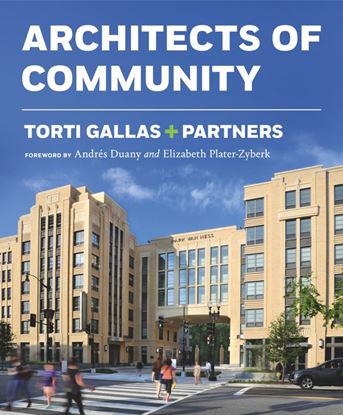
ARCHITECTS OF COMMUNITY
Passionate about designing buildings and neighborhoods that quietly transform the urban environment, Torti Gallas is committed to improving cities, towns, and distressed communities throughout the United States and around the world. This fully illustrated book shows how they have combined the disciplines of architecture, planning, and urban design into a single practice, creating housing and mixed-use buildings that bring catalytic change to urban neighborhoods: the mixed-use apartment buildings, rowhouses, and single-family homes that comprise the fabric of a city. Their work hearkens back to a tradition that, before World War II, created some of the country’s finest neighborhoods, including Forest Hill Gardens in Queens, Rittenhouse Square in Philadelphia, and Russian Hill in San Francisco. Featuring 60 built projects, this book shows how Torti Gallas is dedicated to raising the level of this architecture to a new high.
3,995
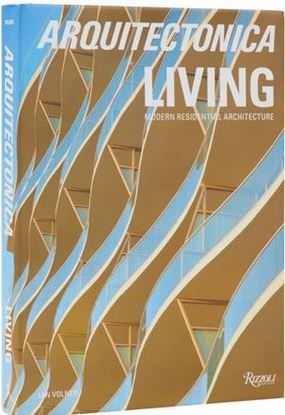
6,995
ARQUITECTONICA LIVING
Dazzling, award-winning, and immensely livable homes are presented here by the world-renowned firm, famous for having played such a large role in the creation of the Miami Vice look, but whose work is so much wider ranging, and which now extends across the globe—from Miami to Singapore, London to Toronto, Luxembourg to Ho Chi Minh City. Highlights include the Ellipse, a delightful oval tower on the Jersey City, New Jersey, waterfront with prime Hudson River and Manhattan views, as well as the Aquavista, in Toronto, which boasts an extraordinary array of jutting terrace-balconies and bright interior spaces flooded with light. By seamlessly merging cutting-edge technology, sustainable practices, and bold artistic vision, Arquitectonica has redefined the possibilities of residential architecture. Their work not only elevates urban living but also affirms a commitment to creating vibrant, livable spaces that inspire communities worldwide.
6,995
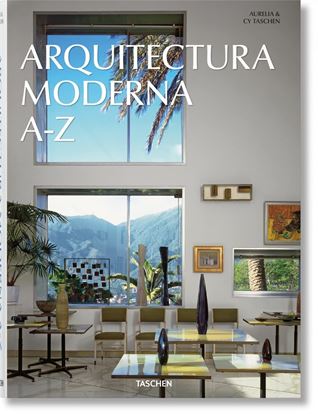
5,995
ARQUITECTURA MODERNA DE LA A A LA Z (FP)
Una verdadera enciclopedia de espacios modernos. De las geometrías de colores de Gio Ponti al fluido futurista de Zaha Hadid, este exhaustivo compendio incluye casi 300 entradas que abarcan arquitectos, estilos, movimientos y tendencias que han creado estructuras desde el siglo XIX al siglo XXI.
Con casi 300 entradas, Arquitectura Moderna A-Z ofrece una inestimable visión general de las figuras clave en la creación del espacio moderno. Presenta a los arquitectos pioneros de los siglos XIX y XX con un retrato, una breve biografía y una descripción de sus obras más importantes.
Como si de un viaje a medida para conocer la arquitectura de todo el mundo se tratase, descubrirá los rascacielos de Manhattan, una sala de conciertos japonesa, el Palacio Güell de Antoni Gaudí en Barcelonao el centro de ocio y deporte de Lina Bo Bardi en una antigua fábrica en São Paulo. Se adentrará en las geometrías de colores de Gio Ponti, en el fluido futurismo de Zaha Hadid, los luminosos interiores de SANAA y la mezcla única de tradición escocesa y elegante japonismo de Charles Rennie Mackintosh.
Las entradas por orden alfabético del libro también abarcan grupos, movimientos y estilos para ubicar en el tiempo y en el espacio a estos arquitectos clave dentro de tendencias arquitectónicas más generales como el estilo internacional, la Bauhaus y De Stijl, entre muchos otros. Con ilustraciones que incluyen algunas de las mejores fotografías arquitectónicas de la era moderna, esta es una completa obra de consulta para profesionales, estudiantes o apasionados de la arquitectura.
“Un libro de lo más sugerente, una oportuna llamada de atención para los que piensan que la arquitectura moderna está limitada a la dureza y la fealdad.”
5,995
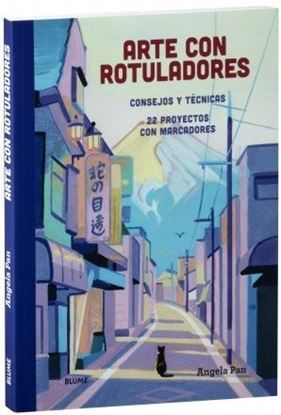
1,150
ARTE CON ROTULADORES
Versátiles y accesibles, los rotuladores son una herramienta artística esencial tanto para artistas principiantes como experimentados.
Aprenda a manejar su juego de rotuladores y a dominar realmente este medio bajo la experta orientación de la artista y educadora Angela Pan.
22 proyectos paso a paso que le mostrarán cómo crear impresionantes paisajes y escenas urbanas utilizando sus rotuladores de pintura.
1,150