
6,500
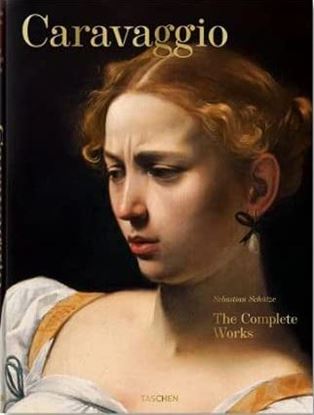
CARAVAGGIO (XL) (INT)
Caravaggio, or more accurately Michelangelo Merisi da Caravaggio (1571–1610), was a legend even in his own lifetime. Notorious bad boy of Italian painting, the artist was at once celebrated and controversial: Violent in temper, precise in technique, a creative master, and a man on the run.
This work offers a comprehensive reassessment of Caravaggio’s entire œuvre with a catalogue raisonné of his works. Each painting is reproduced in large format, with recent, high production photography allowing for dramatic close-ups with Caravaggio's ingenious details of looks and gestures.
Five introductory chapters analyze Caravaggio's artistic career from his early struggle to make a living, through his first public commissions in Rome, and his growing celebrity status. They look at his increasing daring with lighting and with a boundary-breaking naturalism which allowed even biblical events to unfold with an unprecedented immediacy before the viewer.
6,500

850
CHANEL
En una época en la que la moda estaba dominada por hombres, Gabrielle «Coco» Chanel reescribió las convenciones sobre la feminidad a través de creaciones basadas en la simplicidad, la practicidad y una elegancia relajada.
Su legado, de la petite robe noire al icónico Chanel n° 5, se mantiene como un patrimonio fuerte y distintivo, renovado y reinterpretado por el gran Karl Lagerfeld y, posteriormente, por Virginie Viard y Mathieu Blazy, quienes han logrado que la marca siga siendo sinónimo de elegancia y estilo atemporal.
850

1,450
CINE DESCOMPLICADO
¿Por qué todavía se ruedan películas con guiones tan malos? ¿Qué es un actor bancable? ¿Cómo es posible que Harry Potter no fuera rentable en taquilla? ¿Cúal es la cámara de cine más usada de la historia?
Cine descomplicado es una guía divertida, visual y sorprendentemente adictiva que te revela todo lo que siempre quisiste saber sobre el mundo del cine: cómo se hace una película, cómo funcionan las grandes productoras, qué ocurre realmente en un rodaje y por qué algunas acaban siendo auténticos desastres gloriosos.
No hace falta leerlo de principio a fin. Puedes abrirlo por cualquier capítulo y descubrir cómo se ruedan las escenas de acción, quién manda realmente en un rodaje o qué pasa después de la última claqueta.
1,450

1,750
CONVERSACIONES CON GRANDES FIGURAS DE LA
De música, por supuesto sus inicios, referencias y maestros, sus trabajos, pero también de otros asuntos más personales sus miedos y sueños y universales amor, drogas, política, religión, muerte es de lo que el autor de este libro, reconocido periodista cultural con varias biografías de estrellas de la canción española en su haber, ha conversado a lo largo de tres décadas con los 40 grandes músicos e intérpretes que lo protagonizan.
1,750
1,350
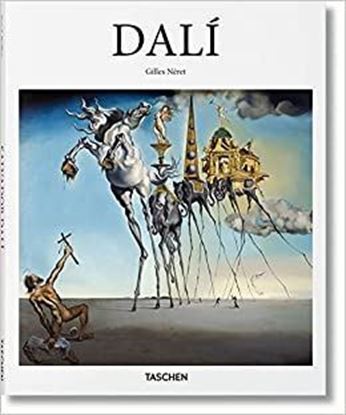
DALI (BA-ART) (GB)
Painter, sculptor, writer, filmmaker, and all-round showman Salvador Dalí (1904–1989) was one of the 20th century’s greatest exhibitionists and eccentrics. One of the first artists to apply the insights of Freudian psychoanalysis to art, he is celebrated in particular for his surrealist practice, with such conceits as the soft watches or the lobster telephone, now hallmarks of the surrealist enterprise, and of modernism in general.
Dalí frequently described his paintings as “hand-painted dream photographs.” Their tantalizing tension and interest resides in the precise rendering of bizarre elements and incongruous arrangements. As Dalí himself explained, he painted with “the most imperialist fury of precision,” but only “to systematize confusion and thus to help discredit completely the world of reality.”
Revolutionizing the role of the artist, the mustache-twirling Dalí also had the intuition to parade a controversial persona in the public arena and, through printmaking, fashion, advertising, writing, and film, to create work that could be consumed and not just contemplated on a gallery wall.
1,350