
2,300
HIROSHIGE. ONE HUNDRED FAMOUS VIEWS
Luces urbanas y cerezos
Los grabados en madera de Tokio que cautivaron la imaginación de Europa
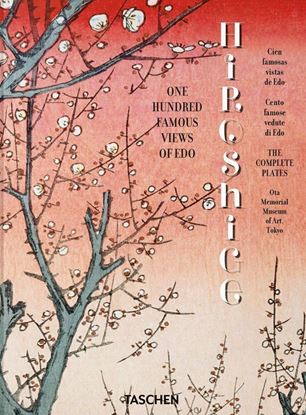
Utagawa Hiroshige (1797-1858) fue uno de los últimos grandes artistas de la tradición japonesa del ukiyo-e. La palabra significa literalmente «pinturas del mundo flotante» y designa un género artístico que floreció entre los siglos xvii y xix y simbolizó la imagen de Japón en el mundo occidental. Las escenas del ukiyo-e, que en muchos aspectos eran de tipo hedonista, representaban a menudo la brillante luminosidad y las atracciones de Edo: mujeres hermosas, actores y luchadores de sumo, la vida urbana y panorámicas espectaculares.
2,300
4,995
HIROSHIGE. ONE HUNDRED FAMOUS VIEWS
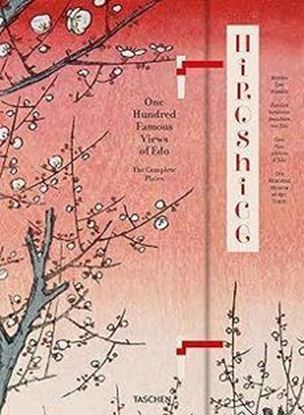
Utagawa Hiroshige (1797-1858) fue uno de los últimos grandes artistas de la tradición japonesa del ukiyo-e. La palabra significa literalmente «pinturas del mundo flotante» y designa un género artístico que floreció entre los siglos xvii y xix y simbolizó la imagen de Japón en el mundo occidental. Las escenas del ukiyo-e, que en muchos aspectos eran de tipo hedonista, representaban a menudo la brillante luminosidad y las atracciones de Edo: mujeres hermosas, actores y luchadores de sumo, la vida urbana y panorámicas espectaculares.
Pese a abarcar una gran variedad de temas, Hiroshige se hizo famoso sobre todo por sus paisajes. De hecho, su obra maestra fue una serie de grabados conocida como Cien famosas vistas de Edo (1856-1858), que reproduce varias escenas de la ciudad en el curso de las estaciones, desde las animadas calles comerciales hasta las espléndidas huertas de cerezos.
4,995
5,995
JACQUES DEVAULX. NAUTICAL WORKS (XL)
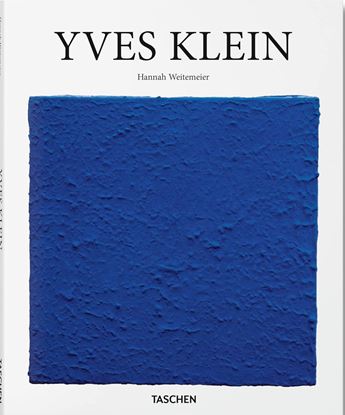
In the mid-1950s, Yves Klein (1928–1962) declared that “a new world calls for a new man.” With his idiosyncratic style and huge charisma, this bold artist would go on to pursue a brief but bountiful career, producing more than 1,000 paintings over seven years in an oeuvre now considered a mainstay of postwar modernism.Klein made his name above all with his large monochrome canvases in his own patented hue of blue. International Klein Blue (IKB), composed of pure pigment and binding medium, is at once rich and luminous, evocative and decorative, and was conceived by Klein as a means of evoking the immateriality and infinitude of the world. The works of this “Blue Revolution” seem to draw us into another dimension, as if hypnotized by a perfect summer sky. Klein was also renowned for his deployment of “living brushes,” in which naked women, daubed in International Klein Blue, would make imprints of their bodies on large sheets of paper.
5,995
1,750
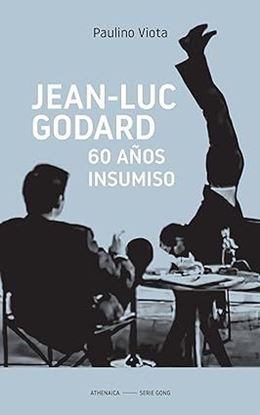
JEAN-LUC GODARD
Casi las mismas decadas de insumisión y rebeldía que ha protagonizado Godard con su vida y obra lleva Paulino Viota estudiando ambas, desde el apasionamiento cinefilo y la devoción inteligente que siente por "el cineasta con mayor riqueza estructural de la historial del cine". Dividido en dos grandes bloques, este ensayo magistral y ya definitivo tras la reciente desaparición del cineasta pone en perspectiva todas las etapas de su mítica carrera, que arranca con la irreverente modernidad de los años 60, atraviesa la militancia política y el utópico deseo de fusión en lo colectivo, y desemboca, rayando el nuevo milenio y como colofón a una duradera y profunda reflexión sobre la mediación tecnológica, en ese estilo inimitable donde lo poetico acontece como posibilidad de una simultaneidad inedita entre imágenes y sonidos, materiales ya convertidos en "formas que piensan" la historia del cine y la del siglo XX, como ejemplifica a la perfección una de sus cimas, "Histoire(s) du cinema".
1,750
1,995
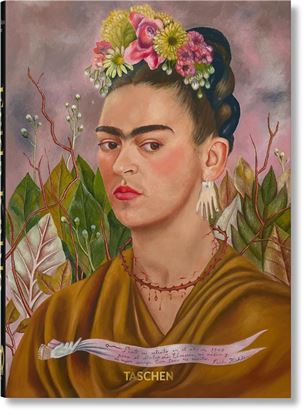
KAHLO, PAINTINGS (40TH) (GB)
Among the few women artists who have transcended art history, none had a meteoric rise quite like Mexican painter Frida Kahlo (1907–1954). Her unmistakable face, depicted in over fifty extraordinary self-portraits, has been admired by generations; along with hundreds of photographs taken by notable artists such as Manuel and Lola Álvarez Bravo, Nickolas Muray, and Martin Munkácsi, they made Frida Kahlo an iconic image of 20th century art.After an accident in her early youth, Frida became a painter of her own free will. Her marriage to Diego Rivera in 1929 placed her at the forefront of an artistic scene not only in the cultural Renaissance of Mexico, but also in the United States. Her work garnered praise from the poet André Breton, who added the Mexican painter to the ranks of international surrealism and exhibited her work in Paris in 1939 to the admiration of Picasso, Kandinsky, and Duchamp.We access the intimacy of Frida’s affections and passions through a selection of drawings, pages from her personal diary, and an extensive illustrated biography featuring photos of Frida, Diego, and the Casa Azul, Frida’s home and the center of her universe.This book allows readers to admire Frida Kahlo’s paintings like never before, including unprecedented detail shots and famous photographs. It presents pieces in private collections and reproduces works that were previously lost or have not been exhibited for more than 80 years.
1,995