
3,800
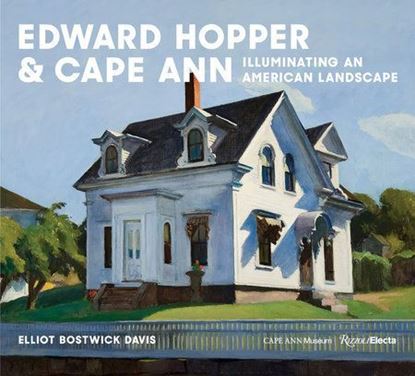
EDWARD HOPPER Y CAPE ANN
A fresh look at one of America’s best-known and beloved artists at a pivotal but little-known moment in his life that profoundly shaped both his art and career.
Edward Hopper & Cape Ann tells the largely ignored but significant origin story of Edward Hopper’s years in and around Gloucester, Massachusetts—a period and place that imbued Hopper’s paintings with a clarity and purpose that had eluded his earlier work. This volume focuses on summers Hopper spent there in the 1920s, starting in 1923, when he first embraced watercolor during outdoor painting excursions on Cape Ann and discovered one of his favorite subjects: houses and vernacular architecture. The success of Hopper’s Gloucester watercolors transformed his work in all media and set the stage for his monumental career.
Accompanying a major retrospective at the Cape Ann Museum, including an unprecedented loan of twenty-eight works from the Whitney Museum of American Art, this highly readable and beautifully illustrated volume reveals in great depth the lesser-known story about the influence of a young painter, Josephine Nivison, who became not only Hopper’s wife but also the most trusted force underlying his artistic confidence. Here she is recast as principal producer of Hopper’s distinctive style and his “brand” visionary from the time of their courtship until his death in 1967.
3,800

3,995
PRINCE. LA HISTORIA DETRAS DE SUS 684 C.
Después de dos álbumes teñidos de funk y disco, Prince Rogers Nelson se convirtió en el maestro del Minneapolis Sound en 1980 con su tercer álbum, el sulfuroso y acertadamente llamado Dirty Mind.
Desde sus primeros discos para Warner Bros. Records, el hombre que pronto sería apodado el Kid de Minneapolis dedicó su vida a una abundante y variada producción musical.
Prince atravesó la década de 1980 con una irreverencia y audacia que lo caracterizarían. Después de encadenar varios éxitos (Little Red Corvette, Purple Rain, Kiss, Sign O' The Times o Batdance) y más de 100 millones de discos vendidos, Prince supo reinventarse con cada uno de sus discos, burlando las predicciones de quienes lo creían muerto, resurgiendo constantemente de las cenizas, y siempre sorprendiendo a través de nuevas direcciones artísticas.
De Madonna a Miles Davis, de Michael Jackson a Kate Bush, todos los grandes nombres de la música popular quisieron grabar con él. Tras la inesperada muerte del cantautor en 2016, The Prince Estate ha trabajado para exhumar de The Vault, su bóveda acorazada de Paisley Park (su casa-estudio), álbumes preciosos hasta ahora inéditos. Miles de canciones aún reposan allí; cada lanzamiento es un evento global.
3,995
3,995
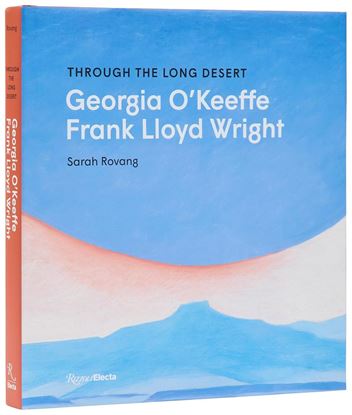
THROUGH THE LONG DESERT: G. O'KEEFE
Georgia O’Keeffe and Frank Lloyd Wright were neither competitors nor direct collaborators. Yet these romantic heroes of twentieth-century art and architecture largely operated in parallel. In this seminal book, Rovang weaves together their compelling life stories, examining newly discovered links between them and, in the process, offering a fresh perspective on their work, their intermittent yet poignant friendship, and their closeness to the desert.
Starting in 1933, O’Keeffe and Wright exchanged roughly two dozen letters in which they expressed admiration for one another but also their passion for the places that informed them—many of which they had in common. Both were born in rural Wisconsin and built their careers in Chicago and New York. However, both sought inspiration and fulfillment in places farther afield, including in Japan and the desert landscape of the American Southwest. Juxtaposing images highlighting shared aspects of their individual biographies and work, this unique take on American creative expression explores the nature of artistic friendship and the idea of “home.” Rovang’s text gives rich context to the allure and romance of her visual subject, offering readers new ways to appreciate O’Keeffe’s and Wright’s monumental contributions to American culture.
3,995
3,995
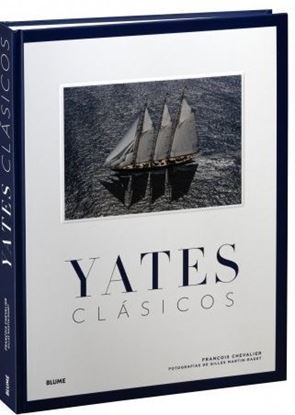
YATES CLASICOS
Dieciocho de los yates clásicos más hermosos del mundo, verdaderas obras maestras de la arquitectura naval.
Una invitación privada a un universo excepcional: desde las regatas de las Voiles de Saint-Tropez hasta la Copa América, los veleros logran que quienes los contemplan sueñen con regatas por todo el mundo.
Las historias de estos barcos son siempre singulares: desde el Manitou, que fue propiedad de John Fitzgerald Kennedy, hasta el Atlantic, una goleta de tres palos de proporciones espectaculares.
3,995

3,995
WORLD MONUMENTS FUND
From the fabled towers of Babylon and Angkor Wat to the colossal stone heads of Rapa Nui (Easter Island) and secret gardens of Beijing’s Forbidden City, each of the sixty sites featured in this lavishly illustrated book are must-visit destinations for every cultured traveler, representing the pinnacles of human achievement over millennia and across the globe.
Yet despite their beauty, fame, and importance, these treasured places face existential challenges arising from climate change, war, financial pressures, and—increasingly—over-tourism. From its founding in 1965, World Monuments Fund (WMF) has focused the public’s attention on these dangers while developing solutions that will ensure these sites will be enjoyed for generations to come.
3,995
4,200